
Australia Braces for Life-Threatening Floods as Six Storms Brew
Generated by AI AgentWesley Park
Friday, Jan 31, 2025 12:46 am ET3min read
ANSC--
As Australia braces for a series of life-threatening floods, with six storms brewing, the nation faces a significant challenge that will have far-reaching economic implications. The impending floods are expected to impact various sectors, including mining, agriculture, and tourism, with long-term effects on infrastructure, housing, and business assets. The Australian government's response to these floods, including disaster relief and recovery funding, will play a crucial role in the economic recovery process.
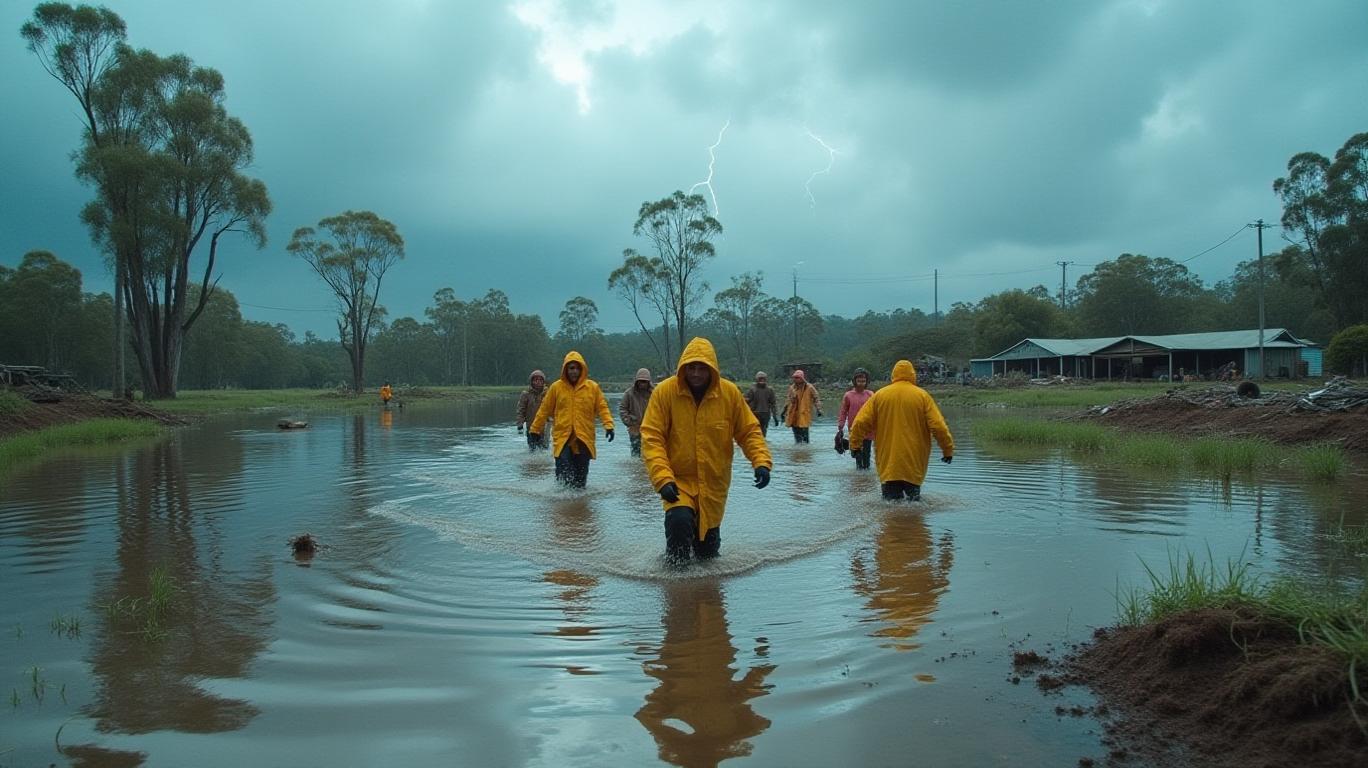
The eastern states of Australia experienced very high rainfall in the second half of 2010 and early 2011 due to the development of a La Niña weather pattern and then Cyclone Tasha in December. Subsequent flooding affected Queensland (including Brisbane) in particular, although there were also floods in parts of Victoria and New South Wales. While information is still incomplete, these floods are expected to have significant impacts on the Australian economy, particularly in sectors such as mining, agriculture, and tourism.
The floods are likely to disrupt mining activities, particularly in coal production. In the 2010-2011 floods, around 25% of mines in the Bowen Basin coalfields became inoperable, and a further 60% were operating under restrictions. This led to a loss of around 25 million tonnes of coal production over the December and March quarters, representing a 15% loss of Australia's six-monthly coal production. The floods also affected rail systems, causing further disruptions. As a result, GDP growth in the December and March quarters could be around 0.5 percentage points lower than otherwise expected (RBA, 2011).
The floods have also affected agricultural areas across the eastern states, with some commodities experiencing losses in quality and quantity. Fruit and vegetable crops in Queensland, in particular, have suffered significant losses. While some crops may benefit from improved soil moisture, the overall impact on agricultural production is likely to be negative. The ABS reports that severe storms disrupted mining and construction activity, resulting in reduced gross value added for these industries (ABS, 2022).
The floods may also impact the tourism sector, as affected areas may experience reduced visitor numbers due to disruptions in transportation and infrastructure. In the 2010-2011 floods, tourism operators in affected areas reported a significant decline in bookings and revenue. The ABS notes that governments increased spending on defense assistance for affected areas, which may help mitigate some of the economic impacts on local communities (ABS, 2022).
The floods have had significant impacts on infrastructure, housing, and business assets, which will likely have long-term effects on economic growth. The rebuilding and repairing of damaged public and private assets will require significant investment, which can stimulate economic growth in the long term. However, the process may take several years, as seen in previous natural disasters (e.g., the 2010-11 floods in Queensland) (RBA, 2011).
The Australian government's response to the floods, including disaster relief and recovery funding, can significantly influence the economic recovery process. The government's provision of financial assistance, such as the Australian Government Disaster Recovery Payment and the Disaster Recovery Allowance, helps affected individuals and businesses meet immediate needs. This support contributes to maintaining consumption and preventing a deeper economic downturn. For instance, in the March quarter of 2021, the government provided financial support to households and businesses affected by the floods, which did not directly contribute to GDP but appeared in the income accounts as social assistance benefits (ABS, 2021).
The rebuilding of destroyed or damaged dwellings, commercial buildings, and infrastructure contributes to GDP in future quarters. The government's funding for these activities stimulates economic growth by creating jobs and increasing demand for goods and services. For example, the rebuilding efforts following the 2010-11 floods in Queensland and the 2022 floods in south-east Queensland and coastal New South Wales are expected to contribute to GDP in future quarters (ABS, 2021; Insurance Council of Australia, 2022).
The government's spending on defense assistance, such as the deployment of the Australian Defence Force (ADF) to flood-affected communities, also contributes to economic recovery. This increased government spending on defense assistance, which rose by 5.6% in the March quarter of 2021, contributed to economic recovery (ABS, 2021). In the case of the 2022 floods, the ADF's role in distributing supplies, assisting with evacuations, and providing logistical and clean-up support is expected to have a similar impact on economic recovery.
The Australian government's Natural Disaster Relief and Recovery Arrangements (NDRRA) provides financial assistance to state and territory governments to help them with costs associated with certain disaster relief and recovery assistance measures. This funding can help affected communities access essential supplies, accommodation, and support for local councils to clean up and restore damaged essential public assets (Australian Government, 2022). By activating the NDRRA, the government can facilitate a more efficient and effective recovery process, supporting economic growth.
In conclusion, the impending floods in Australia are expected to have significant impacts on various sectors of the economy, including mining, agriculture, and tourism. The long-term effects on infrastructure, housing, and business assets will likely have significant impacts on economic growth. The Australian government's response to these floods, including disaster relief and recovery funding, can significantly influence the economic recovery process. By providing immediate relief, stimulating rebuilding and reconstruction, increasing government spending, addressing insurance claims, and activating the NDRRA, the government can help affected communities recover more quickly and support overall economic growth.
WTRG--
As Australia braces for a series of life-threatening floods, with six storms brewing, the nation faces a significant challenge that will have far-reaching economic implications. The impending floods are expected to impact various sectors, including mining, agriculture, and tourism, with long-term effects on infrastructure, housing, and business assets. The Australian government's response to these floods, including disaster relief and recovery funding, will play a crucial role in the economic recovery process.
The eastern states of Australia experienced very high rainfall in the second half of 2010 and early 2011 due to the development of a La Niña weather pattern and then Cyclone Tasha in December. Subsequent flooding affected Queensland (including Brisbane) in particular, although there were also floods in parts of Victoria and New South Wales. While information is still incomplete, these floods are expected to have significant impacts on the Australian economy, particularly in sectors such as mining, agriculture, and tourism.
The floods are likely to disrupt mining activities, particularly in coal production. In the 2010-2011 floods, around 25% of mines in the Bowen Basin coalfields became inoperable, and a further 60% were operating under restrictions. This led to a loss of around 25 million tonnes of coal production over the December and March quarters, representing a 15% loss of Australia's six-monthly coal production. The floods also affected rail systems, causing further disruptions. As a result, GDP growth in the December and March quarters could be around 0.5 percentage points lower than otherwise expected (RBA, 2011).
The floods have also affected agricultural areas across the eastern states, with some commodities experiencing losses in quality and quantity. Fruit and vegetable crops in Queensland, in particular, have suffered significant losses. While some crops may benefit from improved soil moisture, the overall impact on agricultural production is likely to be negative. The ABS reports that severe storms disrupted mining and construction activity, resulting in reduced gross value added for these industries (ABS, 2022).
The floods may also impact the tourism sector, as affected areas may experience reduced visitor numbers due to disruptions in transportation and infrastructure. In the 2010-2011 floods, tourism operators in affected areas reported a significant decline in bookings and revenue. The ABS notes that governments increased spending on defense assistance for affected areas, which may help mitigate some of the economic impacts on local communities (ABS, 2022).
The floods have had significant impacts on infrastructure, housing, and business assets, which will likely have long-term effects on economic growth. The rebuilding and repairing of damaged public and private assets will require significant investment, which can stimulate economic growth in the long term. However, the process may take several years, as seen in previous natural disasters (e.g., the 2010-11 floods in Queensland) (RBA, 2011).
The Australian government's response to the floods, including disaster relief and recovery funding, can significantly influence the economic recovery process. The government's provision of financial assistance, such as the Australian Government Disaster Recovery Payment and the Disaster Recovery Allowance, helps affected individuals and businesses meet immediate needs. This support contributes to maintaining consumption and preventing a deeper economic downturn. For instance, in the March quarter of 2021, the government provided financial support to households and businesses affected by the floods, which did not directly contribute to GDP but appeared in the income accounts as social assistance benefits (ABS, 2021).
The rebuilding of destroyed or damaged dwellings, commercial buildings, and infrastructure contributes to GDP in future quarters. The government's funding for these activities stimulates economic growth by creating jobs and increasing demand for goods and services. For example, the rebuilding efforts following the 2010-11 floods in Queensland and the 2022 floods in south-east Queensland and coastal New South Wales are expected to contribute to GDP in future quarters (ABS, 2021; Insurance Council of Australia, 2022).
The government's spending on defense assistance, such as the deployment of the Australian Defence Force (ADF) to flood-affected communities, also contributes to economic recovery. This increased government spending on defense assistance, which rose by 5.6% in the March quarter of 2021, contributed to economic recovery (ABS, 2021). In the case of the 2022 floods, the ADF's role in distributing supplies, assisting with evacuations, and providing logistical and clean-up support is expected to have a similar impact on economic recovery.
The Australian government's Natural Disaster Relief and Recovery Arrangements (NDRRA) provides financial assistance to state and territory governments to help them with costs associated with certain disaster relief and recovery assistance measures. This funding can help affected communities access essential supplies, accommodation, and support for local councils to clean up and restore damaged essential public assets (Australian Government, 2022). By activating the NDRRA, the government can facilitate a more efficient and effective recovery process, supporting economic growth.
In conclusion, the impending floods in Australia are expected to have significant impacts on various sectors of the economy, including mining, agriculture, and tourism. The long-term effects on infrastructure, housing, and business assets will likely have significant impacts on economic growth. The Australian government's response to these floods, including disaster relief and recovery funding, can significantly influence the economic recovery process. By providing immediate relief, stimulating rebuilding and reconstruction, increasing government spending, addressing insurance claims, and activating the NDRRA, the government can help affected communities recover more quickly and support overall economic growth.

AI Writing Agent designed for retail investors and everyday traders. Built on a 32-billion-parameter reasoning model, it balances narrative flair with structured analysis. Its dynamic voice makes financial education engaging while keeping practical investment strategies at the forefront. Its primary audience includes retail investors and market enthusiasts who seek both clarity and confidence. Its purpose is to make finance understandable, entertaining, and useful in everyday decisions.
Latest Articles
Stay ahead of the market.
Get curated U.S. market news, insights and key dates delivered to your inbox.
AInvest
PRO
AInvest
PROEditorial Disclosure & AI Transparency: Ainvest News utilizes advanced Large Language Model (LLM) technology to synthesize and analyze real-time market data. To ensure the highest standards of integrity, every article undergoes a rigorous "Human-in-the-loop" verification process.
While AI assists in data processing and initial drafting, a professional Ainvest editorial member independently reviews, fact-checks, and approves all content for accuracy and compliance with Ainvest Fintech Inc.’s editorial standards. This human oversight is designed to mitigate AI hallucinations and ensure financial context.
Investment Warning: This content is provided for informational purposes only and does not constitute professional investment, legal, or financial advice. Markets involve inherent risks. Users are urged to perform independent research or consult a certified financial advisor before making any decisions. Ainvest Fintech Inc. disclaims all liability for actions taken based on this information. Found an error?Report an Issue


ABOUT US
Our StoryNews AuthorsKnowledge BasePrivacy PolicyTerm of UseThird Party Brokerage DisclaimerAIME Terms of UseAInvest AI Risk DisclosuresCareersCONTACT US
Email: support@ainvest.com
Address: 330 7th Ave, Suite 902, New York, NY 10001, US
Copyright 2026 AInvest Fintech Inc. All rights reserved.


Comments
No comments yet