
U.S.-Australia Beef Trade Resurgence Under Trump's Tariff Strategy: A Geopolitical Play for Agribusiness Investors
 Aime Summary
The U.S.-Australia beef trade has become a focal point in the broader geopolitical chess match between Washington and Canberra, with President Trump's aggressive tariff strategy reshaping export flows and creating both headwinds and opportunities for investors. While the symbolic easing of Australian restrictions on U.S. beef imports in 2025 has been hailed as a diplomatic win, the reality is far more nuanced. This shift reflects a recalibration of global agricultural supply chains, driven by Trump's 10% baseline tariff on Australian goods and 50% tariffs on steel and aluminum. For investors, the key lies in dissecting the structural forces at play and identifying where capital can thrive in this high-stakes environment.
The Trump Tariff Strategy: A Double-Edged Sword for Agribusiness
Trump's tariffs have forced Australia to pivot its trade strategy, prioritizing biosecurity-aligned access for U.S. beef while mitigating the economic fallout from retaliatory measures. The relaxation of restrictions on U.S. beef—specifically allowing cattle born in Canada or Mexico and slaughtered in the U.S.—was framed as a scientific decision by Australia's government. Yet, it's impossible to ignore the political context: the U.S. had already imposed a 10% tariff on Australian imports, with further threats to escalate.
The immediate impact? A surge in U.S. imports of Australian beef. In 2024, Australia exported 400,000 metric tons of beef to the U.S., valued at $2.9 billion, while U.S. exports to Australia remained negligible. This asymmetry underscores a critical truth: Australia's grass-fed beef, priced at roughly half the cost of U.S. grain-fed beef, is structurally superior for the U.S. market. With U.S. cattle herds at a record low (94.2 million head as of July 2024) and domestic prices soaring to $6.12 per pound for ground beef, the U.S. is a net importer of beef, not an exporter.
Investment Opportunities in Livestock: Niche Markets and Strategic Positioning
While U.S. beef exports to Australia won't disrupt the market, the policy shift has created a niche for U.S. agribusinesses. Tyson FoodsTSN-- (TSN) and Cargill (CAG) are prime examples of companies leveraging their export infrastructure to capture value in specific segments. U.S. beef is now finding a foothold in fast-food chains and pre-packaged meals, where cost matters more than origin.
Investors should focus on meat processors with traceability systems to meet Australia's stringent biosecurity requirements. These companies can scale up operations to serve Australia's demand for marbled cuts, which are less common in the Australian market.
Logistics and Cold Chain: The Unsung Heroes of Global Trade
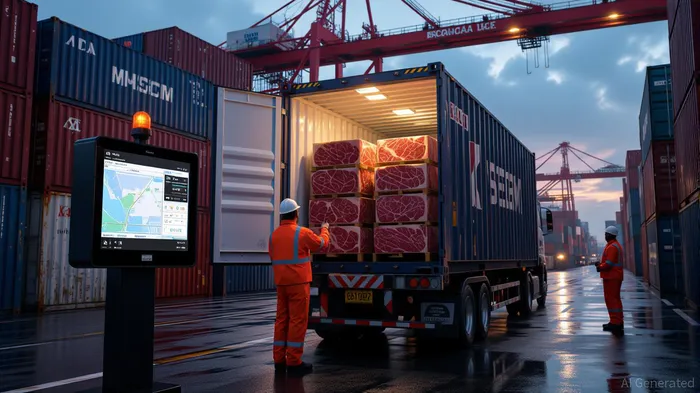
The logistics sector stands to gain as U.S. beef producers ramp up exports to Australia. Refrigerated shipping, warehousing, and real-time tracking services are essential to maintaining product quality during long-haul transport. Companies like Americold Realty TrustCOLD-- (COLD), a leader in coldCOLD-- storage, and logistics firms with international capabilities (e.g., DHL, FedEx) are well-positioned to benefit.
Additionally, the demand for blockchain-based traceability solutions is rising. These technologies help agribusinesses meet Australian import regulations and appeal to global buyers prioritizing sustainability.
Trade Finance: Hedging Against Volatility
The U.S.-Australia trade dynamics have introduced volatility in currency exchange rates and commodity prices. Trade finance institutions and fintech platforms offering hedging tools—such as currency forwards, letters of credit, and blockchain-based payment solutions—are critical for managing risk. Investors should consider firms like TradeLens or startups specializing in agricultural trade finance.
The broader geopolitical context also highlights the importance of diversification. As the U.S. imposes tariffs on Brazilian beef, Australia has emerged as a key supplier, benefiting from increased demand.
Risks and Strategic Cautions
While the opportunities are clear, investors must remain vigilant. Regulatory reversals are a risk, as trade policies can shift with administration changes. Market saturation is another concern: if U.S. producers overextend capacity, prices could collapse. Biosecurity remains a wildcard—any outbreak of BSE or foot-and-mouth disease could trigger trade halts.
Conclusion: Play the Long Game
The U.S.-Australia beef trade resurgence is less about immediate gains and more about long-term positioning. For investors, the key sectors—livestock, logistics, and trade finance—offer entry points aligned with Trump's trade strategy and the structural realities of global agriculture.
- Livestock: Invest in meat processors with export capabilities and traceability tech.
- Logistics: Target cold chain infrastructure and digital logistics platforms.
- Trade Finance: Hedge against currency risks and support platforms enabling transparent trade.
As the world navigates a new era of protectionism, the winners will be those who adapt to the shifting currents of geopolitical trade dynamics. The U.S.-Australia beef trade is a microcosm of this transformation—and a playbook for investors ready to capitalize on it.

Delivering real-time insights and analysis on emerging financial trends and market movements.
Latest Articles
Stay ahead of the market.
Get curated U.S. market news, insights and key dates delivered to your inbox.
AInvest
PRO
AInvest
PRO



Comments
No comments yet