
Australia to Ban Social Media for Under 16s by Year End
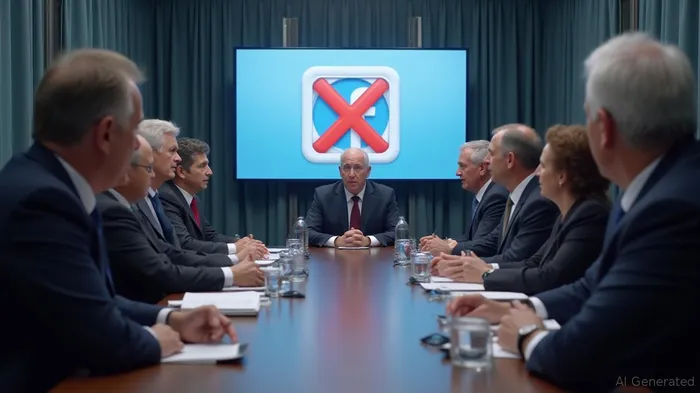
Australia is on the verge of implementing a pioneering national ban on social media use for individuals under the age of 16, a move that could significantly impact major platforms like MetaMETA-- (Facebook, Instagram) and TikTok. This initiative follows a government-backed trial that confirmed the technical feasibility of verifying users' ages and integrating these checks into existing digital platforms. The legislation is set to be implemented by the end of the year, although some tech companies remain skeptical about the reliability of age-detection technologies.
The Age Assurance Technology Trial, commissioned by the government, demonstrated that age verification can be conducted in Australia in a manner that is private, robust, and effective. Tony Allen, the project director of the trial, emphasized that there are no major technological obstacles preventing 16-year-olds from obtaining social media accounts. He argued that these solutions are technically feasible, can be easily integrated into current services, and can help protect children’s safety and rights online. The trial explored various methods, including facial scans, behavioral analysis, age verification, and parental controls, but noted that no single solution works for every scenario.
The proposed ban has sparked significant debate and has been met with both support and opposition. While 77% of the population supports the ban, privacy campaigners and some child rights groups have expressed concerns. A parliamentary inquiry held in 2024 heard from parents whose children had self-harmed due to bullying on social media, and the domestic media, led by Rupert Murdoch’s News Corp, campaigned for the ban under the bannerBANR-- “Let Them Be Kids.”
The ban is likely to test Australia’s relationship with its most important allyALLY--, the United States, and has raised conflicts with some US-based tech giants. Earlier, Australia had forced social media platforms to pay news organizations for their content and is now considering fining companies that do not take down online scams. Elon Musk, the owner of X, commented that the ban seemed like a backdoor method to manage how all Australians access the internet.
The government's trial to evaluate age assurance technologies has shown promising results, suggesting that these technologies can be effective. However, concerns about the accuracy of age estimation technologies persist. Reports indicate that face-scanning tools often misidentify ages, with error rates varying significantly. For instance, a 14-year-old might be incorrectly identified as 17, while a 17-year-old could be blocked. These inaccuracies raise questions about the reliability of the ban and its potential to effectively protect minors.
The trial also highlighted other potential issues, such as the lack of recourse for individuals whose ages are misidentified. It is unclear what mechanisms will be in place for parents to complain if their underage children gain access to social media, or for older individuals who are incorrectly blocked. Additionally, the government has not yet defined what constitutes "reasonable steps" for technology companies to prevent underage access, leaving room for ambiguity.
The ban has also sparked discussions about the potential for circumvention. For example, an underage individual could potentially use an older person to set up an account on their behalf. To mitigate this risk, the government might require regular age verification for all social media users. However, the specifics of how this will be implemented remain unclear.
As the ban approaches its December deadline, many questions remain unanswered. The full results of the government's trial are expected later this year, but with less than six months until implementation, social media users and technology companies are still seeking clarity on how the ban will be enforced. The government's commitment to protecting minors online is evident, but the challenges of implementing an effective and fair age verification system are substantial.

Stay ahead of the market.
Get curated U.S. market news, insights and key dates delivered to your inbox.




Comments
No comments yet