
Australia's A$1B Waratah Super Battery Activated, Set to be World's Most Powerful
ByAinvest
Monday, Aug 4, 2025 4:31 pm ET2min read
BLK--
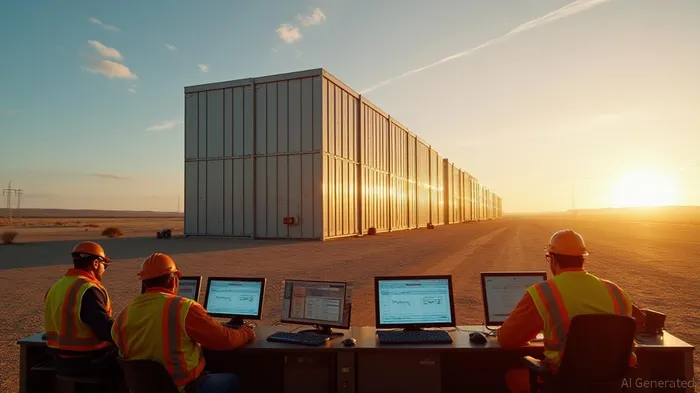
The Waratah Super Battery, located on the central coast of NSW, is part of the System Integrity Protection Scheme (SIPS) and will operate as a giant shock absorber for the grid. It is designed to carry more power over transmission lines into major load centers in Sydney, Newcastle, and Wollongong, thereby reducing the curtailment of wind and solar output. The battery's initial capacity is 850 MW and 1,680 MWh, but it is still undergoing commissioning and will not operate at full capacity until later this year.
The Waratah Super Battery is the largest unit of its type to be connected to the Australian grid, surpassing the 750 MW Kogan Creek coal-fired generator in Queensland. Other batteries currently under construction, such as the 700 MW, 2,800 MWh Eraring battery, will have more storage capacity but are not yet operational.
Akaysha Energy, the company behind the Waratah Super Battery, has faced numerous challenges, including weather delays and financial issues with the battery supplier, Powin, which filed for bankruptcy protection. Despite these hurdles, Akaysha is optimistic about the potential for more contracts for SIPS-style services to boost transmission capacity and support the rollout of renewables.
Australia has emerged as a leader in the global rooftop solar market, with rooftop solar now accounting for 11.2% of the country's electricity supply. According to the Clean Energy Council, rooftop solar installations reached 20 GW of total capacity in 2023, and New South Wales and Queensland have seen significant growth in installations. This growth is driven by the abundance of sunshine and the inherent benefits of lower energy bills and feed-in tariffs.
The Waratah Super Battery is a significant step forward in Australia's transition to renewable energy. It underscores the country's commitment to grid stability and the integration of clean energy sources. As the battery market continues to grow, with federal rebates driving home battery installations, Australia is poised to remain a global leader in both rooftop solar and utility-scale battery storage.
References:
[1] https://reneweconomy.com.au/australias-most-powerful-battery-is-now-officially-operating-as-the-grids-biggest-shock-absorber/
[2] https://cleanenergycouncil.org.au/news-resources/rooftop-solar-generates-over-10-per-cent-of-australias-electricity
[3] https://www.abc.net.au/news/science/2025-08-05/teslas-share-of-home-battery-market-plummeting-as-sales-boom/105596408
Australia's A$1 billion Waratah Super Battery, operated by Blackrock's Akaysha Energy, has begun operations and will have the world's largest power output when fully commissioned later this year. The battery will supply energy to almost 1 million homes for an hour and help stabilize the grid, particularly with the country's widespread coal plant closures expected by 2035. Australia has vaulted into the top five utility-scale battery markets, leading globally in rooftop solar per capita.
Australia's A$1 billion Waratah Super Battery, operated by Blackrock's Akaysha Energy, has officially started operations. Once fully commissioned later this year, it will become the world's largest utility-scale battery in terms of power output. The battery is set to supply energy to nearly one million homes for an hour and will significantly contribute to grid stability, particularly in the face of the country's ongoing coal plant closures expected by 2035.The Waratah Super Battery, located on the central coast of NSW, is part of the System Integrity Protection Scheme (SIPS) and will operate as a giant shock absorber for the grid. It is designed to carry more power over transmission lines into major load centers in Sydney, Newcastle, and Wollongong, thereby reducing the curtailment of wind and solar output. The battery's initial capacity is 850 MW and 1,680 MWh, but it is still undergoing commissioning and will not operate at full capacity until later this year.
The Waratah Super Battery is the largest unit of its type to be connected to the Australian grid, surpassing the 750 MW Kogan Creek coal-fired generator in Queensland. Other batteries currently under construction, such as the 700 MW, 2,800 MWh Eraring battery, will have more storage capacity but are not yet operational.
Akaysha Energy, the company behind the Waratah Super Battery, has faced numerous challenges, including weather delays and financial issues with the battery supplier, Powin, which filed for bankruptcy protection. Despite these hurdles, Akaysha is optimistic about the potential for more contracts for SIPS-style services to boost transmission capacity and support the rollout of renewables.
Australia has emerged as a leader in the global rooftop solar market, with rooftop solar now accounting for 11.2% of the country's electricity supply. According to the Clean Energy Council, rooftop solar installations reached 20 GW of total capacity in 2023, and New South Wales and Queensland have seen significant growth in installations. This growth is driven by the abundance of sunshine and the inherent benefits of lower energy bills and feed-in tariffs.
The Waratah Super Battery is a significant step forward in Australia's transition to renewable energy. It underscores the country's commitment to grid stability and the integration of clean energy sources. As the battery market continues to grow, with federal rebates driving home battery installations, Australia is poised to remain a global leader in both rooftop solar and utility-scale battery storage.
References:
[1] https://reneweconomy.com.au/australias-most-powerful-battery-is-now-officially-operating-as-the-grids-biggest-shock-absorber/
[2] https://cleanenergycouncil.org.au/news-resources/rooftop-solar-generates-over-10-per-cent-of-australias-electricity
[3] https://www.abc.net.au/news/science/2025-08-05/teslas-share-of-home-battery-market-plummeting-as-sales-boom/105596408
Stay ahead of the market.
Get curated U.S. market news, insights and key dates delivered to your inbox.
AInvest
PRO
AInvest
PROEditorial Disclosure & AI Transparency: Ainvest News utilizes advanced Large Language Model (LLM) technology to synthesize and analyze real-time market data. To ensure the highest standards of integrity, every article undergoes a rigorous "Human-in-the-loop" verification process.
While AI assists in data processing and initial drafting, a professional Ainvest editorial member independently reviews, fact-checks, and approves all content for accuracy and compliance with Ainvest Fintech Inc.’s editorial standards. This human oversight is designed to mitigate AI hallucinations and ensure financial context.
Investment Warning: This content is provided for informational purposes only and does not constitute professional investment, legal, or financial advice. Markets involve inherent risks. Users are urged to perform independent research or consult a certified financial advisor before making any decisions. Ainvest Fintech Inc. disclaims all liability for actions taken based on this information. Found an error?Report an Issue




Comments
No comments yet