
Aurora Borealis Geomagnetic Storm to Illuminate Skies Across 16 US States in August
 Aime Summary
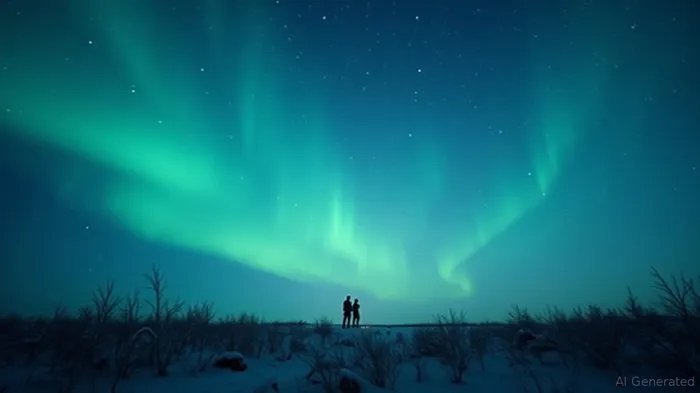
The National Oceanic and Atmospheric Administration’s Space Weather Prediction Center (NOAA SWPC) forecasts that the northern lights, or Aurora Borealis, may present a stunning natural show across 16 states in the northern regions of the United States between August 18 to 20. This celestial light display is anticipated due to geomagnetic activity from a large coronal hole currently facing Earth. In anticipation, NOAA has issued alerts about the likelihood of a minor geomagnetic storm, measured at a G1 value on its scale, indicating an exciting opportunity for residents and enthusiasts to catch a glimpse of the spectral light show.
The aurora display will be prominent, especially given that we're at the peak of the solar cycle, which enhances visibility further south than usual. This solar maximum phase of solar cycle 25 is expected to extend into 2026. As solar activity influences the Earth's magnetic field, sparks of geomagnetic storms may lead to auroral sightings as far south as Vermont and New Hampshire.
NOAA's aurora forecast predicts favorable conditions for aurora visibility across states such as Alaska, Washington, Idaho, Montana, Wyoming, North Dakota, South Dakota, Minnesota, Wisconsin, Iowa, Michigan, New York, Vermont, New Hampshire, Maine, and potentially northern Illinois. Analysts predict that the Kp index, a measure of geomagnetic activity, could reach up to 5 during this period, offering a brighter aurora display and extending the viewing region further from the poles.
The visibility of auroras depends heavily on clear night skies and minimal light pollution. NOAA advises those interested in observing the northern lights to seek dark areas away from city illuminations. The optimal viewing time is suggested to be between 10 p.m. and 2 a.m. local time, when auroral activity tends to be more vivid. Dedicated watchers may benefit from checking NOAA’s 30-minute forecast updates or using apps designed to predict aurora sightings.
The auroras are created when charged particles from the sun, known as solar wind, interact with Earth’s magnetic field and atmosphere, producing brilliant displays of light. When these solar particles collide with gases such as oxygen and nitrogen in the atmosphere, they release photons, resulting in colorful spectra that typically appear green but can also manifest in reds or purples.
It’s crucial to note that while NOAA has provided forecasts and guidelines, the unpredictability of space weather means that the appearance and intensity of auroras can vary, sometimes shifting due to additional factors like a coronal mass ejection potentially grazing Earth. This erratic nature of geomagnetic activity adds an element of chance to the viewing experience, underscoring the necessity for enthusiasm and patience.
Observers interested in capturing these spectacles might consider using digital cameras with night mode settings or wide-angle lenses, avoiding the use of flash to preserve the natural light. Even smartphones can yield commendable results, especially if equipped with low light features focusing on capturing natural illumination without artificial enhancements.
The predicted auroral activity coincides with optimal viewing conditions due to the moon’s early rising schedule, which ensures darker skies conducive to spotting the aurora. This fortunate alignment makes the upcoming nights a prime opportunity for enthusiasts and astronomers alike to witness one of nature’s mesmerizing atmospheric phenomena.
NOAA's forecasts also indicate that periods of geomagnetic storm conditions may extend beyond just a single night, potentially allowing for further sightings in the coming days. As these natural occurrences depend greatly on Earth’s space weather interactions, residents of the forecasted regions are encouraged to keep updated with NOAA’s ongoing advisories to maximize their chances of observing the northern lights.
Overall, the coming display of the aurora promises to be a captivating spectacle, offering a reminder of the dynamic relationship between solar activity and Earth’s magnetic environment. For observers, these forecasts illuminate a path to the rare experience of watching the tumultuous yet beautiful aurora borealis dance across the night sky.

Stay ahead of the market.
Get curated U.S. market news, insights and key dates delivered to your inbox.


AInvest
PRO
AInvest
PRO



Comments
No comments yet