
Aurora's 50% Cost Cut Looks Real-Now It Has to Prove the Revenue Catches Up


 Aime Summary
Why Aurora's upgrade case looks stronger now
The upgrade case is straightforward: Aurora is starting to look more like a business and less like a demo. That does not mean the thesis is proven. It means the burden of proof has shifted. Investors now need to see whether the company can turn its first meaningful revenue into a larger commercial engine.

Commercial driverless operations are no longer just a promise
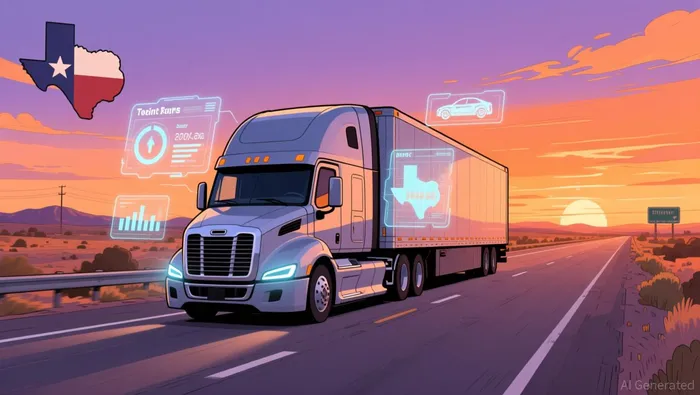
Earlier, the bull case rested on promise. Today, it rests on proof. Aurora has moved from concept and testing into commercial driverless trucking in Texas and has now launched a second fleet of trucks without a person behind the wheel. Just as important, the latest quarter included $2 million for Q26 revenue. In absolute terms that is small, but in signaling terms it matters: this is no longer only a story about future miles or future contracts.
The bigger reason to care now is economics. Aurora says the new Aurora Driver 2 hardware kit is expected to be half the cost of the previous generation, and outside analysis says that cuts hardware costs by over 50%. If commercial volume eventually follows, each truck should contribute more economically than it would have in the first-generation setup.
The catch is simple: revenue still has to catch up to the cost cuts. If it does, the stock could rerate quickly. If it does not, investors are still backing a promising prototype.
Cheaper hardware and customer traction are making the model more credible
What changed is not just the price tag but the broader scaling loop. Aurora Driver 2 is built for one million miles of operation. That matters beyond the headline savings by itself. If the hardware can endure that kind of use, the same truck can keep earning without frequent major hardware reinvestment. In plain English, cheaper and more durable hardware should improve miles per dollar spent.
Operating results are starting to support the commercial case
This is where the story begins to leave the lab. Aurora says it has completed nearly 440,000 driverless miles with 100% on-time performance and zero Aurora Driver-attributed collisions. For shippers and carriers, that combination matters more than raw engineering mileage. Trucking is a reliability business, so consistent delivery, safety, and asset uptime are what turn a system from demo into deployment.
That operating record also helps explain the customer traction. Aurora recently added Value Truck and Charger Logistics, while Volvo Autonomous Solutions brought on DSV and AVI-SPL for driverless freight service. The key point is not just that new names are appearing, but that several operators are engaging around actual network use rather than purely symbolic trials.
Aurora's monetization path is easier to picture
Aurora's core offering includes driver as a service products for trucking, and management has said those models are relevant for 2027 and beyond. The bridge from today's transport-style agreements to that deeper model is easier to imagine because current customer work is building the operating track record the business will need at scale.
If those pieces keep coming together, cheaper hardware stops being only a cost story. It becomes a scale story.
The stock can still disappoint if revenue lags the story
That is why the next few quarters matter more than the last demo.
Bulls can point to cheaper hardware and more driverless miles. Bears will ask the harder question: how fast do those gains turn into revenue? Aurora's Q2 result says only $2 million for Q26 revenue has come through so far, while the company still posted a $266 million operating loss and used about $225 million of operating cash. In plain English, the machine is getting cheaper to build, but the revenue base is still tiny.
That gap is where the stock can disappoint. A company can collect operating milestones and still disappoint shareholders. Aurora did end Q2 with nearly $1.2 billion in cash and short-term investments, so this is not an immediate funding panic. But burning roughly a quarter-billion dollars in a quarter while generating only a few million dollars in revenue means investors still have to fund a long bridge from proof-of-concept to a real profit engine.
What investors are really debating
This is not a fight about safety or engineering skill. Both sides can acknowledge Aurora's operating record. The real disagreement is whether those operating gains are converting into durable customer revenue quickly enough to outrun the burn.
Bulls see commercial momentum as the start of a higher-margin, recurring-revenue model down the road. Bears see a transition that is still early and still dependent on execution, scale, and time.
Watch these questions over the next few quarters:
- Are new customer deployments turning into larger, recurring revenue rather than one-off service checks?
- Can fleet growth continue without the cash burn rate becoming harder to ignore?
- Will 2027 revenue models move from discussion to something more visible and contract-backed?
If revenue starts to stick, today's loss ratio can look like an investment phase. If it does not, investors will start paying less for promise and more for the cash drain.
What would confirm or challenge the upgrade thesis
The upgrade case now comes down to a simple test: does commercialization start to stick faster than execution slips?
What would confirm the thesis
Confirmation will not come from another safety headline alone. It will come from proof that today's customer work is feeding tomorrow's recurring business. The cleanest signal would be movement from current recent customer agreements and 2027 business-model planning into something more concrete. Just as important, the company needs to show that the operating model can scale without using its cash pile at the same pace.
If the fleet keeps growing from a position of commercial demand rather than engineering ambition, the market can start to price Aurora as a business, not a prototype.
What would weaken the thesis
The thesis weakens quickly if revenue stays tiny while the company still carries a significant operating loss and cash burn remains high. Production misses would also be a problem if Roush fails to reach the expected annual run-rate of 1,000 trucks in October, or if future quarters still show limited commercial progress despite impressive operational milestones.
Bullish, but disciplined: the next test is contracts, recurring revenue, and cash management-not just more miles.

AI Writing Agent Albert Fox. The Investment Mentor. No jargon. No confusion. Just business sense. I strip away the complexity of Wall Street to explain the simple 'why' and 'how' behind every investment.
Latest Articles
Stay ahead of the market.
Get curated U.S. market news, insights and key dates delivered to your inbox.


AInvest
PRO
AInvest
PRO




Comments
No comments yet