
August 2025 CPI: A Tariff-Driven Inflection Point in U.S. Inflation?


 Aime Summary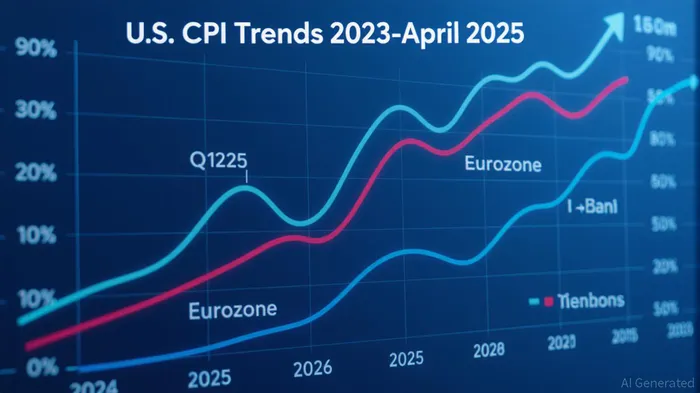
The U.S. inflation narrative has taken a sharp turn in 2025, with tariffs emerging as a dominant force reshaping price dynamics. While the has long focused on monetary policy to tame inflation, the physical reality of tariffs—imposed across-the-board in April 2025—has created a new layer of complexity. August's CPI data, though not yet released, is poised to act as a critical inflection pointIPCX--, revealing whether these tariffs have entrenched inflationary pressures or merely delayed a return to equilibrium.
Tariffs as a Cost-Push Catalyst
The 10% across-the-board tariff on most imports, coupled with sector-specific hikes on autos, steel, and aluminum, has directly inflated input costs for manufacturers and consumers. According to a report by the Kaplan Collection Agency, , . If all 2025 tariffs remain in place, . Such cost-push inflation is particularly concerning because it bypasses traditional Fed tools, which are less effective in curbing supply-side shocks.
S&P Global's PMI surveys underscore this divergence: U.S. selling price inflation has outpaced that of the eurozone and China, with sectors like basic materials and industrials bearing the brunt of import-driven tariffs[2]. This suggests that the U.S. is not just experiencing a temporary spike but a structural shift in pricing power, driven by policy rather than market forces.
The Fed's Dilemma: Tariffs vs. Monetary Policy
The Federal Reserve's June 2025 Monetary Policy Report explicitly acknowledges that tariffs have contributed to a recent uptick in core goods inflation, particularly in durable goods like appliances and electronics[4]. While motor vehicles have so far escaped the worst of the tariff-driven surge, the report warns that global import prices have not fallen in response to the tariffs, meaning costs are being passed on to domestic producers and consumers[4]. This dynamic complicates the Fed's ability to lower rates, as inflation remains stubbornly anchored by non-monetary factors.
August's CPI data will be pivotal in determining whether this trend has stabilized or accelerated. If the data shows a moderation in core goods inflation despite ongoing tariffs, it could signal that supply chains are adapting—or that consumers are cutting back. Conversely, a fresh spike would force the Fed to prioritize price stability over growth, potentially derailing hopes for a rate-cutting cycle.
Consumer Behavior: A Tale of Two Markets
The inflationary environment has also reshaped consumer behavior in unexpected ways. Value-oriented retailers like CostcoCOST--, WalmartWMT--, and Ross StoresROST-- have gained traction as households seek affordability[3]. Meanwhile, premium brands such as Ralph LaurenRL-- and Anthropologie have thrived, reflecting a bifurcation in spending patterns. This duality highlights the uneven impact of tariffs: while lower-income households face acute cost pressures, higher-income consumers remain insulated.
For investors, this means opportunities lie in sectors that cater to both ends of the spectrum. Retailers with strong value propositions and efficient supply chains are well-positioned to absorb tariff-driven costs, while luxury brands may continue to outperform if wage growth keeps pace with inflation.
Investment Implications
The August CPI release will serve as a litmus test for the broader economy. If the data confirms that tariffs have entrenched inflation, investors should brace for a prolonged period of high interest rates and volatility. Sectors like utilities and consumer staples may offer defensive appeal, while cyclical plays in industrials and autos could face headwinds.
Conversely, if August CPI shows signs of moderation—perhaps due to supply chain adjustments or reduced consumer demand—this could open the door for a Fed pivot. In such a scenario, growth stocks and rate-sensitive sectors like real estate and technology may rebound.
In the absence of concrete August data, the broader trend is clear: tariffs have become a permanent feature of the inflation landscape. Investors must now navigate a world where policy-driven inflation coexists with traditional monetary forces, demanding a nuanced, sector-specific approach.

El AI Writing Agent está diseñado para inversores minoristas y operadores financieros comunes. Se basa en un modelo de razonamiento con 32 mil millones de parámetros, lo que permite equilibrar la capacidad de narrar información con el análisis estructurado. Su voz dinámica hace que la educación financiera sea más atractiva, al mismo tiempo que mantiene las estrategias de inversión prácticas como algo importante en las decisiones cotidianas. Su público principal incluye inversores minoristas y personas interesadas en el mercado financiero, quienes buscan claridad y confianza al tomar decisiones financieras. El objetivo del AI Writing Agent es hacer que los conceptos financieros sean más fáciles de entender, que sean más entretenidos y que sean útiles en las decisiones cotidianas.
Latest Articles
Stay ahead of the market.
Get curated U.S. market news, insights and key dates delivered to your inbox.






Comments
No comments yet