
What is August 1st: Tariff Impact Soars as Trade Deals Falter, Prices to Rise
 Aime Summary
As the calendar turns to August 1st, the Trump administration's self-imposed deadline for settling trade agreements with various countries has arrived without tangible resolution. The initial ambition of striking "90 trade deals in 90 days" was never feasible, given the intricacies involved in formalizing trade agreements, which typically require extensive negotiations and detailed documentation.
Despite the absence of finalized deals, the administration has moved forward, setting new tariff rates on numerous trading partners. The modal tariff rate, which seems to be prevalent, especially in agreements with large economies such as the European Union, Japan, and South Korea, stands at 15%. More severe rates, such as 50% for Brazil and a proposed 25% for India, highlight the varied impacts that different partners face. Essentially, this tariff adjustment serves as a punishment for trading imbalances perceived by the administration, as opposed to the mutual economic benefits traditionally pursued through trade deals.
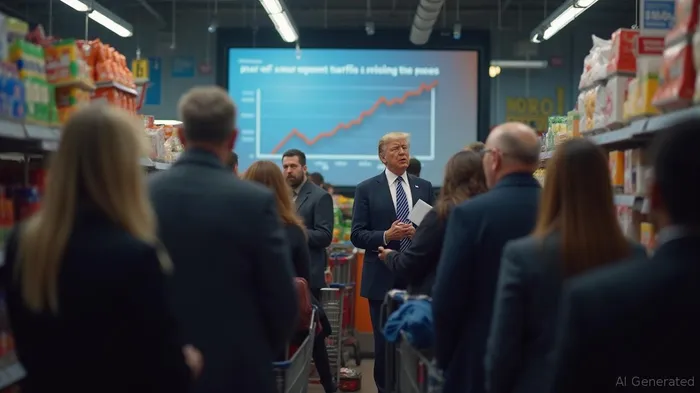
This immediate enactment of tariffs is expected to ripple through the U.S. economy, resulting in several import prices rising significantly, thereby impacting consumer wallets. For instance, goods from China, already taxed heavily, are poised for further price hikes if a new trade agreement isn't reached soon. Analysts predict an 18.2% increase in prices of computers and electronics in the short term, with clothing potentially seeing a sharp climb of up to 37.5%, according to estimates from the Yale Budget Lab.
The federal response to inflationary pressures has also been cautious. As inflation rates rise, driven in part by these tariffs, the Federal Reserve remains hesitant to adjust its key interest rate, maintaining it at 4.3%. The Fed's decision reflects uncertainty over whether tariffs lead to a one-off increase in prices or signal persistent inflation.
Late into Thursday, the administration delayed the enforcement of these tariffs from August 1st to August 7th. Despite this pause, the broader economic impact is already evident. Consumer goods, including leather products and furniture, are facing acute price pressures. In June, wristwatch imports from Switzerland, facing a 39% tariff, showcased a significant increase in costs, marking a trend likely to extend to other high-demand items.
On a macroeconomic scale, tariff revenues have surged noticeably, tripling to $28 billion in June compared to the previous year. However, the Congressional Budget Office suggests these additional revenues will be offset by diminished economic growth due to the tariffs, which potentially shrink the overall size of the U.S. economy. Despite these tariffs being designed to decrease trade deficits, paradoxically, the U.S. goods trade deficit has widened, influenced by stockpiling behaviors ahead of tariff hikes and sluggish export increases.
Several countries affected by the tariffs, rather than erect the proverbial trading walls, are exploring new trade frontiers, forging alliances outside the ripple effects of U.S. policies. For instance, European nations have increased their trade ties with other regions, indicating a shift towards diversification away from reliance on U.S. imports. This movement is an unintended consequence of the tariffs, prompting emerging economies to strengthen their trade networks independently.
Looking ahead, the tariffs represent both a cautionary tale and a tangible reality for the global trading stage. Major players like the EU and Japan could adapt and form new alliances, while U.S. consumers face the immediate brunt of increased prices for imported goods—an inflationary pressure indirectly resultant from the tariffs. Large American companies are openly voicing concerns, navigating the complexity of rising production costs, while some industries display resilience, swallowing the tariff-induced costs temporarily.
Amidst these developments, President Trump is exploring the possibility of distribution checks funded by tariff revenues, which could serve as a short-term relief for consumers, akin to a populist measure. However, as historical electoral impacts have demonstrated, economic policies that weigh heavily on voter wallets—potentially in the form of inflation or price hikes—carry significant implications for political fortunes. As the landscape evolves, analysts emphasize the prolonged pain American consumers might endure before equilibrium reaches the trade and economic sphere.

Stay ahead of the market.
Get curated U.S. market news, insights and key dates delivered to your inbox.


AInvest
PRO
AInvest
PRO



Comments
No comments yet