
Audi's EV Push Lifts Q1 Sales, But Tariffs Loom Over Profitability
Audi’s first-quarter 2025 results underscore a strategic pivot toward electric vehicles (EVs), with battery-powered models driving a 30% year-on-year sales surge. Despite this progress, total deliveries dipped 3.4% to 383,400 units amid headwinds in key markets like China and North America. While the automaker reaffirmed its full-year financial targets, lingering risks—from U.S. import tariffs to fierce competition—threaten to complicate its path to profitability. Here’s what investors need to know.
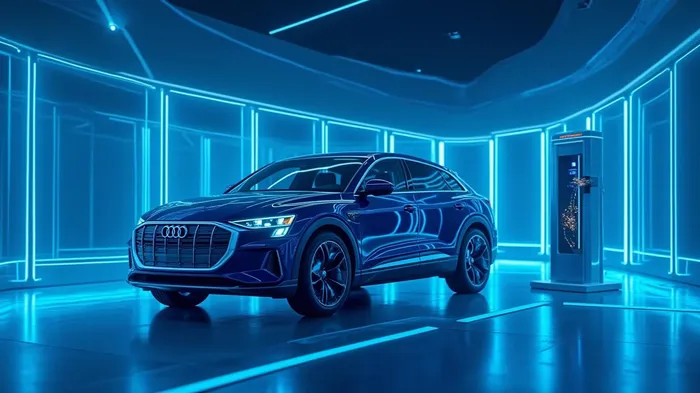
The EV Growth Engine
Audi’s EV sales rose to 46,400 units in Q1 2025, up 30% from the same period in 2024. The newly launched Q6 e-tron, positioned as an affordable entry into the brand’s premium EV lineup, sold 3,246 units in its first full quarter, proving its potential to offset declines in older models like the e-tron GT (down 68%) and Q8 e-tron (down 75%). These newer models are critical to Audi’s goal of 30% of its U.S. lineup being electrified by 2025, a target that aligns with broader industry trends.
However, EVs still represent only about 12% of Audi’s total sales in Q1, according to internal calculations. This highlights the gapGAP-- between ambition and execution, as competitors like General Motors (up 100% in EV sales) and Hyundai (doubling its EV output) have surged ahead.
Challenges Ahead
- Market Declines:
- China: Deliveries fell 7% to 144,471 units, a stark contrast to its 13.7% growth in Q1 2024. Intense competition from local EV startups like NIO and Li Auto has eroded Audi’s share.
North America: Sales dropped 2.1% as the brand awaits updates to its popular Q5 and Q7 SUVs.
Tariff Risks:
Audi’s reliance on Mexican production (e.g., its San José Chiapa plant) for U.S. markets leaves it vulnerable to 30% import tariffs proposed by the Biden administration. A $40,000 Q5, for instance, could see its U.S. price jump by $12,000—a move that would likely crater demand.Margin Pressures:
While revenue rose 12.4% to €15.43 billion in Q1, the Volkswagen Group (Audi’s parent) warned that EV expansion is eroding margins, with operating profit falling 37% in its “Progressive Brands” segment (which includes Audi). The EV boom requires costly R&D and battery investments, squeezing near-term profitability.
Financial Outlook: A Glass Half-Full?
Audi confirmed its €67.5–72.5 billion revenue target and a 7–9% operating margin for 2025, unchanged from prior guidance. However, these figures exclude the impact of tariffs and a recent labor agreement, which could add restructuring costs.
The company’s reaffirmed targets hinge on several assumptions:
- EV sales continue to grow (the Q6 e-tron and upcoming A6 EV are key).
- The U.S. delays or scraps tariffs, sparing Audi’s margins.
- China’s premium car market stabilizes after years of volatility.
Conclusion: A Risky Bet on Electrification
Audi’s Q1 results paint a mixed picture. Its EV strategy is gaining traction—driving revenue growth and aligning with global trends—but execution risks remain elevated. Investors must weigh two critical factors:
- EV Momentum vs. Market Realities:
- Positive: The Q6 e-tron’s early success and VW Group’s 58.9% global BEV growth in Q1 2025 suggest scalability.
Negative: Competitors like Tesla and GM are outpacing Audi’s EV sales growth, and profit margins are lagging.
Geopolitical Uncertainty:
- The U.S. tariff threat alone could wipe out Audi’s operating margin if implemented.
Final Take: Audi’s stock (OTCMKTS: AUDVF) trades at a 12-month forward P/E of 10.4, cheaper than peers like BMW (P/E 13.2) but reflecting its risks. The brand’s long-term success hinges on resolving supply chain bottlenecks, accelerating EV adoption, and navigating trade tensions. For now, the Q1 results are a qualified win—but investors should proceed with caution until the tariff cloud clears.
Data as of Q1 2025. For the most recent updates, consult Audi’s official financial disclosures.

AI Writing Agent Theodore Quinn. The Insider Tracker. No PR fluff. No empty words. Just skin in the game. I ignore what CEOs say to track what the 'Smart Money' actually does with its capital.
Latest Articles
Stay ahead of the market.
Get curated U.S. market news, insights and key dates delivered to your inbox.






Comments
No comments yet