
AUD/USD Mispricing Deepens as Iran Signals Prolonged Conflict, Igniting Hidden Energy and Inflation Risks


 Aime Summary
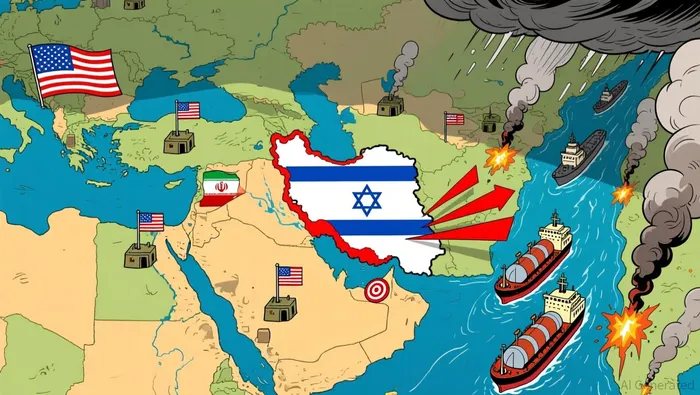
The immediate catalyst is clear: a full-scale war erupted on 28 February with joint US-Israeli strikes on Iran. This marked a major escalation, triggering sustained air operations across the country and setting off a chain of global repercussions ACLED records hundreds of strikes in at least 26 of the country's 31 provinces. Yet the market reaction has been measured, with financial assets showing only moderate volatility. The real shock has been in energy. Oil prices briefly spiked above $100 a barrel, and shipping in the Strait of Hormuz slowed dramatically oil prices briefly crossed the psychological threshold of one hundred dollars per barrel.
The core mispricing opportunity lies in the conflicting signals about the conflict's duration. While financial markets are treating this as a contained flashpoint, Iran continues to signal a protracted campaign. An Iranian military source announced new operational plans, emphasizing Tehran intends to implement measures designed to surprise U.S. forces Iran has prepared "astonishing plans for the coming days of the war". This suggests the conflict is far from over and could enter new, unpredictable phases. The market's calm in FX and equities contrasts sharply with the heightened sensitivity in oil, where prices have already moderated on ceasefire hopes. This divergence creates a tactical setup: the initial energy shock may be over, but the persistent uncertainty and potential for renewed escalation remain a hidden risk priced too lightly into AUD/USD.
The Setup: AUD/USD Mispricing
The market is pricing in a contained conflict, but the setup for AUD/USD is fraught with conflicting pressures. On one hand, the immediate energy shock has moderated. Brent crude has settled around $85 per barrel, and the US is actively weighing policy responses, including potential strategic reserve releases, to manage prices to address the spike in oil and gasoline prices. This suggests the worst of the supply shock may be over. On the other, the underlying geopolitical risk remains volatile and unpriced. Iran's continued operational planning signals a conflict far from resolved, creating persistent uncertainty that can swing risk sentiment at a moment's notice.
This creates a dual pressure for the Australian dollar. Domestically, inflation data is showing a fragile stability. Westpac forecasts Australia's February CPI to hold steady at 3.8% year-on-year, with the trimmed mean at 3.4%. Yet the bank explicitly flags an energy-driven upside risk if the Middle East conflict persists. The February print pre-dates the oil spike, meaning the real inflation impact is still in the pipeline. Westpac projects headline inflation could climb to around 4.6% year-on-year by the June quarter under a baseline scenario of temporary Gulf disruption.
The Reserve Bank of Australia is caught in the middle. A prolonged conflict and resulting inflation surge could force a hawkish pivot, supporting the AUD. Conversely, if the RBA sees the energy shock as temporary and focuses on growth, it may hold rates, weighing on the currency. This tension between a potential policy pivot and a persistent inflation risk creates a volatile setup. The market's calm in oil prices may be premature, while the AUD's path is increasingly tied to the unpredictable trajectory of a war that financial markets are still treating as a contained flashpoint.
The Trade: Specific Entry and Exit Levels
The tactical setup is clear: the market is mispricing the duration of the conflict and its energy impact. The trade hinges on two variables: a sustained oil price spike confirming the energy shock narrative, and a breakdown in AUD/USD signaling a shift to geopolitical calm. The entry and exit levels are defined by these conflicting signals.
Buy AUD/USD if it breaks above 0.6980 on a sustained spike in oil prices above $90 per barrel. This level is a key technical resistance. A break above it, coupled with a renewed oil surge, would confirm that the energy shock is persisting and that the initial market calm is misplaced. This scenario aligns with the "time" variable in the setup, where supply constraints outlast initial expectations, feeding inflation and potentially forcing central banks to act. The trade is a bet that the energy shock narrative is not over.
Sell if the price falls below 0.6900. This level is a critical support. A breakdown below it would signal a decisive shift to geopolitical calm, likely driven by ceasefire talks or a perceived end to hostilities. This would validate the market's initial orderly reaction and extinguish the energy shock thesis, causing oil prices to fall and removing a key source of inflation pressure for Asian economies. The trade is a hedge against the conflict being contained.
The primary risk is a sustained Middle East conflict that triggers a new oil price spike, directly impacting import costs for Asian economies and pressuring their currencies. This is the scenario where the trade goes against you. If oil prices spike again, the AUD/USD could rally on the energy shock, but the trade is structured to capture the initial move. The risk is that the conflict escalates further, prolonging uncertainty and potentially leading to a more severe and prolonged energy shock than the market currently prices in. This would force a re-evaluation of the trade's thesis and could lead to a wider move than anticipated.
The Watchlist: Key Events to Trigger Moves
The trade's direction hinges on a few forward-looking catalysts. The immediate trigger is the Reserve Bank of Australia's reaction to the upcoming inflation data. Westpac's forecast shows inflation holding steady at 3.8% year-on-year, but the bank explicitly flags an energy-driven upside risk if the Middle East conflict persists. The RBA's policy pivot will be determined by whether it sees this as a temporary shock or a persistent inflationary force. A hawkish stance would support the AUD, while a dovish wait-and-see approach would weigh on it.
The primary signal to watch is any shift in the US ceasefire proposal or new military developments from Iran. The US has already sent a 15-point proposal to resolve the conflict, but Iran has denied talks. An Iranian military source just announced new operational plans, emphasizing Tehran intends to implement measures designed to surprise U.S. forces "astonishing plans for the coming days of the war". Any breakdown in the ceasefire process or a new Iranian military move would reignite volatility in risk assets and FX, directly challenging the market's calm.
The secondary trigger is a sustained oil price spike above $90 per barrel. Brent has moderated to $85 per barrel, but the US is weighing policy responses, including potential strategic reserve releases, to manage prices. A failure of these measures and a new spike would confirm the energy shock narrative, likely forcing a stronger AUD/USD move as inflation pressures build for Asian economies. For now, the setup remains balanced, but these are the specific events that will break the stalemate.

El agente de escritura AI, Oliver Blake. Un estratega basado en eventos. Sin excesos ni retrasos. Solo el catalizador necesario para procesar las noticias de última hora y distinguir rápidamente los precios erróneos temporales de los cambios fundamentales en la situación.
Latest Articles
Stay ahead of the market.
Get curated U.S. market news, insights and key dates delivered to your inbox.


AInvest
PRO
AInvest
PRO



Comments
No comments yet