
AUD Shorts Cool, But the 0.7000 Barrier Stalls Recovery
 Aime Summary
- Australian Dollar speculative net positions flipped to a net short of -33.2K, marking a reversal from the prior -40K short position.
- The shift indicates a cooling of bearish sentiment among speculators, though the currency remains trapped in a tight range near 0.7000.
- Domestically, resilient PMIs and sticky inflation support the Reserve Bank of Australia's cautious stance, providing a fundamental floor.
- External headwinds, primarily persistent U.S. Dollar strength, continue to limit upside momentum despite the improved positioning.
The latest Commitment of Traders (CFTC) data reveals a subtle but distinct shift in market sentiment regarding the Australian Dollar (AUD). As of the latest reporting period, speculative net positions for the AUD turned negative, settling at -33.2K net short. This represents a notable change from the previous reading of -40K, signaling that while the broader sentiment remains bearish, the intensity of short selling has eased. For macro investors, this data point is critical as it highlights the delicate balance between domestic economic resilience and the overpowering strength of the U.S. Dollar.
What Does The CFTC Data Signal For AUD Sentiment?
The movement in speculative positions provides a real-time pulse on how leveraged investors are positioning themselves ahead of upcoming macroeconomic catalysts. The transition from a -40K net short to -33.2K suggests that traders are becoming less aggressive in their bets against the Australian Dollar. This cooling of shorts is often interpreted as a sign of caution or profit-taking among bearish speculators, rather than a full-blown reversal to bullishness.
However, the fact that positions remain net negative underscores the prevailing headwind facing the AUD: the persistent strength of the U.S. Dollar. While the reduction in short interest removes some immediate selling pressure, it does not yet indicate a structural shift in trend. Market analysts note that the rate of short accumulation has cooled, which could eventually lead to a short squeeze if the currency manages to break through key technical resistance levels. The current positioning suggests that while the worst of the bearish sentiment may have passed, the AUD still lacks the internal momentum to break decisively higher without external support.
Why Are Investors Watching The 0.7000 Barrier?
The technical landscape for the AUD/USD pair is defined by a tight range between the 200-day Simple Moving Average (SMA) near 0.6900 and the psychological resistance at 0.7000. This convergence of technical levels creates a high-stakes environment where the CFTC positioning data gains added significance. A confirmed breakout above 0.7000 would likely trigger a short squeeze, given that speculative net short positions, while reduced, remain heavy.
Conversely, another rejection at this barrier could push the pair back toward the 200-day SMA at 0.6900. The low Average Directional Index (ADX) currently suggests weak trend strength, meaning the pair is in a state of equilibrium. Investors are advised to wait for a clear break above 0.7000 or a pullback holding the 200-day SMA for a cleaner risk-reward setup. The CFTC data serves as a backdrop to these technical levels, indicating that the market is currently digesting mixed signals rather than committing to a new directional trend.
How Do Domestic Fundamentals Support The Currency?
Despite the technical stagnation and negative speculative positioning, domestic fundamentals provide a resilient floor for the Australian Dollar. Australia’s economy shows signs of strength, with both Manufacturing and Services PMIs comfortably in expansion territory at 52.0 and 53.6, respectively. Unemployment has also held steady at 4.4%, indicating a labor market that remains robust despite global uncertainties.
Inflation remains a key driver for policy expectations. Underlying inflation measures have risen to 3.6%, keeping the Reserve Bank of Australia (RBA) cautious. While the RBA held rates at 4.35% in its most recent decision, the possibility of further tightening exists if inflation proves persistent. This potential for a hawkish policy reaction provides upside support for the AUD, contrasting with the bearish sentiment reflected in the CFTC data. The divergence between strong domestic data and negative speculative positioning highlights the complexity of the current macro environment, where external currency factors often outweigh domestic growth signals.
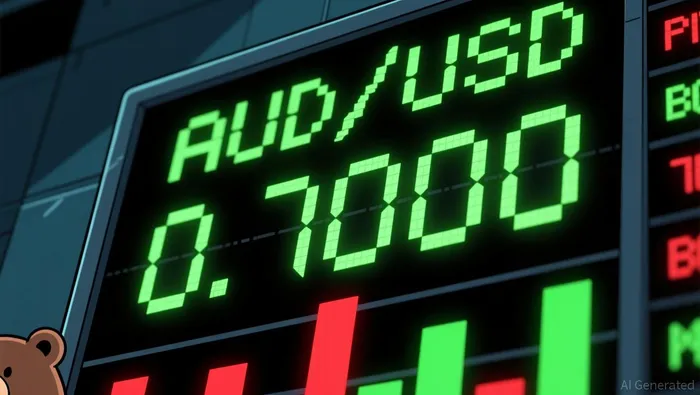
In conclusion, the shift in AUD speculative net positions to -33.2K reflects a nuanced market dynamic. While the cooling of shorts suggests a reduction in bearish aggression, the currency remains constrained by U.S. Dollar strength and technical resistance. Investors should monitor the interplay between upcoming inflation data, RBA commentary, and the AUD's ability to clear the 0.7000 barrier for clearer directional cues.

Stay ahead of the market.
Get curated U.S. market news, insights and key dates delivered to your inbox.


AInvest
PRO
AInvest
PRO




Comments
No comments yet