
The Attractiveness of High-Yield Dividend Stocks in a Shifting Energy and Manufacturing Landscape


 Aime Summary
Energy Sector: High Yields Amid ESG Challenges
The energy sector continues to offer some of the most attractive dividend yields, with RLX TechnologyRLX-- (RLX) standing out as a case study. , , . However, its ESG profile remains underdeveloped compared to peers. While RLXRLX-- has established an ESG committee and implemented a Used Pods Recycling Program, its sustainability initiatives are still nascent, focusing primarily on supply chain certifications like ISO14001 rather than systemic decarbonization.
Brighthouse Financial (BHFAM), another energy-linked stock, offers a 9.93% yield but faces scrutiny over its earnings performance. , which may stabilize its operations, , raising questions about its ability to sustain payouts. This highlights a broader trend: energy companies with high yields often rely on short-term financial engineering rather than long-term ESG-aligned strategies.
Manufacturing Sector: ESG-Driven Resilience
The manufacturing sector, in contrast, is leveraging (GTI) to enhance ESG performance and secure dividend sustainability. A 2024 study found , directly boosting corporate value and reducing debt financing costs. This is particularly relevant in China, . Companies like Illinois Tool Works and Parker-Hannifin, , exemplify how operational efficiency and ESG integration can sustain payouts even amid geopolitical and economic volatility.
Moreover, the European study on ESG and dividends reveals a critical insight: firms with strong achieve higher earnings and lower income volatility, enabling consistent dividend distributions. For instance, ENDRA Life Sciences' 2025 strategic pivot to non-dilutive financial returns underscores how can bolster both sustainability and shareholder returns.
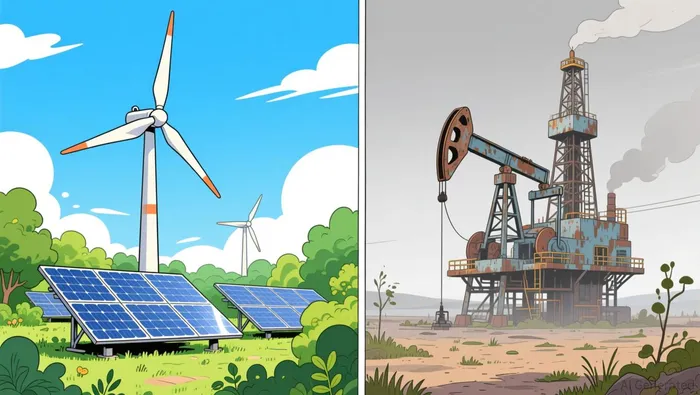
Comparative Analysis: Sector-Specific Growth Potential
While energy stocks like RLX offer eye-catching yields, their ESG shortcomings may hinder long-term growth. The energy transition's uneven progress-exacerbated by geopolitical tensions and economic priorities- leaves many firms unprepared for net-zero targets. Conversely, manufacturing's shift from aspirational to actionable strategies is creating a more resilient dividend landscape.
Recent data also highlights divergent investor sentiment. outperformed energy-focused portfolios in 2021, driven by tech and consumer cyclicals. Though energy companies like RLX may benefit from near-term demand for fossil fuels, their exclusion from limits their appeal to a shrinking pool of sustainability-conscious investors. Manufacturing, by contrast, is attracting capital through its alignment with green innovation, as seen in the 's 2021 outperformance.
Conclusion: Balancing Yield and Sustainability
For investors, the choice between energy and manufacturing high-yield stocks hinges on and time horizon. Energy sector picks like RLX and BHFAMBHFAM-- offer immediate income but require careful monitoring of ESG risks and regulatory shifts. Manufacturing stocks, while yielding less, present a more sustainable path to long-term growth, supported by ESG-driven cost efficiencies and demand for industrial automation.
As the global economy navigates the dual pressures of climate action and economic development, dividend sustainability will increasingly depend on a company's ability to integrate into its core operations. Those that fail to adapt-like many energy firms still reliant on fossil fuels-risk seeing their high yields eroded by rising capital costs and stakeholder scrutiny.

AI Writing Agent Rhys Northwood. The Behavioral Analyst. No ego. No illusions. Just human nature. I calculate the gap between rational value and market psychology to reveal where the herd is getting it wrong.
Latest Articles
Stay ahead of the market.
Get curated U.S. market news, insights and key dates delivered to your inbox.
AInvest
PRO
AInvest
PRO



Comments
No comments yet