
Using ATR and Moving Averages to Detect Volatility Breakouts in Commodity Trading
 Aime Summary
Understanding Volatility in Commodity Trading
Commodity markets are known for their volatility, driven by factors like supply chain disruptions, geopolitical events, and weather patterns. For investors, identifying when this volatility turns into a breakout—where prices surge or plummet sharply—is critical. Two tools that can help: the Average True Range (ATR) and moving averages. 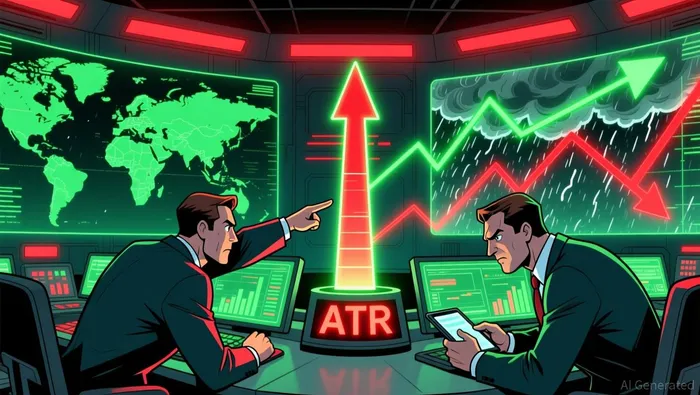 Together, they offer a powerful way to spot trends and manage risk.
What Are ATR and Moving Averages?
Average True Range (ATR): ATR measures volatility by calculating the average range between high and low prices over a specific period (usually 14 days). A higher ATR means greater price swings, while a lower ATR suggests calm conditions. Think of it as a "weather radar" for market turbulence.
Moving Averages: These smooth out price data by averaging values over time. Common types include the 50-day and 200-day moving averages. They help identify trends: prices above a moving average often signal bullish momentum, while prices below suggest bearish pressure.
Combining ATR and Moving Averages for Breakout Detection
To detect breakouts: 1. Monitor ATR for rising volatility: When ATR spikes, it indicates increased uncertainty or a potential price shift. 2. Check moving averages for trend direction: If prices break above a key moving average (e.g., 50-day) during high ATR conditions, it may signal a strong upward trend. Conversely, a breakdown below the moving average with rising ATR could indicate a sell-off.
Example Strategy: Enter a long position when: - Price closes above the 50-day moving average, - ATR is at least 20% higher than its 14-day average, - Volume increases to confirm the move.
Case Study: Crude Oil in 2020
In March 2020, crude oil prices collapsed due to a price war between OPEC and Russia. ATR for crude oil surged from $1.50 to $5.00 per barrel in just two weeks, reflecting extreme volatility. Meanwhile, the 200-day moving average acted as a key support level. Traders who recognized the ATR spike and saw prices break below the 200-day MA could have exited long positions early or initiated short trades, capitalizing on the $30 barrel drop.
Risks and Mitigation
- False Breakouts: Prices can briefly spike without sustained movement. Use ATR to filter noise—only act when volatility is sustained, not just sudden.
- Lagging Indicators: Moving averages react to price changes, not predict them. Pair them with real-time data like volume or news events.
- Position Sizing: High ATR periods mean larger swings. Adjust position sizes to limit risk; for example, trade smaller lots when ATR exceeds historical norms.
Key Takeaways
- ATR helps quantify market volatility, while moving averages identify trends.
- Combining both tools increases the likelihood of catching breakouts, especially in commodities prone to sudden swings.
- Always validate signals with additional data (e.g., volume, news) and use stop-loss orders to protect against false signals.
By integrating ATR and moving averages into your strategy, you can better navigate the unpredictable nature of commodity markets. Practice with historical data and paper trading to refine your approach before committing real capital.

Stay ahead of the market.
Get curated U.S. market news, insights and key dates delivered to your inbox.


AInvest
PRO
AInvest
PRO



Comments
No comments yet