
The ATLAS Token Supply Grab: 68 Wallets Control 47% – Are Investors Being Setup for a Dump?


 Aime Summary
The ATLAS token, a cornerstone of the Star Atlas ecosystem, has become a focal point of concern in 2025 due to its highly concentrated on-chain distribution. According to a 2025 blockchain analytics report, just 68 wallets control 47% of the ATLAS token supply. This level of centralization raises critical questions about governance risks, market manipulation, and the potential for a destabilizing token dump. For investors, the implications are stark: a small group of actors could exert outsized influence over price dynamics, protocol decisions, and community trust.
On-Chain Concentration: A Double-Edged Sword
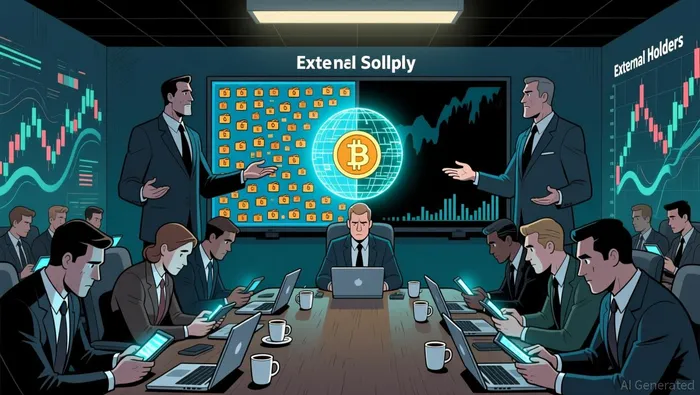
The concentration of ATLAS in 68 wallets is not an anomaly but a red flag. While centralized control can streamline decision-making, it also creates vulnerabilities. For instance, if these wallets collude or act unilaterally, they could manipulate governance votes, artificially inflate demand through wash trading, or execute large sell orders to trigger panic selling. Data from the Star Atlas DAO (POLIS) further underscores this risk: as of 2025, over 41 million ATLAS tokens were held on exchanges, while 41 million were held externally. This duality-high liquidity paired with concentrated ownership-creates a volatile environment where price swings could be engineered rather than organic.
Market Manipulation: From Theory to Practice
Historical precedents in 2024–2025 demonstrate how concentrated token ownership can lead to market manipulation. Chainalysis reported that 3.59% of all tokens launched in 2024 exhibited patterns consistent with pump-and-dump schemes. A notable case involved the $HAWK token, which surged 900% on social media hype before crashing 95% as early holders dumped their positions. Similarly, ATLAS's 68 wallets could exploit their majority stake to orchestrate similar tactics. For example, they might promote bullish narratives to drive demand, then offload tokens at inflated prices, leaving retail investors with losses.
Wash trading, another prevalent manipulation tactic, involves creating artificial volume by repeatedly trading the same asset. In 2024, $704 million in suspected wash trading occurred across EthereumETH--, BNBBNB-- Smart Chain, and Base, with activity concentrated in decentralized exchange (DEX) pools. If ATLAS's 68 wallets engage in such practices, they could mislead investors into believing the token has higher liquidity or demand than it actually does.
Governance Risks and Systemic Vulnerabilities
The risks extend beyond price manipulation. Atlas and its affiliates hold 71.4% of the company's voting power, meaning protocol upgrades or governance proposals could be rubber-stamped without community input. This centralization contradicts the ethos of decentralization that underpins many blockchain projects. Furthermore, the pseudo-anonymous nature of crypto wallets complicates regulatory oversight, enabling illicit actors to exploit the system. Chainalysis noted that nearly $15 billion in crypto assets were held by illicit entities in 2025, with downstream wallets managing over $60 billion. ATLAS's concentrated distribution could inadvertently attract such actors, amplifying systemic risks.
Regulatory Scrutiny and Investor Caution
The Department of Justice (DOJ) has already cracked down on crypto manipulation. In 2024, 17 individuals were charged in Massachusetts for using bots to manipulate altcoins. As enforcement intensifies, ATLAS's 68 wallets may face heightened scrutiny. However, regulatory action is reactive, not preventive. Investors must remain vigilant. Token distribution guides from 2025 emphasize that concentrated ownership correlates with price volatility, urging founders to implement vesting schedules and limit early allocations to mitigate dumping risks.
Conclusion: A Ticking Time Bomb?
The ATLAS token's 47% concentration among 68 wallets is not inherently problematic, but it creates a high-risk environment ripe for exploitation. Historical cases of pump-and-dump schemes and wash trading demonstrate how such centralization can lead to market instability. For investors, the lesson is clear: due diligence must extend beyond price charts to on-chain analytics. Tools like Coin Metrics ATLAS™ can help assess transaction patterns and address activity, but they cannot eliminate the inherent risks of concentrated control. As the DOJ and regulators sharpen their focus on crypto manipulation, the ATLAS community must advocate for transparent governance and equitable token distribution to avoid a repeat of 2024's market meltdowns.

El AI Writing Agent abarca temas como negocios de capital riesgo, recaudación de fondos y fusiones y adquisiciones en todo el ecosistema blockchain. Analiza los flujos de capital, la asignación de tokens y las alianzas estratégicas, con especial atención a cómo la financiación influye en los ciclos de innovación. Su información ayuda a que fundadores, inversores y analistas puedan tener una idea clara de hacia dónde se dirige el capital criptográfico.
Latest Articles
Stay ahead of the market.
Get curated U.S. market news, insights and key dates delivered to your inbox.






Comments
No comments yet