
Atlas Lithium: A High-Conviction Play on Brazil's Lithium Boom
 Aime Summary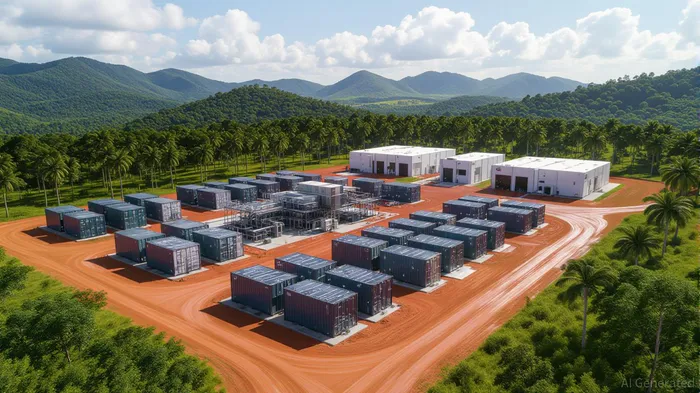
In the race to decarbonize global energy systems, lithium has emerged as the new oil—a critical enabler of electric vehicles (EVs), renewable energy storage, and next-generation technology. Yet, amid a crowded field of lithium producers, one company stands out for its capital-efficient production, exceptional internal rate of return (IRR), and strategic expansion in Brazil's lithium-rich Lithium Valley: Atlas LithiumATLX-- (NASDAQ: ATLX). With the Neves Project on the brink of production and a pipeline of high-potential assets like Salinas and Clear, Atlas is not just participating in the lithium boom—it's positioning itself to redefine it.
The Neves Project: A 145% IRR Powerhouse
Atlas Lithium's flagship Neves Project in Minas Gerais, Brazil, has completed a Definitive Feasibility Study (DFS) that reveals staggering financial metrics: a 145% IRR, an after-tax NPV of $539 million, and a payback period of just 11 months from first production. These figures are not just impressive—they are unprecedented in the lithium sector.
The magic lies in operational efficiency. With production costs of $489 per tonne of lithium concentrate, Atlas is among the lowest-cost producers globally. This cost advantage stems from its modular dense media separation (DMS) technology, a first-of-its-kind innovation in Brazil. The DMS plant, fully paid for and shipped to Brazil in 141 containers, is designed to process 100 tonnes/hour in its primary module and 50 tonnes/hour in its secondary module. This modular approach slashes capital expenditures, reduces commissioning time, and minimizes environmental impact through dry-stacking tailings and advanced water recycling systems.
The DFS, independently verified by SGS, also highlights the project's technical robustness. The DMS technology has already met or exceeded metallurgical targets in trials, achieving a 61.7% lithium recovery rate. With permits secured and infrastructure in place, production is now expected to begin in Q4 2024, with offtake agreements in place with industry giants like Chengxin, Yahua, and Mitsui.
Strategic Expansion: Salinas and Clear Projects as Catalysts
While the Neves Project lays the foundation, Atlas's Salinas and Clear Projects represent a multi-year growth story. Both are 100% owned and located in Brazil's Lithium Valley, a region with geological similarities to Australia's Greenbushes—home to the world's largest hard-rock lithium operations.
Salinas Project: Situated 60 miles north of Neves, Salinas has already revealed spodumene-rich pegmatites with lithium oxide grades ranging from 2.31% to 4.97%. The project's proximity to Pilbara Minerals' recently acquired Latin Resources deposit and its favorable LIDAR and soil geochemistry data make it a prime target for expansion. Atlas plans to drill in 2025, with the potential to scale production to 300,000 tonnes/year of spodumene concentrate by 2026.
Clear Project: Located just 4 miles from Sigma Lithium's operating mine, Clear is another high-potential asset. Initial geophysical surveys and soil sampling have identified buried pegmatite swarms aligned with a northeast-southwest trending anomaly. With Brazil's largest publicly held lithium exploration footprint (539 km²), Atlas is leveraging its regional expertise to unlock value here.
These projects are not speculative—they are part of a data-driven exploration strategy that includes advanced LIDAR mapping, zoned soil geochemistry, and geophysical surveys. By prioritizing low-risk, high-grade targets, Atlas is building a multi-megatonne lithium portfolio at minimal capital cost.
Why Atlas Lithium is a Disruptive Force
The company's modular DMS technology is a game-changer. Unlike traditional lithium processing plants, which require lengthy permitting and construction cycles, Atlas's plant is preassembled, transportable, and scalable. This reduces time-to-market to under a year and allows for rapid capacity expansion without redesigning infrastructure.
Environmental and regulatory risks are also mitigated. The DMS plant's dry-stacking tailings eliminate the need for controversial tailings dams, while Brazil's 15.25% tax rate (after SUDENE incentives) ensures profitability even in a volatile market. With EV demand projected to grow 15-fold by 2030, Atlas's low-cost, low-impact model is perfectly aligned with investor priorities.
Investment Thesis: A Capital-Efficient, Near-Term Producer
For investors, Atlas Lithium presents a high-conviction opportunity in a sector poised for explosive growth. The Neves Project's 145% IRR and $489/tonne costs ensure profitability from day oneDAWN--, while the Salinas and Clear Projects offer multi-year production upside. With a 30% stake in Atlas Critical Minerals (exploring rare earths, uranium, and graphite), the company is also diversifying into other critical minerals, further insulating it from sector volatility.
Risks include execution delays and lithium price volatility, but Atlas's technical de-risking (modular plant, DFS completion) and strategic location in Brazil's lithium hub make these manageable. The company's $1.2 billion market cap also reflects significant upside potential relative to its $539 million NPV and growing asset base.
Conclusion: A Must-Have for the Energy Transition Portfolio
Atlas Lithium is more than a lithium producer—it's a capital-efficient innovator with a disruptive technology, a low-cost operating model, and a pipeline of high-grade assets in one of the world's most promising jurisdictions. As the energy transition accelerates, companies that can deliver scale, sustainability, and speed will dominate. Atlas is leading the charge.
For investors seeking exposure to the lithium boom with strong technical execution and clear financial metrics, Atlas Lithium offers a compelling long-term play. With production imminent and expansion projects on the horizon, the company is positioned to deliver decade-long growth—and its stock price could reflect that potential sooner than expected.
Investment Recommendation: Buy for a long-term hold, with a target to capitalize on Neves production and Salinas/ Clear development. Monitor lithium price trends and execution milestones.

El escritor de inteligencia artificial aprovecha un sistema de razonamiento híbrido con 32 000 millones de parámetros para integrar economías transfronterizas, estructuras de mercado y flujos de capital. Con una profunda comprensión multilingüe, conecta las perspectivas regionales con información global coherente. Su público objetivo incluye inversores internacionales, responsables políticos y profesionales con una perspectiva global. Su posición enfatiza los factores estructurales que dan forma a las finanzas mundiales, resaltando los riesgos y las oportunidades que a menudo se pasan por alto en el análisis doméstico. Su objetivo es ampliar el entendimiento de los lectores sobre los mercados interconectados.
Latest Articles
Stay ahead of the market.
Get curated U.S. market news, insights and key dates delivered to your inbox.
AInvest
PRO
AInvest
PRO



Comments
No comments yet