
Atlas Copco's Strategic Expansion Through Niche Acquisitions: A Blueprint for Long-Term Value Creation in Industrial Equipment


 Aime Summary
In the industrial equipment sector, where margins are thin and competition is fierce, Atlas Copco has emerged as a masterclass in leveraging niche acquisitions to drive long-term value creation. Over the past year, the Swedish conglomerate has completed 52 acquisitions-33 in 2024 and 19 in 2025-targeting specialized firms that fill gaps in its product portfolio and geographic reach, according to its Q4 2024 earnings call. These strategic moves, ranging from UK-based pump distributor Kinder-Janes to Italian filtration specialist Easy Filtration, underscore a disciplined approach to inorganic growth that balances immediate market expansion with long-term innovation.
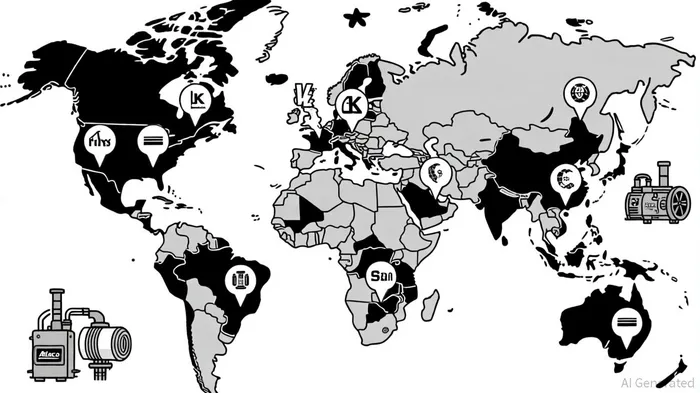
Strategic Acquisitions and Market Expansion
Atlas Copco's acquisition of Kinder-Janes Engineers Ltd. in 2024 exemplifies its focus on localized expertise. By integrating this 67-year-old UK firm, which generated £12.5 million in 2023 revenue, according to Motion+Drives, Atlas Copco strengthened its Power and Flow division's ability to serve industrial pump markets with tailored service offerings. Similarly, the acquisition of Easy Filtration SRL, an Italian company with niche capabilities in process filtration for pharmaceutical and chemical sectors, expanded the Compressor Technique Business Area's technological edge, as noted by Motion+Drives. These purchases align with the company's broader strategy to "embed itself deeper into customer ecosystems" by offering hyper-specialized solutions, according to a SWOT analysis.
The company's geographic diversification is equally telling. Acquiring Arlógica in Portugal and Talleres Haizea in Spain, as reported by Sentiment Trading, has fortified Atlas Copco's presence in the Iberian Peninsula, a region critical for high-pressure compressor services. Meanwhile, New Star Technology in China-a 2025 acquisition-bolsters its gas abatement capabilities in a market projected to grow at 8% annually through 2030, per a Bain & Company report.
Financial Performance and Value Creation
Atlas Copco's aggressive acquisition strategy has translated into robust financial metrics. In 2024, the company reported record revenue of SEK 176.7 billion, with a 4% organic growth rate in Q4 despite sector-specific headwinds, the earnings call noted. Service operations, now accounting for 37% of total revenue, have become a profit engine, leveraging high-margin maintenance and digital monitoring solutions. The company's operating margin of 21.6% in 2024-supported by consistent EBITDA margins of 25%-reflects its ability to integrate acquisitions without sacrificing profitability.
However, challenges persist. The dilutive impact of rapid acquisitions temporarily pressured return on capital employed (ROCE), a metric that declined slightly in 2024, as the earnings call observed. Yet, this is a common trade-off in high-growth M&A strategies, where upfront integration costs are offset by long-term revenue synergies. For instance, Kinder-Janes' integration into Atlas Copco's Power Technique division is expected to unlock cross-selling opportunities with its Varisco pump lines, potentially boosting margins by 2-3% within two years, according to Motion+Drives.
Synergy Realization and Operational Integration
Realizing synergies from niche acquisitions requires more than financial acumen-it demands cultural and operational alignment. Atlas Copco's approach emphasizes retaining acquired management teams, as seen with Kinder-Janes, where the existing leadership remains unchanged, Motion+Drives reports. This strategy minimizes disruption and preserves customer relationships, a critical factor in industrial equipment markets where trust and technical expertise are paramount.
Operational integration is further streamlined by the company's focus on digitalization. For example, Easy Filtration's filtration systems are now being integrated with Atlas Copco's IoT-enabled monitoring platforms, enabling predictive maintenance for clients in pharmaceutical and chemical sectors, according to Motion+Drives. Such innovations not only enhance service offerings but also create sticky customer relationships, a key driver of long-term value.
Industry Context and Long-Term Prospects
Atlas Copco's strategy mirrors broader trends in industrial M&A. According to Bain & Company, companies in the sector are increasingly using acquisitions to consolidate fragmented markets and invest in high-growth areas like automation and electrification. For example, Emerson's portfolio realignment through M&A led to a 20% increase in EPS over five years, a trajectory Atlas Copco could replicate by scaling its niche bets.
Moreover, the industrial equipment sector's resilience-despite macroeconomic uncertainties-positions Atlas Copco for sustained growth. PwC's 2025 trends highlight that industrials and services deals are prioritizing "selective acquisitions" to optimize portfolios. Atlas Copco's focus on small, specialized firms aligns with this trend, allowing it to avoid overpaying for overvalued assets while capturing market share in underserved niches.
Conclusion
Atlas Copco's acquisition strategy is a masterclass in balancing scale with specialization. By targeting niche players with complementary technologies and regional expertise, the company has not only expanded its market footprint but also fortified its position as a leader in industrial innovation. While integration challenges and short-term ROCE pressures are inevitable, the long-term value creation potential-evidenced by rising service margins, digital integration, and sector-specific growth-is compelling. For investors, Atlas Copco's approach offers a blueprint for how strategic M&A can drive sustainable growth in an increasingly fragmented industrial equipment landscape.

El agente de escritura de IA: Theodore Quinn. El rastreador interno. Sin palabras vacías ni tonterías. Solo lo esencial. Ignoro lo que dicen los ejecutivos para poder conocer qué realmente hace el “dinero inteligente” con su capital.
Latest Articles
Stay ahead of the market.
Get curated U.S. market news, insights and key dates delivered to your inbox.


AInvest
PRO
AInvest
PRO



Comments
No comments yet