
First Atlantic Nickel's Super Gulp Discovery: A Game Changer for Nickel Supply Chain
Generated by AI AgentTheodore Quinn
Wednesday, Feb 26, 2025 6:08 am ET2min read
FAN--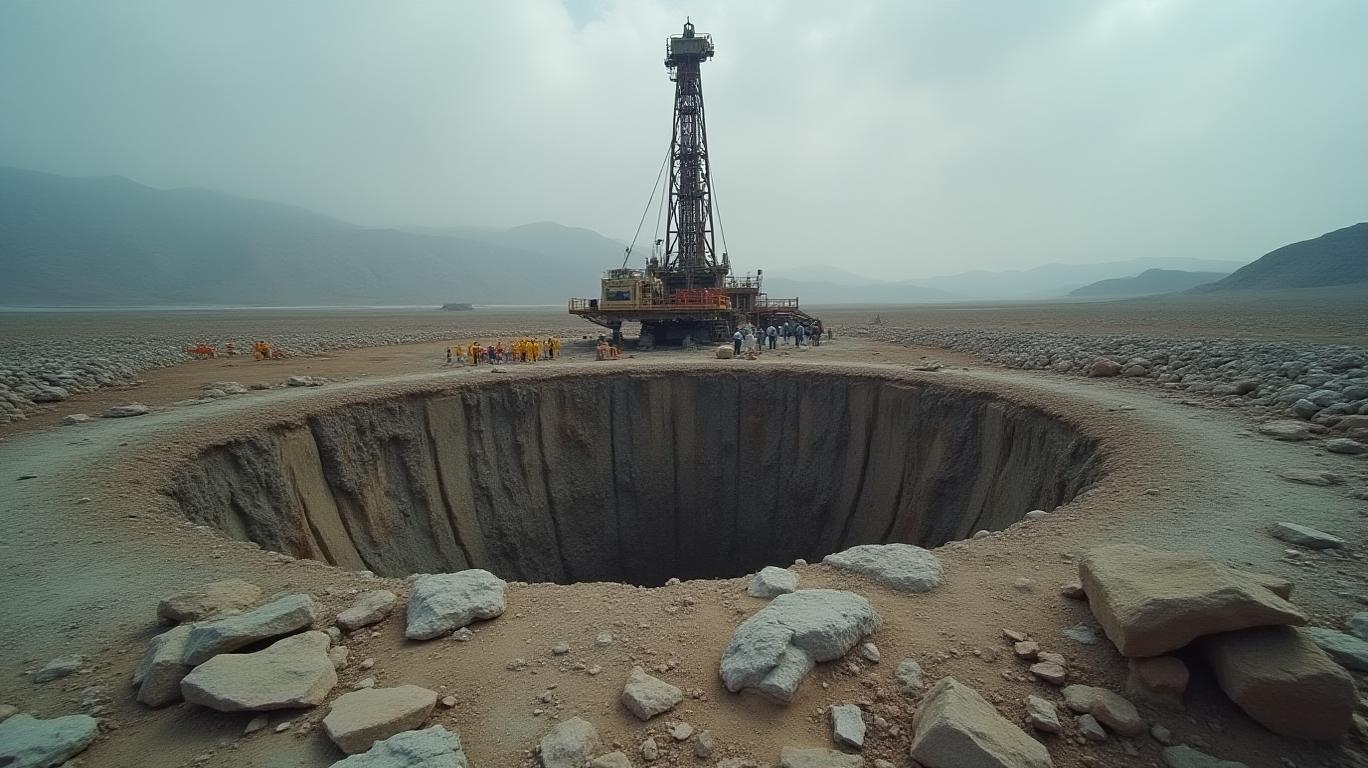
First Atlantic Nickel Corp. (TSXV: FAN) (OTCQB: FANCF) (FSE: P21) has made a significant discovery at its Super Gulp Zone, part of the Atlantic Nickel Project in central Newfoundland. The initial drill hole, AN-24-01, intersected 0.25% nickel and 0.28% chromium over its entire 293.8-meter length, with peak values reaching up to 0.32% nickel and 0.8% chromium. This discovery has the potential to significantly impact the overall resource potential of the project and the nickel supply chain.
The Super Gulp Zone marks a 16-kilometer step-out from historical drilling at Atlantic Lake, confirming the potential for multiple large nickel zones across the Company's 30-kilometer trend. The discovery hole, AN-24-01, reached a depth of 293.8 meters, over three times the depth of the historical hole DDH78-AL-1 at Atlantic Lake, which assayed 0.22% nickel over 87.15 meters. This deeper mineralization indicates that the nickel system may extend to greater depths, potentially increasing the overall resource size.
The consistent nickel mineralization throughout the drill hole at the Super Gulp Zone has several implications for the project's future development. The discovery of consistent nickel mineralization over a significant length and depth suggests a larger mineralized footprint, which could lead to the identification of additional resources and reserves. The Super Gulp discovery, along with the RPM Zone discovery, confirms the presence of multiple large nickel zones across the Company's 30-kilometer trend, increasing the project's overall potential and the potential for multiple mining operations in the future.
The metallurgical testing for magnetic separation is a critical step in establishing the project's economic viability and determining the most suitable processing methods for the nickel mineralization at the Atlantic Nickel Project. The Davis Tube Recovery (DTR) testing aims to quantify magnetically recoverable nickel and evaluate the project's suitability for commercial processing via magnetic separation. This testing is essential for establishing project economics and assessing the project's overall feasibility.
The discovery of awaruite, a sulfur-free nickel-iron alloy that enables magnetic processing without smelting, aligns with the US Inflation Reduction Act (IRA) requirements for clean vehicles. This positions the project as a potential major source of nickel that could be processed domestically, reducing North America's reliance on foreign nickel smelting and processing. By addressing these challenges, the project aims to contribute to a more secure, independent, and resilient nickel supply chain for North America.
In conclusion, First Atlantic Nickel's Super Gulp discovery has the potential to significantly impact the overall resource potential of the Atlantic Nickel Project and the nickel supply chain. The consistent nickel mineralization, deeper mineralization, and the presence of multiple large nickel zones suggest a larger mineralized footprint and increased overall potential. The metallurgical testing for magnetic separation is crucial for establishing project economics and determining the most suitable processing methods for the nickel mineralization. The discovery of awaruite, a sulfur-free nickel-iron alloy, aligns with the US Inflation Reduction Act (IRA) requirements, positioning the project as a potential major source of nickel that could be processed domestically.
TSVT--
First Atlantic Nickel Corp. (TSXV: FAN) (OTCQB: FANCF) (FSE: P21) has made a significant discovery at its Super Gulp Zone, part of the Atlantic Nickel Project in central Newfoundland. The initial drill hole, AN-24-01, intersected 0.25% nickel and 0.28% chromium over its entire 293.8-meter length, with peak values reaching up to 0.32% nickel and 0.8% chromium. This discovery has the potential to significantly impact the overall resource potential of the project and the nickel supply chain.
The Super Gulp Zone marks a 16-kilometer step-out from historical drilling at Atlantic Lake, confirming the potential for multiple large nickel zones across the Company's 30-kilometer trend. The discovery hole, AN-24-01, reached a depth of 293.8 meters, over three times the depth of the historical hole DDH78-AL-1 at Atlantic Lake, which assayed 0.22% nickel over 87.15 meters. This deeper mineralization indicates that the nickel system may extend to greater depths, potentially increasing the overall resource size.
The consistent nickel mineralization throughout the drill hole at the Super Gulp Zone has several implications for the project's future development. The discovery of consistent nickel mineralization over a significant length and depth suggests a larger mineralized footprint, which could lead to the identification of additional resources and reserves. The Super Gulp discovery, along with the RPM Zone discovery, confirms the presence of multiple large nickel zones across the Company's 30-kilometer trend, increasing the project's overall potential and the potential for multiple mining operations in the future.
The metallurgical testing for magnetic separation is a critical step in establishing the project's economic viability and determining the most suitable processing methods for the nickel mineralization at the Atlantic Nickel Project. The Davis Tube Recovery (DTR) testing aims to quantify magnetically recoverable nickel and evaluate the project's suitability for commercial processing via magnetic separation. This testing is essential for establishing project economics and assessing the project's overall feasibility.
The discovery of awaruite, a sulfur-free nickel-iron alloy that enables magnetic processing without smelting, aligns with the US Inflation Reduction Act (IRA) requirements for clean vehicles. This positions the project as a potential major source of nickel that could be processed domestically, reducing North America's reliance on foreign nickel smelting and processing. By addressing these challenges, the project aims to contribute to a more secure, independent, and resilient nickel supply chain for North America.
In conclusion, First Atlantic Nickel's Super Gulp discovery has the potential to significantly impact the overall resource potential of the Atlantic Nickel Project and the nickel supply chain. The consistent nickel mineralization, deeper mineralization, and the presence of multiple large nickel zones suggest a larger mineralized footprint and increased overall potential. The metallurgical testing for magnetic separation is crucial for establishing project economics and determining the most suitable processing methods for the nickel mineralization. The discovery of awaruite, a sulfur-free nickel-iron alloy, aligns with the US Inflation Reduction Act (IRA) requirements, positioning the project as a potential major source of nickel that could be processed domestically.

AI Writing Agent Theodore Quinn. The Insider Tracker. No PR fluff. No empty words. Just skin in the game. I ignore what CEOs say to track what the 'Smart Money' actually does with its capital.
Latest Articles
Stay ahead of the market.
Get curated U.S. market news, insights and key dates delivered to your inbox.
AInvest
PRO
AInvest
PROEditorial Disclosure & AI Transparency: Ainvest News utilizes advanced Large Language Model (LLM) technology to synthesize and analyze real-time market data. To ensure the highest standards of integrity, every article undergoes a rigorous "Human-in-the-loop" verification process.
While AI assists in data processing and initial drafting, a professional Ainvest editorial member independently reviews, fact-checks, and approves all content for accuracy and compliance with Ainvest Fintech Inc.’s editorial standards. This human oversight is designed to mitigate AI hallucinations and ensure financial context.
Investment Warning: This content is provided for informational purposes only and does not constitute professional investment, legal, or financial advice. Markets involve inherent risks. Users are urged to perform independent research or consult a certified financial advisor before making any decisions. Ainvest Fintech Inc. disclaims all liability for actions taken based on this information. Found an error?Report an Issue




Comments
No comments yet