
Atkins' New SEC Vision: Clarity Over Enforcement for Crypto Innovation
 Aime Summary
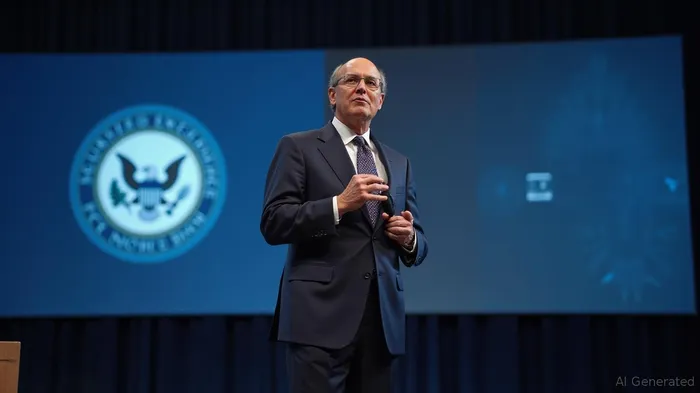
The U.S. regulatory landscape for cryptocurrency is undergoing a significant shift, with SEC Chair Paul Atkins signaling a more structured and transparent approach to digital assetDAAQ-- oversight at the Wyoming Blockchain Symposium. Atkins’ remarks suggest a departure from the enforcement-heavy strategies of his predecessor, Gary Gensler, and instead advocate for proactive regulation to foster innovation and clarity for the industry.
Atkins stated that only “very few” crypto tokens qualify as securities, a notable deviation from prior interpretations that broadly categorized most tokens under securities laws. This new stance could redefine how tokens are evaluated, emphasizing the context and method of their sale rather than the token itself. This nuanced perspective is expected to reduce the regulatory burden on many U.S. crypto projects, offering a more predictable environment for developers, exchanges, and decentralized finance (DeFi) protocols.
A cornerstone of the new strategy is the launch of Project Crypto, an initiative designed to modernize securities law and adapt it for the blockchain era. Atkins outlined the project’s goals as including the creation of formal classification rules for tokens, the introduction of safe harbors for innovation, and the establishment of clear pathways for exchanges and developers. The initiative aims to provide a framework that balances investor protection with the need for technological advancement, offering a potential roadmap for U.S. crypto companies to scale without fear of litigation.
The shift in regulatory approach has been framed as a strategic move to position the U.S. as a global crypto capital. This aligns with broader policy goals set by the Trump administration and recent recommendations from the President’s Working Group on digital assets. The report proposed a collaborative regulatory structure, suggesting a division of responsibilities between the SEC and the Commodity Futures Trading Commission (CFTC). Under this proposal, the CFTC would oversee commodity-based tokens, while the SEC would focus on securities, aiming to streamline oversight and reduce regulatory overlap.
For U.S.-based crypto firms, the potential benefits of this regulatory clarity are substantial. The industry has previously struggled with uncertainty, which has driven innovation offshore and increased compliance costs. With Project Crypto, the SEC aims to create a more supportive environment that encourages domestic development. This includes easing restrictions on token offerings, broadening product offerings on exchanges, and providing a clearer regulatory path for DeFi protocols. These changes could attract more institutional and retail participation, improving liquidity and market stability.
The broader implications for the crypto ecosystem are significant. A more transparent regulatory environment may foster greater trust among investors, potentially leading to increased long-term investment. This shift could also encourage more mainstream adoption of crypto assets by providing a stable legal framework that supports innovation while protecting consumers. As the SEC moves forward with Project Crypto, it is anticipated that the agency will collaborate with Congress and other regulatory bodies to ensure a cohesive and future-ready approach to digital asset regulation.
[1] SEC Chair Paul Atkins: 'Very Few' Crypto Tokens Qualify ... (https://www.ccn.com/news/crypto/sec-chair-paul-atkins-crypto-tokens-securities-clarity-soon-project-crypto/)
[2] SEC Shifts Gears: Paul Atkins Signals New U.S. Crypto ... (https://news.shibSHIB--.io/2025/08/18/sec-shifts-gears-paul-atkins-signals-new-u-s-crypto-regulation-ahead/)

Stay ahead of the market.
Get curated U.S. market news, insights and key dates delivered to your inbox.


AInvest
PRO
AInvest
PRO



Comments
No comments yet