
Astronaut Grows Purple Potato in Space: Implications for Future Missions
 Aime Summary
- NASA astronaut Don Pettit grew a purple potato on the ISS during Expedition 72 as a personal experiment to study microgravity's effects on plant growth.
- The potato was grown in an improvised hydroponic setup using Velcro and grow lights, and its growth was compared to Earth-grown varieties.
- Potatoes are considered nutritionally efficient and could play a key role in supporting astronauts with fresh food during long-duration missions.
- The experiment was not NASA-led but contributes to broader research into space agriculture by agencies like NASA and China.
- The ISS potato experiment highlights the importance of informal experiments in advancing space food production methods.
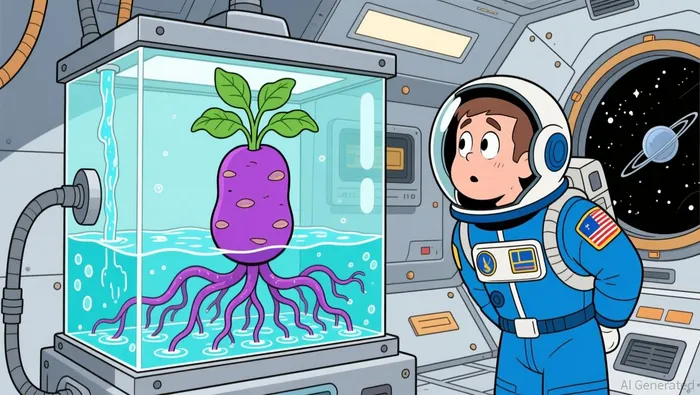
Astronaut Don Pettit's potato experiment on the International Space Station (ISS) may seem like a small, off-duty project, but it points to a critical challenge for future space exploration: how to grow food in microgravity. During Expedition 72, Pettit anchored an early purple potato in a makeshift hydroponic terrarium to study its growth. While the experiment wasn't formally sanctioned by NASA, it offered insights into plant behavior in space.
The potato, known as Spudnik-1, grew in an environment with limited control over atmospheric conditions, water flow, and gravity. Pettit noted that the potato's firmness and nutritional value were similar to Earth-grown varieties, but growth was slower, potentially due to stress or microgravity effects. Roots grew in all directions, unlike on Earth where they typically grow downward. This behavior is not unique to potatoes, as Pettit has previously observed similar root patterns in other plants grown in space.
What Did Don Pettit's ISS Potato Experiment Reveal About Space Agriculture?
Pettit's experiment was inspired in part by the science fiction novel and film The Martian, which highlights the feasibility of growing potatoes for long-term survival on Mars. In reality, NASA has been conducting plant growth experiments for years—successful trials include lettuce, cabbage, and even flowers. While these crops are valuable for morale and scientific research, they don't provide the same caloric density and nutrient profile as starchy vegetables like potatoes.
The potato experiment reflects a broader trend in space agriculture: informal research by astronauts who use their off-duty time to explore novel approaches. Pettit's results aren't conclusive, but they do offer valuable context for larger, more controlled experiments. The key takeaway for investors is that space agencies and private companies are increasingly prioritizing food production research, especially for missions to the Moon and Mars.
Why Should Investors Care About the "Space Potato"?
For now, space agriculture remains in the experimental phase, but its implications for long-term space travel are profound. The ability to grow fresh food on-site could reduce dependence on resupply missions and improve crew health and morale. The ISS potato experiment may seem minor, but it fits into a larger narrative of space sustainability—where food production is a crucial component of mission planning.
Investors should pay attention to emerging trends in space agriculture, including hydroponics, aeroponics, and closed-loop life support systems. While no major commercial ventures have emerged yet, the groundwork laid by astronauts like Pettit could shape future innovations in space food systems.
As NASA and other space agencies continue to test plant growth in microgravity, the lessons learned from these informal experiments may inform future missions. The bottom line is that growing food in space is not just a scientific curiosity—it's a practical necessity for the future of space exploration.

Stay ahead of the market.
Get curated U.S. market news, insights and key dates delivered to your inbox.


AInvest
PRO
AInvest
PRO



Comments
No comments yet