
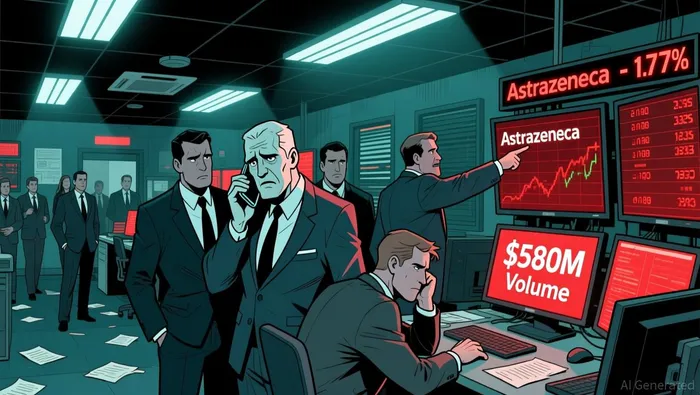
Astrazeneca Slumps 2.37% as Surging $580M Volume Ranks 171st Amid Sector Weakness
 Aime Summary
Market Snapshot
, marking its second consecutive day of losses. , ranking 171st among U.S.-listed equities by dollar volume. This performance lagged behind broader market indices, . AZNAZN-- also underperformed peers in the pharmaceutical sector, .
Key Drivers
The stock’s decline on 2025-12-01 was driven by a combination of elevated short interest, sector-wide weakness, and heightened trading activity. , . , . The surge in shorting activity likely amplified downward pressure on the stock, particularly amid a broader market selloff.
AZN’s underperformance relative to its pharmaceutical peers further exacerbated its decline. On the same day, competitors such as Eli Lilly & Co. (LLY) and Biogen Inc. , respectively, while Johnson & . This sector-wide decline reflects ongoing investor concerns about drug pricing pressures and regulatory risks, which are common challenges for large pharmaceutical firms. Additionally, , indicating heightened investor activity and potential profit-taking or panic selling.
The stock’s proximity to its 52-week high—$94.02 achieved on November 26—also played a psychological role. Closing at $90.52, , potentially triggering stop-loss orders or discouraging new buyers seeking to capitalize on a breakout. This dynamic is often observed in stocks nearing key technical levels, where profit-taking or risk-off behavior can accelerate price declines.
Finally, the broader market environment contributed to AZN’s struggles. , reflecting a risk-off sentiment that spilled over into individual equities. While AZN’s fundamental performance was not explicitly cited in the news, its underperformance relative to broader indices and peers suggests that macroeconomic factors, such as inflation concerns or interest rate expectations, may have indirectly impacted its valuation.
In summary, AZN’s decline on 2025-12-01 was the result of a confluence of factors: rising short interest, sector-wide weakness, elevated trading activity, and a challenging macroeconomic backdrop. These dynamics highlight the interplay between technical indicators, market sentiment, and external economic pressures in shaping short-term stock performance.

Stay ahead of the market.
Get curated U.S. market news, insights and key dates delivered to your inbox.




Comments
No comments yet