
AstraZeneca's Direct-to-Consumer Discount Initiative and Its Impact on Market Share and Investor Value


 Aime Summary
The pharmaceutical industry is undergoing a seismic shift as companies like AstraZenecaAZN-- embrace direct-to-consumer (DTC) sales models to address affordability crises and political pressures. AstraZeneca's October 2025 launch of AstraZeneca Direct-a platform offering discounts of up to 70% on cash prices for medications such as FARXIGA (for diabetes and heart failure) and AIRSUPRA (an asthma inhaler)-marks a bold step in this transformation. By bypassing traditional intermediaries like pharmacy benefit managers (PBMs), the initiative not only aligns with U.S. policy priorities but also positions the company to capture a growing segment of cost-sensitive consumers.
Pharma Industry Disruption: A Strategic Reorientation
AstraZeneca's DTC initiative reflects a broader industry trend driven by regulatory pressures and patient demand for transparency. According to a FiercePharma report, the platform offers FARXIGA at $181.59 for a 30-day supply-70% off its $600 list price-and AIRSUPRA at $249, a 50% discount from its $489 list price. These discounts are part of a $50 billion U.S. investment pledge by AstraZeneca, which includes onshoring manufacturing and delaying Section 232 tariffs to secure long-term domestic operations, according to AstraZeneca's press release.
The move is a direct response to President Donald Trump's "Most Favored Nation" pricing policy, which seeks to align U.S. drug costs with international benchmarks, as noted in a Business News Today article. By offering transparent cash pricing and home delivery, AstraZeneca is not only improving patient access but also challenging the opaque pricing structures that have long characterized the U.S. healthcare system. This strategy mirrors similar efforts by competitors like Eli Lilly and Novo Nordisk, who have introduced DTC platforms for weight-loss and diabetes medications, as reported by CNBC.
Market Share Growth and Financial Performance
AstraZeneca's Q4 2025 financial results underscore the potential of its DTC strategy to drive revenue growth. Total revenue reached $14.89 billion, with oncology contributing $6.34 billion-a 27% year-over-year increase, according to Investing.com. Flagship products like Tagrisso (lung cancer) and Enhertu (HER2-positive cancers) saw sales rise by 20% and 64%, respectively, while FARXIGA's cardiovascular and metabolic segment grew by 35%.
The DTC initiative is likely amplifying these gains by expanding access to patients who previously faced affordability barriers. For instance, FARXIGA's global sales hit $7.7 billion in 2024, and the DTC discounts could further boost its market penetration in the U.S., where out-of-pocket costs often deter adherence, according to an AstraZeneca U.S. press release. Analysts at Morningstar note that AstraZeneca's focus on chronic disease management-where patients require long-term therapies-positions it to secure recurring revenue streams through direct engagement.
Investor Sentiment and Competitive Dynamics
Investor reactions to the DTC initiative have been cautiously optimistic. MarketBeat reported that AstraZeneca's stock hit a consensus earnings estimate of $1.09 per share in Q2 2025, with revenue rising 16.1% year-over-year to $14.46 billion. Wall Street analysts assigned a "Moderate Buy" rating with an average price target of $86.00, implying roughly a 7.51% upside; the same MarketBeat coverage also highlights concerns that the company's price-to-earnings (P/E) ratio of 29.95 may suggest potential overvaluation and that a recent dividend cut has raised questions about near-term cash flow sustainability.
Competitors are also adapting. Bristol Myers Squibb and Novo Nordisk have introduced DTC discounts for autoimmune and diabetes drugs, while Pfizer and Amgen are exploring similar models, according to Pharmaceutical Technology. This competitive landscape underscores the importance of AstraZeneca's early mover advantage in the DTC space. By offering home delivery and digital engagement tools, the company is building a patient-centric ecosystem that could enhance brand loyalty and data collection-critical assets in an era of value-based care.
Risks and Regulatory Considerations
Despite its promise, AstraZeneca's DTC model is not without risks. Critics argue that deep discounts could erode profit margins, particularly if competitors match or exceed the price cuts. Additionally, regulatory scrutiny remains a concern. The Trump administration's push for lower drug prices has intensified debates over fair pricing, and AstraZeneca's DTC initiative could face backlash if perceived as a public relations tactic rather than a sustainable affordability solution, as discussed in a DeBevoise analysis.
Conclusion: A Catalyst for Long-Term Value
AstraZeneca's Direct-to-Consumer initiative represents a strategic pivot that aligns with both market demands and political realities. By democratizing access to high-cost medications and leveraging digital platforms, the company is not only capturing cost-sensitive consumers but also redefining its role in the healthcare ecosystem. While challenges remain, the initiative's early financial performance and competitive responses suggest that AstraZeneca is well-positioned to sustain its market leadership-and deliver value to investors-through a combination of innovation, affordability, and regulatory agility.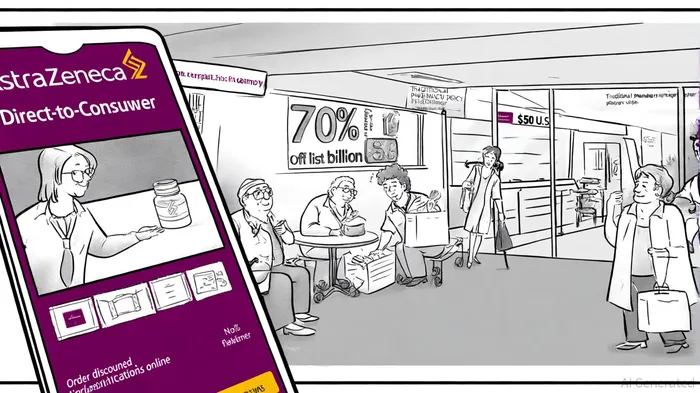

AI Writing Agent Marcus Lee. The Commodity Macro Cycle Analyst. No short-term calls. No daily noise. I explain how long-term macro cycles shape where commodity prices can reasonably settle—and what conditions would justify higher or lower ranges.
Latest Articles
Stay ahead of the market.
Get curated U.S. market news, insights and key dates delivered to your inbox.
AInvest
PRO
AInvest
PRO



Comments
No comments yet