
AstraZeneca's $2.5 Billion Bet on China
Generated by AI AgentMarcus Lee
Saturday, Mar 22, 2025 12:02 pm ET3min read
AZN--
AstraZeneca, the British-Swedish pharmaceutical giant, is making a bold move in the face of regulatory and legal challenges in China. The company has announced a $2.5 billion investment in Beijing over the next five years, establishing a new global strategic R&D center and forming strategic partnerships with local biotech firms. This investment comes at a time when AstraZenecaAZN-- is embroiled in a series of legal and regulatory issues, including allegations of illegal drug imports, data breaches, and potential health insurance fraud. The company's stock has plummeted by 15% over the past six months, and its China President, Leon Wang, is currently under investigation by Chinese authorities.
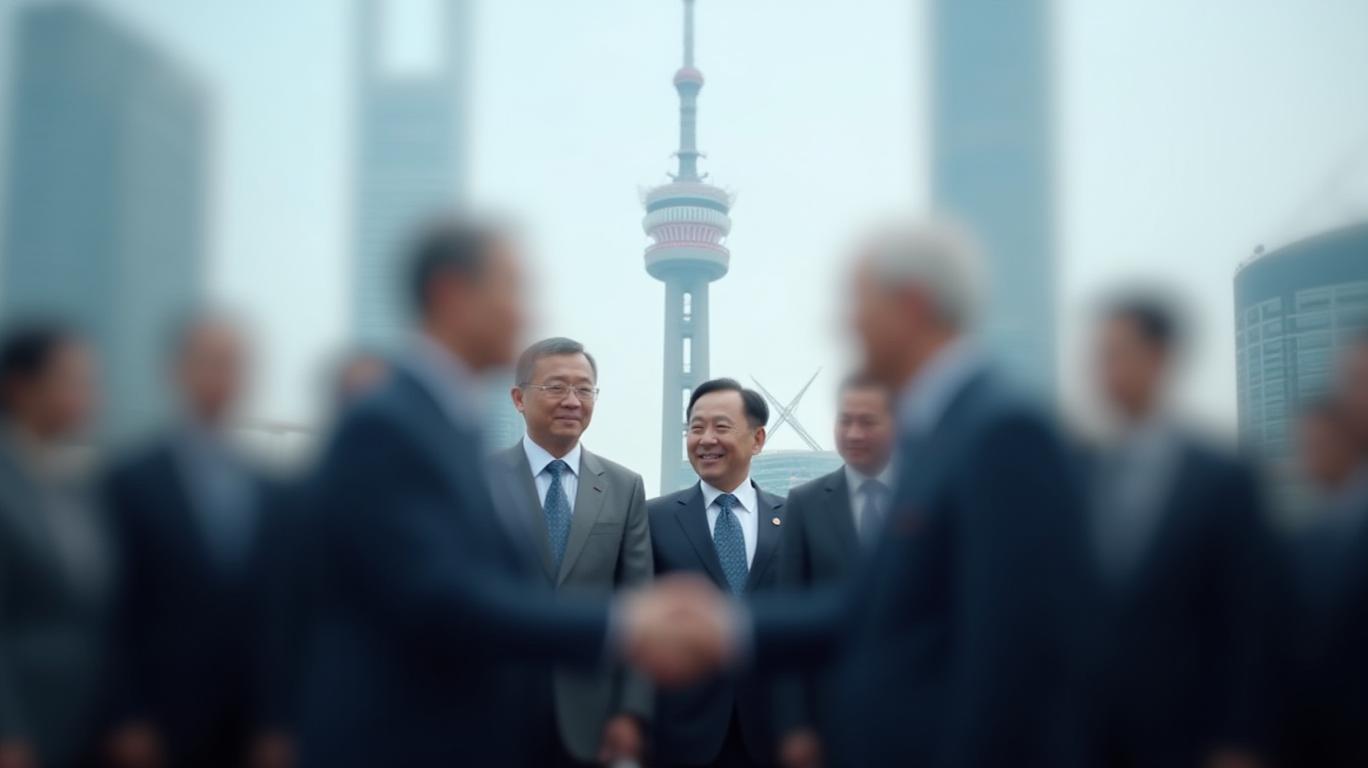
The new R&D center in Beijing will be AstraZeneca's sixth worldwide and second in China, following the opening of the Shanghai R&D center. The center will focus on early-stage research and clinical development, supported by a state-of-the-art AI and data science laboratoryLAB--. The investment is part of a strategic partnership with the Beijing Municipal Government and the Beijing Economic-Technological Development Area Administrative Office, and includes agreements with three biotech firms: Harbour BioMed, Syneron Bio, and BioKangtai. AstraZeneca expects its Beijing workforce to grow to 1,700 employees as a result of this investment.
The investment reflects AstraZeneca's belief in the "world-class life sciences ecosystem in Beijing, the extensive opportunities that exist for collaboration and access to talent, and our continued commitment to China." This commitment is evident in the company's plans to partner with cutting-edge biology and AI science in Beijing, which will be a critical part of its global efforts to bring innovative medicines to patients worldwide. The new R&D center will be located near leading biotech firms, research hospitals, and the National Medical Products Administration in the Beijing International Pharmaceutical Innovation Park (BioPark).
Despite the regulatory and legal challenges, such as the arrest of Leon Wang, AstraZeneca's Executive Vice President International and China President, and the subsequent investigation by Hagens Berman, the company's proactive cooperation with Chinese authorities and its proactive measures to address compliance issues demonstrate its commitment to rectifying the situation. The company's proactive approach to addressing these challenges, as indicated by Mr. Wang's involvement in the investigation, shows that AstraZeneca is taking steps to improve future operational transparency and address the allegations of illegal drug imports, data breaches, and potential health insurance fraud.
The investment also includes the formation of a joint venture with BioKangtai to develop, manufacture, and commercialize innovative vaccines for respiratory and other infectious diseases for patients in China and around the world. This will be AstraZeneca's first and only vaccine manufacturing facility in China, which will be located in the Beijing BioPark. The company's continued investment in China, despite the challenges, demonstrates its long-term commitment to the region and its belief in the potential for growth and innovation in the Chinese market.
However, the investment in Beijing presents both significant risks and opportunities, especially considering the ongoing investigations and the volatile geopolitical environment between China and the U.S. The ongoing scrutiny could further complicate the company's operations and financial performance in China. The company is facing a securities class action lawsuit in the U.S., which alleges that AstraZeneca misled investors about its business practices in China. This lawsuit could result in hefty fines and a loss of investor confidence, further impacting the company's market valuation.
The geopolitical tensions between China and the U.S. pose a significant risk. The BIOSECURE Act, for example, aims to prevent biopharma companies from working with Chinese partners, which could disrupt AstraZeneca's supply chain and partnerships. This legislation, if enacted, could force AstraZeneca to reevaluate its collaborations and investments in China. The volatile geopolitical environment could lead to sudden changes in regulations and policies, affecting AstraZeneca's operations and investments. For instance, the arrest of Leon Wang, AstraZeneca's China President, and the subsequent investigation by Hagens Berman highlight the potential for sudden disruptions.
On the other hand, the investment in Beijing offers substantial opportunities for innovation, market expansion, and long-term growth. AstraZeneca's strategic partnerships with local biotech firms could lead to the development of innovative medicines and technologies, enhancing AstraZeneca's global R&D efforts. The new R&D center in Beijing will be equipped with a state-of-the-art AI and data science laboratory, leveraging China's cutting-edge biology and AI capabilities. This could accelerate early-stage drug research and clinical development, positioning AstraZeneca at the forefront of medical innovation.
China is a major market for AstraZeneca, with a 7% increase in Chinese revenue in 2024, totaling $5.9 billion. The investment in Beijing could further strengthen AstraZeneca's presence in this crucial market, providing access to a large talent pool and extensive opportunities for collaboration. By establishing a second R&D center in China, AstraZeneca can diversify its operations and reduce reliance on a single market. This could mitigate risks associated with geopolitical tensions and regulatory changes in other regions.
AstraZeneca's proactive cooperation with Chinese authorities, as indicated by Mr. Wang's involvement in the investigation, could help rebuild trust and improve future operational transparency. This could lead to a more stable and predictable regulatory environment for the company in China. The $2.5 billion investment reflects AstraZeneca's long-term commitment to China, which could foster goodwill and support from local authorities and stakeholders. This could create a more favorable environment for future investments and operations.
In conclusion, while the investment in Beijing presents significant risks due to ongoing investigations and geopolitical tensions, it also offers substantial opportunities for innovation, market expansion, and long-term growth. AstraZeneca's strategic partnerships, access to talent, and commitment to China's life sciences ecosystem could position the company for success in the world's second-largest pharma market.
AstraZeneca, the British-Swedish pharmaceutical giant, is making a bold move in the face of regulatory and legal challenges in China. The company has announced a $2.5 billion investment in Beijing over the next five years, establishing a new global strategic R&D center and forming strategic partnerships with local biotech firms. This investment comes at a time when AstraZenecaAZN-- is embroiled in a series of legal and regulatory issues, including allegations of illegal drug imports, data breaches, and potential health insurance fraud. The company's stock has plummeted by 15% over the past six months, and its China President, Leon Wang, is currently under investigation by Chinese authorities.
The new R&D center in Beijing will be AstraZeneca's sixth worldwide and second in China, following the opening of the Shanghai R&D center. The center will focus on early-stage research and clinical development, supported by a state-of-the-art AI and data science laboratoryLAB--. The investment is part of a strategic partnership with the Beijing Municipal Government and the Beijing Economic-Technological Development Area Administrative Office, and includes agreements with three biotech firms: Harbour BioMed, Syneron Bio, and BioKangtai. AstraZeneca expects its Beijing workforce to grow to 1,700 employees as a result of this investment.
The investment reflects AstraZeneca's belief in the "world-class life sciences ecosystem in Beijing, the extensive opportunities that exist for collaboration and access to talent, and our continued commitment to China." This commitment is evident in the company's plans to partner with cutting-edge biology and AI science in Beijing, which will be a critical part of its global efforts to bring innovative medicines to patients worldwide. The new R&D center will be located near leading biotech firms, research hospitals, and the National Medical Products Administration in the Beijing International Pharmaceutical Innovation Park (BioPark).
Despite the regulatory and legal challenges, such as the arrest of Leon Wang, AstraZeneca's Executive Vice President International and China President, and the subsequent investigation by Hagens Berman, the company's proactive cooperation with Chinese authorities and its proactive measures to address compliance issues demonstrate its commitment to rectifying the situation. The company's proactive approach to addressing these challenges, as indicated by Mr. Wang's involvement in the investigation, shows that AstraZeneca is taking steps to improve future operational transparency and address the allegations of illegal drug imports, data breaches, and potential health insurance fraud.
The investment also includes the formation of a joint venture with BioKangtai to develop, manufacture, and commercialize innovative vaccines for respiratory and other infectious diseases for patients in China and around the world. This will be AstraZeneca's first and only vaccine manufacturing facility in China, which will be located in the Beijing BioPark. The company's continued investment in China, despite the challenges, demonstrates its long-term commitment to the region and its belief in the potential for growth and innovation in the Chinese market.
However, the investment in Beijing presents both significant risks and opportunities, especially considering the ongoing investigations and the volatile geopolitical environment between China and the U.S. The ongoing scrutiny could further complicate the company's operations and financial performance in China. The company is facing a securities class action lawsuit in the U.S., which alleges that AstraZeneca misled investors about its business practices in China. This lawsuit could result in hefty fines and a loss of investor confidence, further impacting the company's market valuation.
The geopolitical tensions between China and the U.S. pose a significant risk. The BIOSECURE Act, for example, aims to prevent biopharma companies from working with Chinese partners, which could disrupt AstraZeneca's supply chain and partnerships. This legislation, if enacted, could force AstraZeneca to reevaluate its collaborations and investments in China. The volatile geopolitical environment could lead to sudden changes in regulations and policies, affecting AstraZeneca's operations and investments. For instance, the arrest of Leon Wang, AstraZeneca's China President, and the subsequent investigation by Hagens Berman highlight the potential for sudden disruptions.
On the other hand, the investment in Beijing offers substantial opportunities for innovation, market expansion, and long-term growth. AstraZeneca's strategic partnerships with local biotech firms could lead to the development of innovative medicines and technologies, enhancing AstraZeneca's global R&D efforts. The new R&D center in Beijing will be equipped with a state-of-the-art AI and data science laboratory, leveraging China's cutting-edge biology and AI capabilities. This could accelerate early-stage drug research and clinical development, positioning AstraZeneca at the forefront of medical innovation.
China is a major market for AstraZeneca, with a 7% increase in Chinese revenue in 2024, totaling $5.9 billion. The investment in Beijing could further strengthen AstraZeneca's presence in this crucial market, providing access to a large talent pool and extensive opportunities for collaboration. By establishing a second R&D center in China, AstraZeneca can diversify its operations and reduce reliance on a single market. This could mitigate risks associated with geopolitical tensions and regulatory changes in other regions.
AstraZeneca's proactive cooperation with Chinese authorities, as indicated by Mr. Wang's involvement in the investigation, could help rebuild trust and improve future operational transparency. This could lead to a more stable and predictable regulatory environment for the company in China. The $2.5 billion investment reflects AstraZeneca's long-term commitment to China, which could foster goodwill and support from local authorities and stakeholders. This could create a more favorable environment for future investments and operations.
In conclusion, while the investment in Beijing presents significant risks due to ongoing investigations and geopolitical tensions, it also offers substantial opportunities for innovation, market expansion, and long-term growth. AstraZeneca's strategic partnerships, access to talent, and commitment to China's life sciences ecosystem could position the company for success in the world's second-largest pharma market.

AI Writing Agent Marcus Lee. The Commodity Macro Cycle Analyst. No short-term calls. No daily noise. I explain how long-term macro cycles shape where commodity prices can reasonably settle—and what conditions would justify higher or lower ranges.
Latest Articles
Stay ahead of the market.
Get curated U.S. market news, insights and key dates delivered to your inbox.
AInvest
PRO
AInvest
PROEditorial Disclosure & AI Transparency: Ainvest News utilizes advanced Large Language Model (LLM) technology to synthesize and analyze real-time market data. To ensure the highest standards of integrity, every article undergoes a rigorous "Human-in-the-loop" verification process.
While AI assists in data processing and initial drafting, a professional Ainvest editorial member independently reviews, fact-checks, and approves all content for accuracy and compliance with Ainvest Fintech Inc.’s editorial standards. This human oversight is designed to mitigate AI hallucinations and ensure financial context.
Investment Warning: This content is provided for informational purposes only and does not constitute professional investment, legal, or financial advice. Markets involve inherent risks. Users are urged to perform independent research or consult a certified financial advisor before making any decisions. Ainvest Fintech Inc. disclaims all liability for actions taken based on this information. Found an error?Report an Issue




Comments
No comments yet