
Astera Outlook: Mixed Signals Amid Volatile Technical and Analyst Sentiments
 Aime Summary
Market SnapshotHeadline Takeaway: AsteraALAB-- (ALAB.O) is caught in a tug-of-war between bullish and bearish technical signals, with recent price movement rising 2.45% despite neutral market expectations.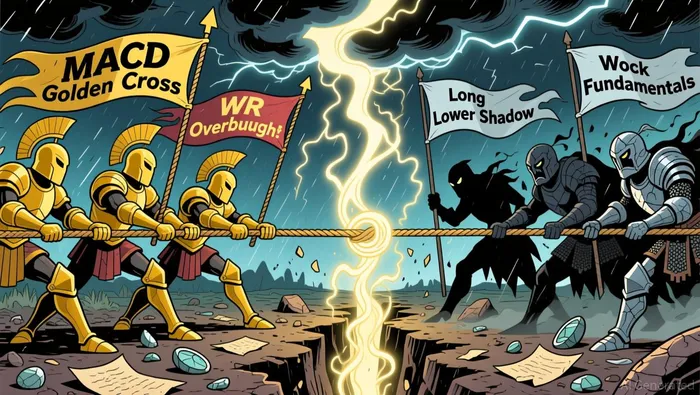
News Highlights Synopsys Halts China Sales: In response to U.S. export restrictions, Synopsys—key to semiconductor design—has suspended sales in China. This could affect supply chains and demand for semiconductor-related products like Astera’s offerings. McKinsey Analyzes U.S. Tariff Impact: New research highlights the potential ripple effects of U.S. tariffs on global chip supply chains. Astera, which operates in materials and electronics, may face increased costs or supply disruptions. DuPont Eyes Electronics Spin-Off: DuPont’s move to spin off its electronics division shows growing interest in pure-play semiconductor and advanced materials firms. This could highlight opportunities or competition for Astera.
Analyst Views & Fundamentals
Analyst Ratings: Eight institutions have issued ratings in the last 20 days, with a simple average rating of 4.25 and a historical performance-weighted rating of 2.50. This indicates a moderate level of confidence but also a wide dispersion of views.
Consistency and Price Trends: Analyst ratings are mixed—three "Strong Buy," four "Buy," and one "Neutral"—and these expectations contrast with the stock’s recent 2.45% price rise. This mismatch highlights cautious optimism from the market, though it remains unaligned with analyst sentiment.
Fundamental Insights: Astera’s fundamentals are mixed, with a model score of 6.12 from our internal diagnostic system (0-10). Here are key factors and their scores: Price-to-Book (PB): 23.02 (score 3.00) – Elevated, indicating a premium valuation. Price-to-Earnings (PE): 353.98 (score 3.00) – Very high, suggesting speculative expectations or low current profitability. Gross Profit Margin (GPM): 7.62% (score 2.00) – Weak, signaling pressure on margins. Net Profit Attributable to Parent Company Shareholders / Net Profit (%): 100% (score 1.00) – Full net profit is attributed to the parent, but this may not be a positive sign without context. Interest Coverage Ratio: -167.51% (score 1.00) – Negative, indicating a high risk of default due to debt burden. Cash Utilization (Cash-UP): 9.74% (score 2.00) – Suggests weak cash flow efficiency.
Money-Flow Trends
Astera's money-flow patterns show a negative trend, with fund inflows below average across all categories. The overall inflow ratio is 0.4908, significantly lower than the historical average. Large and extra-large investors are also showing a bearish trend, with inflow ratios at 0.4843 and 0.4976, respectively.
Notably, the block investor inflow ratio is 0.4920, a sign that big money is still cautious. In contrast, small investors (retail) show a slightly better inflow ratio of 0.4856, but still negative. This suggests a general bearish tilt among major market participants, while retail investors are cautiously optimistic.
Key Technical Signals
Astera’s technical environment is volatile and undecided. Our proprietary model assigns an overall technical score of 6.79, indicating “technical neutrality is strong, moderate attention”.
Recent Chart Patterns: 2025-12-01: WR Overbought (bullish), Long Upper Shadow (bullish). 2025-11-26: MACD Golden Cross (bullish). 2025-11-21 and 2025-11-25: Long Lower Shadow (bearish).
Indicator Strengths: WR Overbought: 7.76 (internal diagnostic score) – a strong bullish signal historically. Long Upper Shadow: 8.95 – a very strong bullish indicator. Long Lower Shadow: 3.63 – weak and bearish. MACD Golden Cross: 6.83 – a moderate bullish signal.
Overall, Astera is in a highly volatile and mixed technical environment, with both bullish and bearish signals active but no clear direction emerging.
Conclusion
Astera is at a crossroads, with mixed technical signals, disagreement among analysts, and weak cash and margin fundamentals. Despite recent price gains, the underlying technical and fundamental conditions suggest caution. Investors may want to wait for a clearer trend or more fundamental strength before entering or increasing positions.

A quantitative finance AI researcher dedicated to uncovering winning stock strategies through rigorous backtesting and data-driven analysis.
Latest Articles
Stay ahead of the market.
Get curated U.S. market news, insights and key dates delivered to your inbox.




Comments
No comments yet