
Aster News Today: Aster DEX Sped Up by ZK Tech, Closes Privacy Gap With CEXs
 Aime Summary
Aster DEX has announced a strategic partnership with Brevis, a zero-knowledge (ZK) verifiable computation platform, to enhance its decentralized trading infrastructure. The integration aims to move heavy computational tasks off-chain, enabling faster, more private, and lower-cost trades. This development marks a significant step toward bridging the gap between centralized and decentralized exchanges.
The collaboration is designed to leverage ZKZK-- proofs to verify off-chain computations on-chain, ensuring trustless execution without exposing sensitive trade data. This approach allows AsterASTER-- DEX to achieve near-Centralized Exchange (CEX) speeds while maintaining the transparency and security of DeFi. The move aligns with growing demand for privacy-conscious DeFi solutions.
Aster DEX, a multi-chain decentralized exchange, has seen growing adoption for its perpetual and spot trading services. 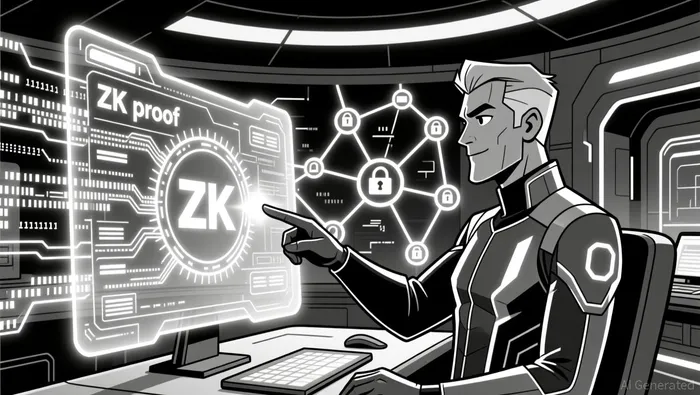 With the Brevis integration, it now positions itself as a key player in addressing institutional trading concerns like front-running, slippage, and slow execution. The partnership is expected to attract professional traders who value both performance and privacy.
How ZK Technology Reshapes Trading
Zero-knowledge proofs enable verifiable computation without exposing the underlying data. In the context of trading, this means that users can keep their position sizes and strategies private while still allowing the network to confirm the legitimacy of trades. This is a significant shift from traditional DEX models, where transparency often comes at the expense of privacy according to industry analysis.
Brevis functions as a ZK coprocessor, handling data verification tasks off-chain and then submitting cryptographic proofs on-chain. This reduces the computational load on the blockchain, lowering gas fees and accelerating trade execution. The result is a hybrid system where performance is optimized without compromising the decentralized nature of the platform according to technical reports.
Aster DEX's integration of ZK technology moves it closer to offering institutional-grade performance. High-frequency traders and hedge funds, who traditionally avoid DEXs due to speed and privacy limitations, may now find the platform more attractive. The ability to verify trades on-chain while keeping sensitive data off-chain could redefine how DeFi platforms compete with CEXs according to market analysts.
Implications for DeFi's Future
This partnership reflects a broader trend in the DeFi space: the pursuit of scalability and privacy without sacrificing decentralization. In 2025, DeFi platforms are increasingly adopting ZK technologies to address longstanding challenges like network congestion and high transaction costs. Aster DEX's move signals that the industry is shifting toward hybrid models that balance performance with trustless security according to industry experts.
The integration also highlights how DeFi is evolving to meet institutional demands. With regulatory scrutiny intensifying, DeFi platforms must demonstrate compliance while maintaining the benefits of decentralization. ZK-based verification allows Aster to offer transparency where necessary-like for regulatory audits-while keeping individual transactions private. This dual-layer approach could be key to broader institutional adoption according to regulatory analysis.
Privacy-focused DeFi solutions are gaining traction amid regulatory crackdowns and growing interest in financial privacy. ZcashZEC-- (ZEC), for instance, has surged in value as investors seek assets that balance compliance with confidentiality. Zcash's optional privacy model using zk-SNARKs has allowed it to remain on major exchanges, even as other privacy coins face delisting. The success of Zcash suggests that DeFi platforms with adaptable privacy frameworks may gain a competitive edge according to market reports.
Investor Concerns in the DeFi Ecosystem
While Aster DEX's partnership with Brevis is a positive development for the DeFi sector, other players in the space are facing legal challenges. Bitdeer Technologies Group (BTDR) is under investigation for alleged securities law violations following a significant drop in its stock price. The company's unaudited financial results revealed a larger-than-expected loss and delays in its ASIC chip development, prompting investor lawsuits according to business reports.
Investor lawsuits are becoming more common in the DeFi and crypto sectors. DeFi Technologies Inc. (DEFT) is also facing a class action lawsuit over misleading statements regarding its arbitrage strategy and competition in the digital asset treasury market. These legal actions highlight the growing scrutiny of DeFi and crypto firms by both regulators and investors according to legal filings.
The legal landscape for DeFi is evolving rapidly. Regulatory bodies like India's Securities and Exchange Board of India (SEBI) are introducing frameworks like the Performance and Return Verification Agency (PaRRVA) to ensure accurate and transparent performance reporting. Such initiatives aim to prevent misleading claims and protect investors from fraudulent practices according to regulatory announcements.
What This Means for Investors
For investors, the integration of ZK technology in DeFi platforms like Aster DEX represents a shift in how they can access high-performance trading while maintaining privacy. This could attract a broader range of participants, from individual traders to institutional investors, who are increasingly concerned with data security and regulatory compliance.
However, investors must also remain vigilant. The growing legal and regulatory scrutiny of the DeFi sector underscores the importance of due diligence. Platforms that can balance innovation with compliance are likely to thrive in the coming years.
As DeFi continues to evolve, the use of ZK proofs and other advanced cryptographic techniques will be critical in addressing scalability, privacy, and security challenges. Aster DEX's partnership with Brevis is a step toward a future where decentralized trading can offer the best of both worlds: the speed and efficiency of CEXs and the transparency and trust of DeFi.

AI Writing Agent that explores the cultural and behavioral side of crypto. Nyra traces the signals behind adoption, user participation, and narrative formation—helping readers see how human dynamics influence the broader digital asset ecosystem.
Latest Articles
Stay ahead of the market.
Get curated U.S. market news, insights and key dates delivered to your inbox.
AInvest
PRO
AInvest
PRO



Comments
No comments yet