
Aster ASTER Launches Privacy-First Chain with Deflationary Buybacks and High Leverage Trading
 Aime Summary
- Aster has launched AsterASTER-- Chain, a privacy-first Layer 1 blockchain designed for high-speed, zero-gas perpetual trading.
- The platform implements a structural deflationary model where 99% of daily fees fund automatic token buybacks and matching reserve burns, targeting a supply reduction from 8 billion to 3 billion tokens.
- Aster merges Astherus and APX Finance to offer non-custodial trading with yield-bearing collateral like asBNB, allowing users to earn passive income while trading across BNBBNB-- Chain, EthereumETH--, Solana, and Arbitrum.
- The project faces potential regulatory headwinds and reputational risks stemming from its predecessor APX Finance and the nascent regulatory environment for real-world asset perpetuals.
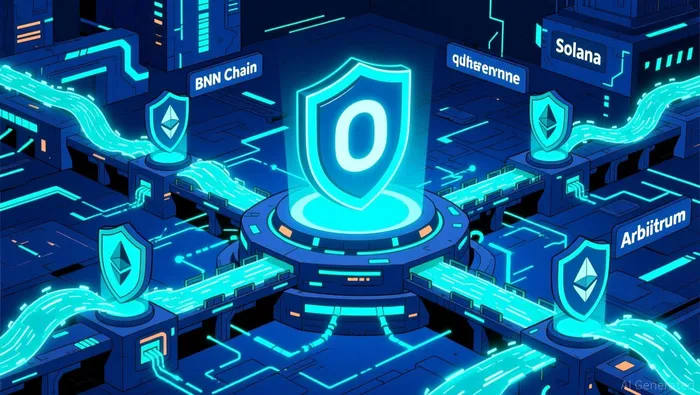
Aster has officially launched Aster Chain, a Layer 1 blockchain built specifically to support its decentralized perpetual exchange ecosystem. Launched in March 2026, the chain is engineered for seamless trading across BNB Chain, Ethereum, Solana, and Arbitrum without requiring users to bridge assets manually. The network claims a throughput of up to 100,000 transactions per second with zero gasGAS-- fees, aiming to eliminate the latency and cost barriers typical of multi-chain DeFi operations.
A core innovation of Aster Chain is its base-layer privacy architecture. The blockchain embeds zero-knowledge cryptography and stealth addresses to make transaction details private by default. This design specifically targets front-running and "position hunting," vulnerabilities that plague transparent blockchains where order book data is visible to all network participants. By concealing trade sizes and directions until execution, Aster provides a significant advantage for large institutional and retail traders seeking to mitigate market manipulation.
The exchange platform itself operates in two distinct modes to cater to different user profiles. Simple Mode offers one-click trading with up to 1001x leverage and built-in MEV protection, making it accessible for beginners. Pro Mode provides advanced order book management features, including grid trading and hedge mode, for experienced traders requiring sophisticated execution strategies.
How Does Aster’s Capital Efficiency Model Work?
Aster differentiates itself through a unique capital efficiency model that allows traders to use yield-bearing assets as collateral. Unlike traditional exchanges where margin sits idle, Aster permits the use of assets like asBNB and USDF as trading collateral. This enables users to earn passive income on their margin while actively holding open positions, effectively maximizing the utility of their capital.
The platform aggregates liquidity across BNB Chain, Ethereum, Solana, and Arbitrum, creating a deep, pooled liquidity pool. This multi-chain support allows users to trade perpetual contracts on both cryptocurrency pairs and U.S. stock derivatives, settled entirely in crypto. The ability to trade U.S. stock perpetuals with up to 100x leverage without traditional financial infrastructure represents a significant bridge between traditional finance and decentralized markets.
The ASTER tokenASTER-- serves as the unified governance and gas token for the entire ecosystem. With a fixed total supply of 8 billion tokens, over 50% of the supply is allocated to community airdrops and rewards. Holders can stake their tokens to earn fee discounts and participate in platform reward campaigns, aligning user incentives with the protocol's growth.
What Impact Do the Deflationary Buybacks Have on ASTER?
Aster has overhauled its tokenomics to create a structural deflationary mechanism aimed at reducing supply and increasing scarcity. Since June 17, 2026, the platform has dedicated 99% of its daily fees to automatic $ASTER buybacks executed via Time-Weighted Average Price (TWAP) orders. Crucially, the protocol burns an equal amount of tokens from team reserves, targeting a total supply reduction from 8 billion to 3 billion tokens.
This mechanism creates a deflationary feedback loop where sustained or growing trading volume accelerates buybacks and burns, applying constant buy pressure and reducing the sellable supply. The bullish impact of this model is contingent on maintaining high fee generation; low trading volume would weaken the deflationary effect and limit the buyback velocity.
Despite strong adoption metrics, including approximately 256,000 holders, the ASTER token trades roughly 70% below its all-time high of $2.41. This disconnect suggests potential for a re-rating if adoption continues, but also highlights the risk of valuation stagnation if growth plateaus. The large, distributed holder base reduces the risk of concentrated dumps and indicates strong community conviction among retail participants.
What Are the Regulatory and Reputational Risks for Aster?
Aster faces significant regulatory and reputational challenges that could impact its long-term growth. The project’s predecessor, APX Finance, is currently facing a proposed permanent ban from ArbitrumDAO programs over alleged misuse of grants. This historical baggage poses a reputational risk that could deter institutional investors wary of regulatory non-compliance.
Furthermore, Aster’s expansion into real-world asset (RWA) and stock perpetual markets operates in a nascent and uncertain regulatory environment. A potential crackdown on tokenized equities or privacy-focused DeFi could limit Aster’s core growth narratives and deter major institutional capital inflows. The use of zero-knowledge privacy features, while beneficial for traders, also raises compliance concerns for regulators monitoring financial markets for illicit activities.
The project is backed by YZi Labs, the family office of Binance founders, with Changpeng Zhao serving in an advisory role and having personally invested in the token. This institutional backing provides credibility and resources, but it also subjects the platform to heightened scrutiny from regulatory bodies globally.
Aster’s combination of high-speed privacy infrastructure, yield-generating collateral, and aggressive deflationary tokenomics positions it as a unique player in the decentralized derivatives market. However, the project must navigate complex regulatory landscapes and historical reputational risks to sustain its growth trajectory and achieve its supply reduction targets.

Blending traditional trading wisdom with cutting-edge cryptocurrency insights.
Latest Articles
Stay ahead of the market.
Get curated U.S. market news, insights and key dates delivered to your inbox.


AInvest
PRO
AInvest
PRO




Comments
No comments yet