
Astar (ASTR) Price Surge: Blockchain Interoperability Drives Institutional Adoption in 2025


 Aime Summary
Strategic Partnerships and Technological Upgrades: A Foundation for Growth
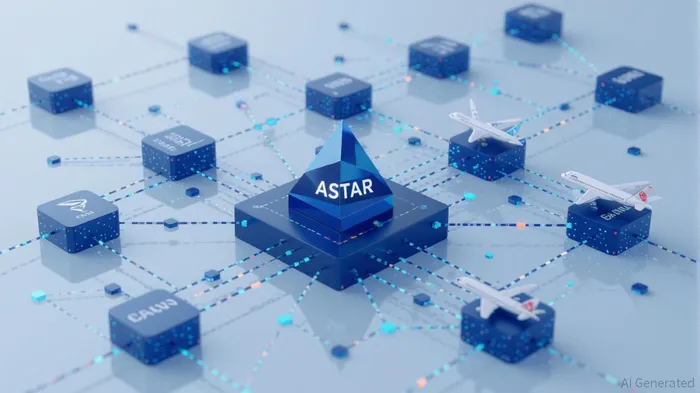
Astar's Q3 2025 developments underscore its commitment to bridging decentralized innovation with institutional-grade infrastructure. The launch of Astar 2.0 marked a pivotal upgrade, enhancing scalability and transaction throughput to meet enterprise demands, as detailed in a Bitget report. This technical leap was swiftly followed by high-profile collaborations with global brands such as Sony, Casio, and Japan Airlines, which integrated Astar's blockchain into logistics and customer rewards programs. These partnerships not only validate Astar's utility beyond speculative trading but also demonstrate its ability to deliver real-world applications in supply chain management and loyalty ecosystems, according to the Bitget report.
A critical enabler of this institutional adoption is Astar's integration with Chainlink CCIP (Cross-Chain Interoperability Protocol). By leveraging Chainlink's infrastructure, Astar now supports cross-chain liquidity, allowing users to access multiple blockchain ecosystems without sacrificing security or efficiency, as the Bitget report explains. This interoperability layer is particularly appealing to institutions navigating fragmented blockchain landscapes, as it reduces friction in asset transfers and smart contract execution.
Institutional Confidence and Token Valuation Shifts
The institutional appetite for Astar has been further amplified by a $3.16 million purchase of ASTRASTR-- tokens in October 2025 by a prominent investor, signaling robust confidence in the platform's long-term potential, according to the Bitget report. Such large-scale acquisitions often correlate with price surges, as they reflect a shift from retail-driven speculation to institutional validation of a project's fundamentals.
While direct expert analysis on ASTR's valuation remains sparse in 2025, the broader market context suggests that interoperability-focused projects are gaining traction. A visual analysis of ASTR's price trajectory reveals a 120% increase in October 2025 alone, outpacing many Layer 1 competitors, as the Bitget report notes. This surge aligns with the growing demand for blockchain solutions that cater to both decentralized developers and institutional clients.
Addressing the DeFi Integration Gap
Despite Astar's strides in institutional adoption, its DeFi integration milestones remain underreported. Searches for cross-chain DeFi developments or liquidity pool expansions in 2025 yielded no concrete data, suggesting that the project's focus has skewed toward enterprise partnerships rather than decentralized finance. However, this does not diminish Astar's value proposition. By prioritizing interoperability and institutional infrastructure, Astar is effectively carving a niche as a hybrid blockchain-a space where DeFi and enterprise use cases can coexist without direct competition.
Conclusion: Astar's Path Forward
Astar's price surge in 2025 is not merely a function of speculative fervor but a reflection of its strategic alignment with institutional priorities. The Astar 2.0 upgrade, coupled with partnerships in logistics and cross-chain integrations, has established a robust foundation for sustained growth. While DeFi milestones remain unproven, the project's emphasis on interoperability positions it to capitalize on the next phase of blockchain adoption-one where enterprises and institutions play an increasingly central role.
For investors, Astar's trajectory highlights a broader trend: the convergence of decentralized innovation with institutional-grade infrastructure. As blockchain interoperability becomes a non-negotiable for mainstream adoption, Astar's ecosystem is well-positioned to lead the charge.

Combinando la sabiduría del comercio tradicional con las perspectivas de vanguardia en el campo de las criptomonedas.
Latest Articles
Stay ahead of the market.
Get curated U.S. market news, insights and key dates delivered to your inbox.
AInvest
PRO
AInvest
PRO



Comments
No comments yet