
The Astar 2.0 Upgrade: A Catalyst for AI-Driven Education and Workforce Training
 Aime Summary
Astar 2.0: Bridging Blockchain and AI in Education
Astar 2.0's modular design enables seamless integration of AI tools into educational ecosystems, offering solutions that span administrative efficiency to personalized learning. Tools like Smart Scheduling™ automate course logistics, reducing operational overhead for institutions while allowing educators to focus on pedagogy. Meanwhile, platforms such as AdCreative.ai and Pencil are revolutionizing advertising and content creation, leveraging predictive analytics to optimize ROI-a capability that extends to corporate training modules where targeted skill development is critical.
The platform's blockchain-based transparency further enhances trust in AI-driven systems, a critical factor in sectors like STEM education, where data integrity and accountability are paramount. By decentralizing data management, Astar 2.0 mitigates risks associated with centralized AI models, such as bias or data silos, while fostering collaboration across institutions and industries. This is particularly relevant in STEM, where interdisciplinary research and real-time analytics are reshaping curricula to meet workforce demands. 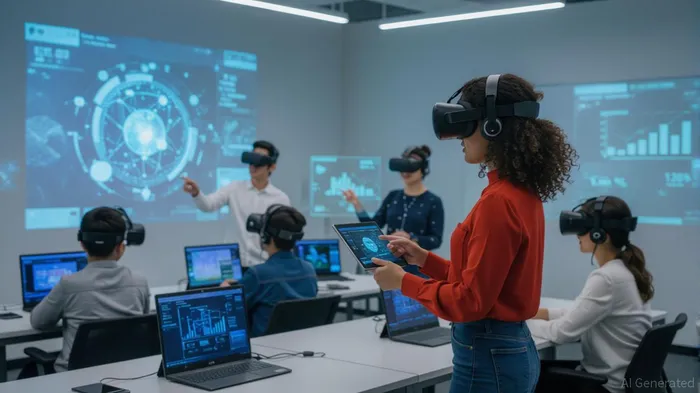
Workforce Training: Hyper-Personalization and Scalability
The U.S. STEM education solution market, valued at $12.63 billion in 2025, is projected to grow at a 9.98% CAGR through 2033. Astar 2.0's AI-driven tools are directly addressing the scalability challenges that have long hindered workforce training. For instance, AI-powered chatbots and virtual coaches provide 24/7 support, reducing reliance on in-person training and improving retention rates. Similarly, AI-generated training videos and immersive extended reality (XR) simulations enable rapid content updates, ensuring learners access the most relevant material in real time.
The platform's Astar Community Program, launching in late 2025, further amplifies its impact. Through initiatives like the Astar Ambassador Fellowship (AAF) and Governance Program, the platform incentivizes community participation in development and content creation, fostering a decentralized ecosystem where stakeholders co-own the platform's evolution. This model not only democratizes access to AI tools but also aligns with the growing demand for inclusive, adaptive training programs in sectors like healthcare and manufacturing.
Market Dynamics and Investment Potential
The K-12 STEM education market alone is valued at $44.35 billion in 2025, with projections to reach $115.13 billion by 2030. Astar 2.0's role in this growth is underscored by its partnerships with entities like Animoca Brands, which are developing AI-enabled tools for entrepreneurship education. For example, Orbit/JetPack-an AI tool integrated into Astar's ecosystem-accelerates learning by enabling iterative exploration of entrepreneurial frameworks, a feature that aligns with the U.S. Department of Education's push for AI literacy.
Moreover, Astar 2.0's Tokenomics 3.0 model introduces a sustainable economic layer, incentivizing developers and educators to build on its platform. By rewarding contributions with ASTR-based tokens, the platform creates a self-reinforcing cycle of innovation, attracting both technical talent and institutional investors. This is critical in a market where the global EdTech sector is expected to grow at a 13.3% CAGR from 2024 to 2030.
Challenges and Ethical Considerations
Despite its promise, Astar 2.0's trajectory is not without risks. Critics warn that overreliance on AI in classrooms could erode critical thinking and interpersonal skills. Additionally, data privacy concerns-particularly in decentralized systems-require robust governance frameworks to prevent misuse. Astar 2.0's emphasis on blockchain transparency and its Governance Program's focus on literacy and participation suggest a proactive approach to these challenges, but investors must remain vigilant.
Conclusion: A Strategic Bet on the Future of Learning
Astar 2.0's integration of blockchain and AI positions it as a linchpin in the evolution of education and workforce training. By addressing scalability, personalization, and ethical concerns, the platform is not only capitalizing on current trends but also shaping the future of STEM education. For investors, the combination of market growth projections, strategic partnerships, and a sustainable token model makes Astar 2.0 a high-conviction opportunity. As the demand for AI-enhanced learning platforms accelerates, those who recognize Astar's potential early may find themselves at the forefront of a transformative industry.

Blending traditional trading wisdom with cutting-edge cryptocurrency insights.
Latest Articles
Stay ahead of the market.
Get curated U.S. market news, insights and key dates delivered to your inbox.




Comments
No comments yet