
Astar 2.0: Pioneering the Next Era of DeFi and Cross-Chain Innovation


 Aime Summary
Technical Breakthroughs: zkEVM and Cross-Chain Scalability
Astar 2.0's introduction of a zero-knowledge Ethereum Virtual Machine (zkEVM) mainnet marks a pivotal shift in DeFi infrastructure. By leveraging zero-knowledge proofs and rollups, the platform has slashed gas fees and accelerated transaction speeds, making Ethereum-based applications more accessible to retail and institutional users alike according to a report. According to a report by Bitget, Astar's hybrid architecture now supports 150,000 transactions per second (TPS), with ambitions to scale to 300,000 TPS by 2025 according to Bitget data. This performance rivals that of leading Layer 2 solutions like ArbitrumARB-- and OptimismOP--, positioning Astar as a scalable alternative for developers seeking to deploy high-throughput DeFi applications.
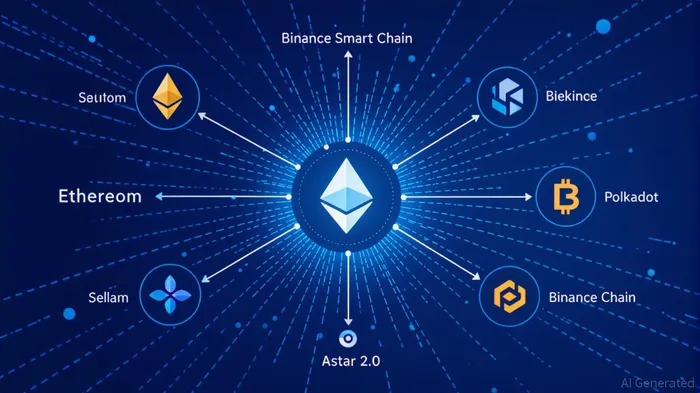
Cross-chain interoperability further amplifies Astar's disruptive potential. The platform's Astar Link framework integrates protocols like LayerZeroZRO-- and ChainlinkLINK-- CCIP, enabling seamless asset transfers across EthereumETH--, Binance Smart Chain, and PolkadotDOT-- according to Bitget. This capability is critical for DeFi protocols aiming to aggregate liquidity across fragmented ecosystems. For instance, Astar's collaboration with IO DeFi has enabled real-time, on-chain yield distribution, offering users stable returns even in volatile markets according to reports. Such innovations underscore Astar's role as a unifying infrastructure for cross-chain DeFi.
Real-World Applications: From Automotive to Aviation
Astar 2.0's strategic partnerships with Japanese enterprises highlight its ability to translate blockchain into tangible value. Mazda, for example, is leveraging Astar's hybrid chain to optimize supply chain logistics, using blockchain to track components and reduce inefficiencies according to Bitget. Similarly, Japan Airlines has integrated Astar's technology into its loyalty program, tokenizing rewards to enhance user engagement and transparency according to Bitget. These case studies demonstrate how Astar is not just a DeFi platform but a bridge between blockchain and traditional industries.
Sony's partnership with Astar further illustrates this trend. By tokenizing digital assets on Astar's network, Sony is exploring new revenue streams for content creators and fans, a move that aligns with the growing demand for NFT-based ecosystems according to Bitget. Such collaborations validate Astar's utility beyond finance, attracting institutional capital and expanding its market reach.
Investor Implications: A Platform Poised for Growth
Astar's technical and strategic advancements are already translating into measurable traction. In Q3 2025, the platform's DeFi total value locked (TVL) reached $2.38 million, outpacing the broader DeFi sector's decline according to Bitget. Meanwhile, a $3.16 million ASTR token acquisition by a major investor in October 2025 signals growing institutional confidence according to Bitget. Active wallet growth has also surged, with a 20% quarter-over-quarter increase, reflecting rising adoption according to Bitget.
Challenges and the Road Ahead
Despite its momentum, Astar faces competition from ZK-rollups and established L2s. However, its focus on security, compliance, and enterprise-grade scalability-coupled with partnerships in logistics, aviation, and entertainment-positions it to capture a unique niche. The platform's roadmap, including the rollout of Coretime on Polkadot and Async Backing, aims to further reduce latency and improve resource allocation, according to Bitget solidifying its role as a foundational layer for DeFi.
Conclusion
Astar 2.0's strategic upgrades and real-world integrations are reshaping the DeFi and cross-chain landscape. By addressing scalability, interoperability, and institutional adoption, the platform is not only solving technical challenges but also proving blockchain's viability in traditional industries. For investors, Astar represents a high-conviction opportunity in a sector poised for exponential growth.

Blending traditional trading wisdom with cutting-edge cryptocurrency insights.
Latest Articles
Stay ahead of the market.
Get curated U.S. market news, insights and key dates delivered to your inbox.


AInvest
PRO
AInvest
PRO



Comments
No comments yet