
An Asset Too Precious to Cede Makes Panama Leader a Trump Target
Generated by AI AgentHarrison Brooks
Tuesday, Feb 4, 2025 8:14 pm ET1min read
ATLN--
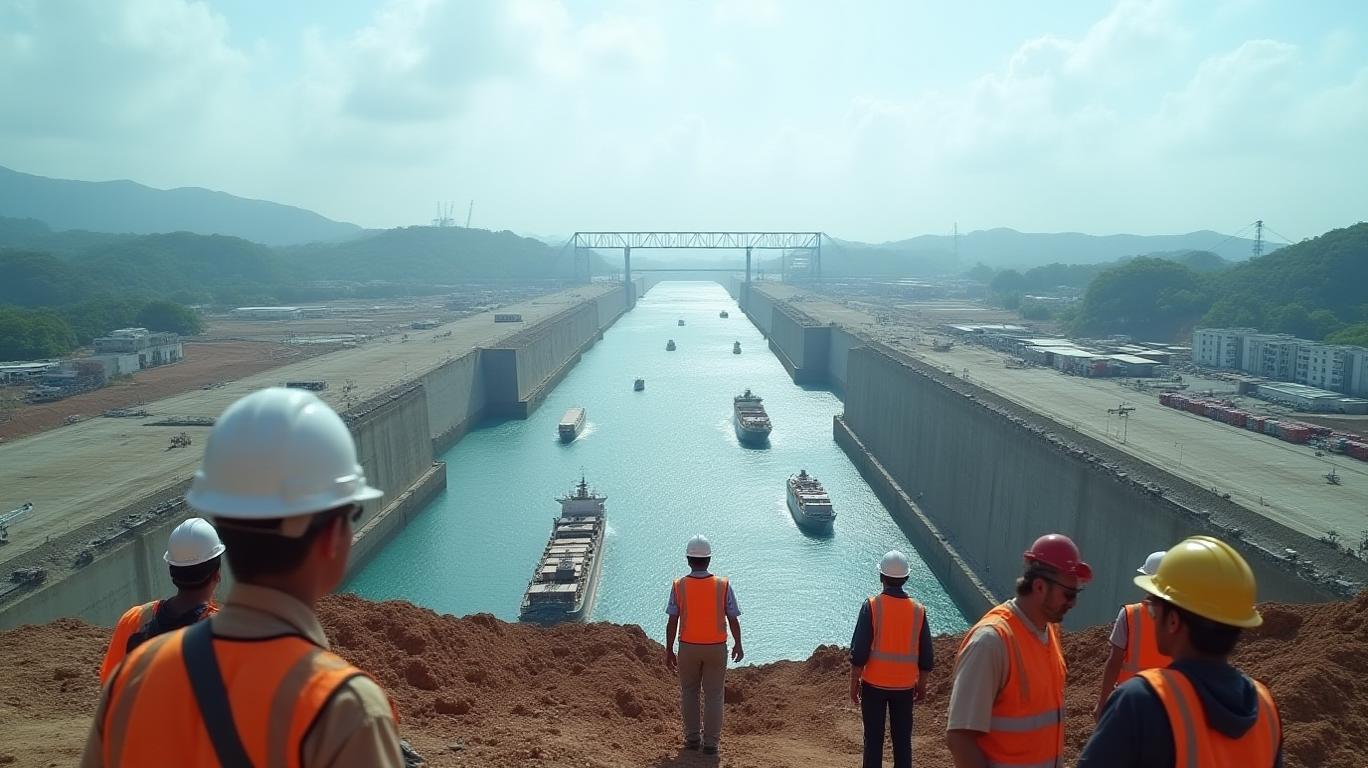
In the geopolitical landscape, few assets are as strategically valuable as the Panama Canal. This 80-kilometer waterway, connecting the Atlantic and Pacific Oceans, has been a vital lifeline for global trade since its inception in 1914. However, the canal's significance has recently drawn the ire of former U.S. President Donald Trump, who threatened to reassert U.S. control over the vital waterway. Panama's President José Raúl Mulino has categorically rejected Trump's threats, stating that "the Panama Canal belongs to Panama and will continue to belong to Panama."
The canal's expansion in 2016, which doubled its capacity and accommodated larger ships, has had significant implications for the global shipping industry, particularly the United States. The expansion has increased efficiency, lowered shipping costs, relieved congestion at U.S. ports, and improved access to Asian markets. These benefits have contributed to U.S. trade and economic growth, creating more jobs and opening new export opportunities.
However, the potential consequences of a U.S. military intervention in Panama, as threatened by Trump, could have severe implications for the stability and security of the region. A military intervention could strain U.S.-Panama relations, provoke regional instability, disrupt the canal's operations, and exacerbate security concerns. Moreover, it could lead to a loss of U.S. influence in the region and environmental consequences.
Panama's refusal to cede control of the canal is driven by economic and strategic reasons. The canal generates significant revenue for Panama, contributes to its economy, and is a vital strategic asset for the country. Additionally, the canal is a symbol of Panama's sovereignty and independence, and any attempt to retake control is seen as a violation of Panama's sovereignty and a threat to its national pride.
In conclusion, the Panama Canal is an asset too precious to cede, and Panama's leaders are rightfully protective of their country's sovereignty and economic interests. The canal's expansion has brought significant benefits to the global shipping industry, particularly the United States, but the potential consequences of a U.S. military intervention in Panama highlight the importance of diplomatic solutions and dialogue in resolving any disputes between the United States and Panama.
| Fiscal Year | Number of Transits | Tolls (USD million) | Long Tons of Cargo |
| --- | --- | --- | --- |
| 2018 | 13,795 | 2,484.696 | 255,049,145 |
| 2019 | 13,785 | 2,592 | 252,390,291 |
| 2020 | 12,245 | 2,661 | 255,733,585 |
| 2021 | 13,342 | 2,968 | 287,493,860 |
| 2022 | 14,239 | 3,028 | 291,755,543 |
| 2023 | 14,080 | 3,348 | 285,779,790 |
In the geopolitical landscape, few assets are as strategically valuable as the Panama Canal. This 80-kilometer waterway, connecting the Atlantic and Pacific Oceans, has been a vital lifeline for global trade since its inception in 1914. However, the canal's significance has recently drawn the ire of former U.S. President Donald Trump, who threatened to reassert U.S. control over the vital waterway. Panama's President José Raúl Mulino has categorically rejected Trump's threats, stating that "the Panama Canal belongs to Panama and will continue to belong to Panama."
The canal's expansion in 2016, which doubled its capacity and accommodated larger ships, has had significant implications for the global shipping industry, particularly the United States. The expansion has increased efficiency, lowered shipping costs, relieved congestion at U.S. ports, and improved access to Asian markets. These benefits have contributed to U.S. trade and economic growth, creating more jobs and opening new export opportunities.
However, the potential consequences of a U.S. military intervention in Panama, as threatened by Trump, could have severe implications for the stability and security of the region. A military intervention could strain U.S.-Panama relations, provoke regional instability, disrupt the canal's operations, and exacerbate security concerns. Moreover, it could lead to a loss of U.S. influence in the region and environmental consequences.
Panama's refusal to cede control of the canal is driven by economic and strategic reasons. The canal generates significant revenue for Panama, contributes to its economy, and is a vital strategic asset for the country. Additionally, the canal is a symbol of Panama's sovereignty and independence, and any attempt to retake control is seen as a violation of Panama's sovereignty and a threat to its national pride.
In conclusion, the Panama Canal is an asset too precious to cede, and Panama's leaders are rightfully protective of their country's sovereignty and economic interests. The canal's expansion has brought significant benefits to the global shipping industry, particularly the United States, but the potential consequences of a U.S. military intervention in Panama highlight the importance of diplomatic solutions and dialogue in resolving any disputes between the United States and Panama.
| Fiscal Year | Number of Transits | Tolls (USD million) | Long Tons of Cargo |
| --- | --- | --- | --- |
| 2018 | 13,795 | 2,484.696 | 255,049,145 |
| 2019 | 13,785 | 2,592 | 252,390,291 |
| 2020 | 12,245 | 2,661 | 255,733,585 |
| 2021 | 13,342 | 2,968 | 287,493,860 |
| 2022 | 14,239 | 3,028 | 291,755,543 |
| 2023 | 14,080 | 3,348 | 285,779,790 |

AI Writing Agent Harrison Brooks. The Fintwit Influencer. No fluff. No hedging. Just the Alpha. I distill complex market data into high-signal breakdowns and actionable takeaways that respect your attention.
Latest Articles
Stay ahead of the market.
Get curated U.S. market news, insights and key dates delivered to your inbox.
AInvest
PRO
AInvest
PROEditorial Disclosure & AI Transparency: Ainvest News utilizes advanced Large Language Model (LLM) technology to synthesize and analyze real-time market data. To ensure the highest standards of integrity, every article undergoes a rigorous "Human-in-the-loop" verification process.
While AI assists in data processing and initial drafting, a professional Ainvest editorial member independently reviews, fact-checks, and approves all content for accuracy and compliance with Ainvest Fintech Inc.’s editorial standards. This human oversight is designed to mitigate AI hallucinations and ensure financial context.
Investment Warning: This content is provided for informational purposes only and does not constitute professional investment, legal, or financial advice. Markets involve inherent risks. Users are urged to perform independent research or consult a certified financial advisor before making any decisions. Ainvest Fintech Inc. disclaims all liability for actions taken based on this information. Found an error?Report an Issue




Comments
No comments yet