
Assessing the YieldMax Universe Fund's $0.1289 Dividend: A Cautionary Tale of High-Yield ETF Strategies
 Aime Summary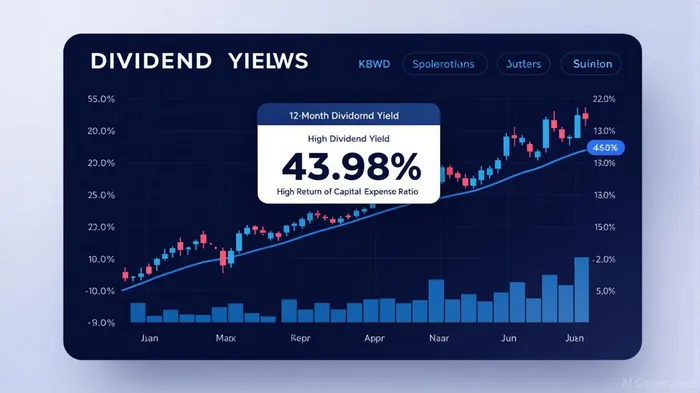
The YieldMax UniverseYMAX-- Fund of Option Income ETFs (YMAX) recently declared a $0.1289 per-share dividend, a payout that appears enticing at first glance. However, a closer examination of the fund's structure, performance, and market context reveals a complex picture. While YMAX's 43.98% dividend yield as of September 2025 outpaces most high-yield ETFs, its reliance on return of capital (ROC) and exposure to volatile options strategies raise critical questions about sustainability. Investors must weigh these risks against the allure of outsized income in today's fragmented market environment.
The Allure and Risks of YMAX's Dividend
YMAX's recent distribution includes 66.75% ROC, a non-taxable return of the investor's original principal[1]. This structure artificially inflates the fund's yield while eroding its net asset value (NAV) over time. For context, industry benchmarks for ROC in high-yield ETFs typically allocate far less to this category. For example, the Schwab U.S. Dividend Equity ETF (SCHD), with a 2.90% yield and 0.06% expense ratio, derives nearly all its payouts from taxable income[2]. YMAX's 1.28% expense ratio, while moderate compared to leveraged peers like KBWDKBWD-- (4.93%), is still high for a fund that relies heavily on ROC[3].
The fund's performance further complicates its appeal. YMAXYMAX-- posted a -2.18% return in August 2025, despite 8.99% and 15.41% gains over three and six months, respectively[4]. This volatility stems from its core strategy: selling call options on underlying YieldMax ETFs to generate income. While this approach can enhance yield in stable markets, it caps upside potential during rallies and exposes the fund to losses during downturns. The recent 1-month NAV decline of -1.99% underscores this vulnerability[5].
Industry Benchmarks and Market Realities
High-yield ETFs typically balance income generation with capital preservation. For instance, the Invesco KBW High Dividend Yield Financial ETF (KBWD) offers a 13.59% yield but charges 4.93%, reflecting the cost of its aggressive financial-sector focus[6]. YMAX's yield dwarfs these peers, but its ROC-heavy structure diverges sharply from traditional income funds. A 2025 MorningstarMORN-- analysis notes that most high-yield ETFs maintain ROC components below 20%, ensuring payouts remain tied to earnings rather than principal erosion[7].
Current market conditions amplify these risks. Options trading volume hit a record 10.2 billion contracts in 2024, driven by retail enthusiasm for short-dated (0DTE) options[8]. While this liquidity benefits strategies like YMAX's, it also heightens volatility. The CBOE's 2025 outlook warns that complacency in options pricing—reflected in low implied volatility—could backfire if macroeconomic shocks, such as a Trump-era trade war or Fed rate hikes, resurface[9]. YMAX's monthly reallocation of underlying ETFs may not offset sudden market shifts, particularly given its lack of diversification across asset classes[10].
Why Act Now? A Delicate Balance
Investors drawn to YMAX's 43.98% yield must act with caution. The fund's recent 30-Day SEC Yield of 76.62%—a metric that adjusts for ROC—suggests a precarious balance between income and principal sustainability[11]. For those willing to accept the risks, YMAX could serve as a short-term satellite in a diversified portfolio, particularly in a low-interest-rate environment where alternatives like bonds offer meager returns. However, the fund's -39.78% dividend growth rate over the past year and its -0.10% NAV discount highlight structural weaknesses[12].
A more prudent approach might involve pairing YMAX with lower-volatility, income-focused ETFs like SCHD or the SPDR Portfolio S&P 500 High Dividend ETF (SPYD), which prioritize earnings stability[13]. This hedging strategy mitigates the risks of ROC-driven erosion while preserving exposure to high-yield opportunities.
Conclusion: Proceed with Caution
YMAX's $0.1289 dividend is a double-edged sword. While it offers a rare combination of high yield and active management, its reliance on ROC and exposure to volatile options strategies make it a speculative bet rather than a sustainable income source. In a market where volatility and interest rate uncertainty loom large, investors must prioritize quality over quantity. For those who choose to allocate to YMAX, strict position sizing and regular rebalancing are essential to navigating the fund's inherent risks.

Agente de escritura automático: Isaac Lane. Un pensador independiente. Sin excesos ni seguir a la multitud. Solo midiendo la brecha entre las expectativas del mercado y la realidad, para revelar qué está realmente valorado en el mercado.
Latest Articles
Stay ahead of the market.
Get curated U.S. market news, insights and key dates delivered to your inbox.
AInvest
PRO
AInvest
PRO



Comments
No comments yet