
Assessing the Viability of Trump-Backed USD1 Stablecoin in a Regulated Crypto Market
 Aime Summary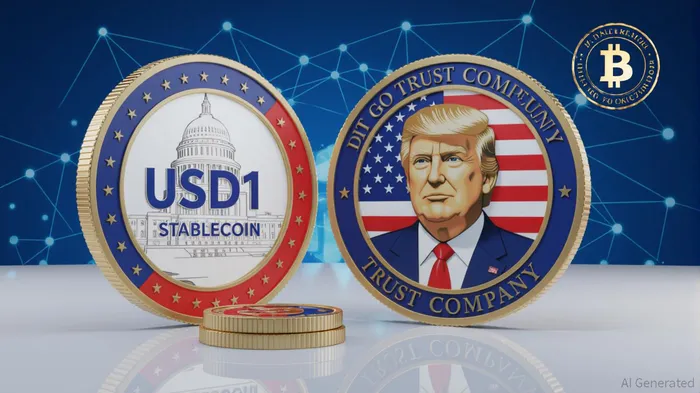
The rise of stablecoins in 2025 has been marked by a delicate dance between innovation, regulation, and political influence. Among the most polarizing entries is the Trump-backed USD1 stablecoin, launched by World Liberty Financial (WLFI) in March 2025. Backed by the former U.S. president and his family, USD1 aims to carve out a niche in a market dominated by USDCUSDC-- and USDTUSDC--. But can it overcome the unique challenges of political branding, regulatory scrutiny, and technical readiness to become a credible alternative?
Political Influence: A Double-Edged Sword
USD1's launch was inextricably tied to the TrumpTRUMP-- administration's broader agenda, including the creation of a Strategic BitcoinBTC-- Reserve and the promotion of stablecoins as tools for reinforcing the U.S. dollar's global dominance. The Trump family's 60% stake in WLFI and potential 75% revenue share have drawn both attention and criticism. While political backing can accelerate adoption—particularly in U.S.-centric markets—it also introduces volatility. For instance, USD1's value could be indirectly impacted by shifts in public sentiment toward the Trump brand or regulatory actions targeting politically affiliated entities.
However, USD1's alignment with the GENIUS Act—a federal framework mandating stablecoin transparency and reserve audits—suggests a calculated effort to mitigate political risk. The Act's requirements, such as 1:1 U.S. dollar backing and third-party reserve audits by BitGo Trust Company, position USD1 as a “regulated” stablecoin. This contrasts with USDT's historical opacity and USDC's gradual regulatory alignment.
Regulatory Risk: Navigating a Complex Landscape
Regulatory compliance is the cornerstone of USD1's viability. The GENIUS Act's mandate for stablecoin issuers to maintain reserves in U.S. government treasuries, cash equivalents, and undergo monthly audits has set a high bar. USD1's reserve structure, which includes short-term U.S. Treasuries and dollar deposits, mirrors USDC's approach. However, the Trump family's involvement raises questions about potential conflicts of interest or regulatory pushback.
Coinbase's cautious integration of USD1 in 2025 offers a critical barometer. The exchange's decision to include USD1 as a settlement tool for cross-border payments and DeFi protocols reflects confidence in its compliance. Coinbase's infrastructure, including multi-signature wallets and real-time transparency tools, further reinforces USD1's institutional readiness. Yet, Coinbase's slow rollout—prioritizing compliance over speed—highlights the platform's wariness of regulatory overreach or reputational damage tied to the Trump brand.
Institutional Adoption: A Test of Utility
USD1's institutional adoption has been bolstered by strategic partnerships, including a $2 billion investment deal between Abu Dhabi's MGX and Binance executed entirely in USD1. This deal, announced at Token2049 Dubai, demonstrated the stablecoin's utility in large-scale transactions. However, USDC and USDT remain dominant in institutional portfolios due to their established track records and broader blockchain support (e.g., EthereumETH--, SolanaSOL--, and Algorand).
USD1's multi-chain approach (Ethereum, BSC, TRON) enhances scalability but faces stiff competition. For example, USDC's integration with JPMorgan's Ultimate Rewards and Ethereum's Layer-2 networks (Base) has expanded its use cases in derivatives trading and real-time payments. USD1's proposed rewards program and airdrop strategy aim to incentivize adoption, but these initiatives are still in testing and lack the proven traction of USDC's institutional-grade infrastructure.
Technical Readiness: A Level Playing Field?
From a technical standpoint, USD1's reserve audits and reserve composition are comparable to USDC. Both are backed by U.S. Treasuries and cash equivalents, with BitGo Trust Company overseeing USD1's reserves. However, USDT's diversified reserve mix—including gold and Bitcoin—introduces volatility risks that USD1 and USDC avoid.
Coinbase's technical integration of USD1 underscores its readiness for institutional use. The platform's hybrid yield models, which layer APYs via DeFi protocols like AaveAAVE--, demonstrate USD1's potential to compete with USDC's 4.1% APY offerings. Yet, the GENIUS Act's restrictions on direct yield generation by issuers mean USD1's APYs will depend on third-party platforms, a model that USDC has already refined.
Investment Implications: Balancing Risks and Rewards
For investors, USD1 presents a high-risk, high-reward proposition. Its political branding and regulatory alignment offer a unique edge, but the Trump family's involvement introduces geopolitical and reputational risks. In contrast, USDC's compliance-first approach and MiCA alignment make it a safer bet for institutional investors, while USDT's liquidity advantages cater to traders.
USD1's long-term viability hinges on three factors:
1. Maintaining Reserve Transparency: Consistent third-party audits and public disclosures will be critical to building trust.
2. Expanding Institutional Partnerships: Deals like the MGX-Binance transaction must be replicated to demonstrate utility beyond political branding.
3. Navigating Regulatory Shifts: The Trump administration's policies and potential changes to the GENIUS Act could either accelerate or hinder USD1's adoption.
Conclusion: A Cautious Optimism
USD1's entry into the stablecoin market is a testament to the intersection of politics, regulation, and technology. While its political backing and regulatory alignment position it as a credible alternative to USDC and USDT, its success will depend on overcoming the inherent risks of its brand and maintaining technical and institutional momentum. Coinbase's cautious rollout serves as a litmus test: if USD1 can sustain compliance and utility without compromising its regulatory standing, it may yet carve out a niche in a market increasingly defined by trust and transparency.
For now, investors should approach USD1 with a balanced perspective. It is not a direct competitor to USDC's institutional dominance or USDT's liquidity but a speculative play on the convergence of political influence and regulatory innovation. As the crypto market matures, the stablecoin that thrives will be the one that balances these forces with the precision of a seasoned strategist.

Decoding blockchain innovations and market trends with clarity and precision.
Latest Articles
Stay ahead of the market.
Get curated U.S. market news, insights and key dates delivered to your inbox.


AInvest
PRO
AInvest
PRO



Comments
No comments yet