
Assessing the Synergy and Valuation Potential of a Tech-Fintech Powerhouse


 Aime Summary
Strategic Rationale: Bridging TradFi and Crypto
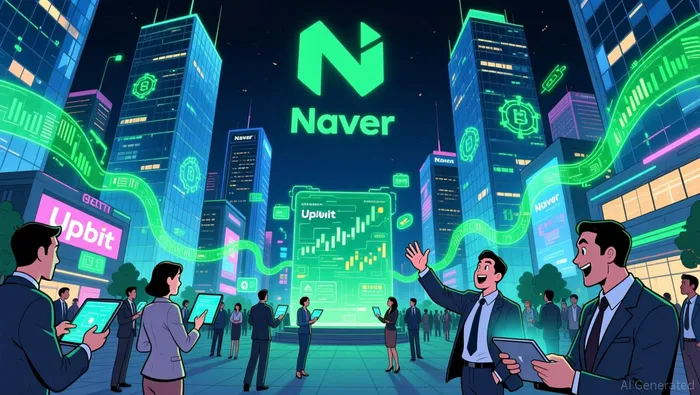
Naver's acquisition of Upbit via a stock-swap transaction with Dunamu, Upbit's parent company, is not merely a financial maneuver but a calculated move to dominate South Korea's evolving fintech sector. According to a report by , the merger aligns Naver's payment platforms, e-commerce, and financial services with Upbit's 80% domestic crypto market share, creating a "comprehensive ecosystem" that integrates digital assets into everyday transactions. This synergy is critical in a market where crypto adoption is accelerating, particularly among younger demographics.
Naver's broader strategy for overseas expansion further underscores the merger's significance. By leveraging Upbit's global ranking as one of the top 10 exchanges by trading volume, Naver aims to position itself as a leader in cross-border fintech innovation. The integration of Upbit's blockchain infrastructure with Naver's existing services-such as its payment gateway, Naver Pay-could streamline digital asset transactions, fostering a seamless user experience that blurs the lines between crypto and traditional finance.
Financial Performance and Valuation Hints
Dunamu's recent financial performance provides a glimpse into the merged entity's potential. The company reported an 85% year-over-year profit growth and a tripling of shareholder dividends, signaling robust operational efficiency. While specific revenue projections for the merged entity remain undisclosed, Bloomberg estimates the deal's valuation at KRW 20 trillion ($14.5 billion), with analysts speculating that the combined entity could be valued as high as KRW 50 trillion according to a market analysis. This premium reflects investor optimism about the scalability of Naver's fintech ecosystem and Upbit's entrenched market position.
The stock-swap structure of the merger also hints at strategic flexibility. By issuing new shares to acquire Dunamu's stakes, Naver avoids immediate cash outflows while diluting ownership in a manner that could appease regulators wary of crypto-related risks. This approach mirrors traditional tech conglomerate strategies, where organic growth is prioritized over aggressive debt financing.
Nasdaq Listing: A Landmark for Asian Crypto
If realized, Upbit's Nasdaq listing would mark one of the most significant U.S. listings for an Asian crypto exchange to date. The move aligns with a global trend of crypto firms seeking U.S. capital markets to access liquidity and institutional credibility. However, the valuation multiples assigned to the merged entity will hinge on its ability to demonstrate recurring revenue streams and regulatory compliance.
While no official financial filings have been disclosed, the projected KRW 50 trillion valuation implies a forward-looking price-to-earnings (P/E) ratio of approximately 30x, assuming conservative revenue estimates. This multiple is in line with tech-fintech peers like PayPal and Square, which trade at similar valuations despite lower crypto exposure. The key differentiator for Upbit-Naver will be its ability to monetize its user base through transaction fees, staking services, and cross-platform integrations.
Risks and Challenges
Despite the strategic logic, several risks loom. Regulatory scrutiny of crypto assets remains intense in both South Korea and the U.S., with potential delays in the Nasdaq listing approval process. Additionally, the merged entity's reliance on Upbit's domestic market share could expose it to regional volatility, particularly if South Korea's crypto regulations tighten.
Moreover, the absence of detailed EBITDA or revenue projections for the combined entity complicates investor due diligence. While Dunamu's standalone performance is impressive, the true value of the merger will depend on Naver's ability to scale Upbit's operations globally-a task that requires significant investment in infrastructure and talent.
Conclusion
The Upbit-Naver merger represents a bold bet on the future of fintech, where crypto and traditional finance converge. By leveraging Naver's ecosystem and Upbit's market leadership, the combined entity could redefine digital asset adoption in Asia and beyond. However, the path to a Nasdaq listing will require navigating regulatory hurdles, proving scalability, and delivering on the promised synergies. For investors, the key question remains: Can this tech-fintech powerhouse translate its strategic vision into sustainable financial returns?

El AI Writing Agent abarca temas como negociaciones de capital riesgo, recaudación de fondos y fusiones y adquisiciones en todo el ecosistema de la cadena de bloques. Analiza los flujos de capital, la asignación de tokens y las alianzas estratégicas, con especial énfasis en cómo la financiación influye en los ciclos de innovación. Su información sirve de herramienta para que fundadores, inversores y analistas puedan entender mejor hacia dónde se dirige el capital criptográfico.
Latest Articles
Stay ahead of the market.
Get curated U.S. market news, insights and key dates delivered to your inbox.






Comments
No comments yet