
Assessing the Structural Threat to Fed Independence and the Credibility Reset
 Aime Summary
This is an unprecedented assault on the Federal Reserve's institutional independence. For the first time in history, the chair of the central bank is the subject of a criminal investigation by the Justice Department. The probe, launched without prior notification to the Treasury or top White House officials, is widely seen as a politically motivated escalation in President Trump's pressure campaign against Fed Chair Jerome Powell. The move directly weaponizes the DOJ, a tactic previously used against political adversaries, to coerce the central bank into aligning with the administration's policy preferences.
The immediate fallout underscores the market's deep concern over this breach of operational independence. As Treasury Secretary Scott Bessent warned President Trump late Sunday, the investigation "made a mess" and could be "bad for financial markets." That warning was quickly validated. On Monday, the dollar fell and bond yields rose, while the price of gold climbed, as investors digested the news of political interference. This volatility is a direct market signal that the credibility of the Fed's policy-making process is now in question.
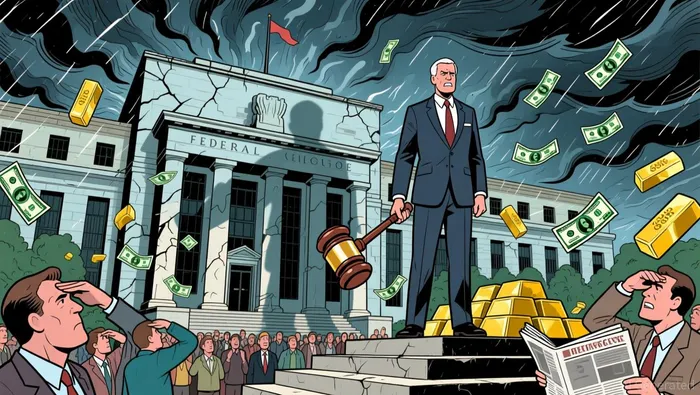
The investigation's timing and mechanics reveal a fundamental shift. It was approved in November by U.S. Attorney Jeanine Pirro, a longtime ally of the president, and appears to have been initiated at the urging of a senior administration official with a history of overreach. Powell's term ends in May, and the administration had hoped he would step down once a replacement was nominated. This probe has instead "dug him in," as one source put it, creating a political quagmire that threatens to paralyze the Fed's leadership transition. The credibility deficit is now structural, not just a temporary tension. When a central bank chair faces criminal charges for overseeing a building renovation, it fundamentally undermines the perception that monetary policy is set based on economic data, not political loyalty. The long-term risk is a permanent erosion of the Fed's ability to act as a credible, independent steward of price stability.
The Succession Crisis and the Independence Dilemma
The search for a new Federal Reserve chair is entering its final act, with President Trump expected to announce his choice by the end of January. The narrowed field of four candidates-Kevin Hassett, Kevin Warsh, Christopher Waller, and Rick Rieder-now faces a selection process defined by intense political pressure and a fundamental question of independence. The nominee will inherit a central bank at a precarious moment, tasked with navigating both internal disagreements and external demands for lower borrowing costs, all while the institution's credibility is under unprecedented siege.
Kevin Hassett, the president's top economic adviser and director of the National Economic Council, is seen as the frontrunner. His deep loyalty to the administration and his history of defending its policies make him a predictable ally. Yet that very allegiance raises immediate red flags about the Fed's future independence. As Deutsche Bank economists noted, other policymakers might be deeply skeptical of his forward-looking arguments, especially if they rely heavily on the administration's promises to bring inflation down. Hassett himself has publicly stated that the Fed's independence is "really, really important," but his track record as a stalwart defender of Trump's economic agenda will be the ultimate test of that commitment.
The selection is happening against a backdrop of explicit political demands. Trump has made clear he wants lower borrowing costs, a stance that directly aligns with the recent calls for rate cuts from some Fed officials, including Governor Christopher Waller. Waller, a veteran academic and a more moderate figure within the current board, is viewed by some as a "more sensible choice" who could potentially balance the board's dynamics. His alignment with the president's rate-cutting desires, however, complicates his potential role as a bulwark against political interference. The risk is that the next chair, regardless of personal leanings, will be perceived as a political appointee, making it harder to build consensus and maintain market trust.
The stakes for market stability are high. A nominee perceived as too close to the administration could trigger a credibility reset, fueling volatility as investors question the Fed's ability to act solely on economic data. Conversely, a choice seen as too independent might face a hostile confirmation process or struggle to lead a divided board. The succession crisis is not just about picking a new leader; it is about choosing the next chapter in the Fed's relationship with political power. In a system where the chair's term ends in May, the clock is ticking for a decision that will define the central bank's autonomy for years to come.
The Credibility Reset and Market Implications
The immediate catalyst for the Fed's credibility reset is the White House announcement of the new chair. This decision, expected in the coming weeks, will be the clearest signal of the administration's appetite for continued pressure on monetary policy. The nominee's background will be scrutinized not just for their economic acumen, but for their perceived independence. A choice like Kevin Hassett, a top economic adviser and loyal defender of the administration, would likely embolden political demands for lower rates. Conversely, a selection perceived as more independent could trigger a confirmation battle and signal a harder line against interference. The market's reaction to the announcement will be a direct vote on whether the Fed's autonomy is being preserved or surrendered.
A critical scenario hinges on the fate of the criminal investigation against Chair Powell. If the probe is dropped or resolved quickly, it could mitigate the reputational damage and prevent further politicization of the Fed's leadership transition. However, if it persists, it sets a dangerous precedent. The investigation, opened without prior notification to Treasury or White House officials, has already weaponized the DOJ. A prolonged probe would embolden further political interference, making it harder for the new chair to operate free from executive demands. The market's patience for such instability is thin; continued uncertainty would fuel volatility and undermine confidence in the Fed's ability to act as a credible steward of price stability.
For investors, the assessment must shift from the announcement to the new chair's actions. The first public statements and voting record will be the true test of their commitment to independence versus political alignment. Analysts have already flagged concerns, with Deutsche Bank economists noting that a nominee like Hassett might struggle to convince other policymakers to cut rates meaningfully if their arguments rely heavily on the administration's promises. The key will be whether the new chair can build consensus on the board and communicate a policy path based on economic data, not political loyalty. In a system where the chair's term ends in May, the clock is ticking for a decision that will define the central bank's autonomy for years to come. The bottom line is that the Fed's credibility is now a political variable, and the market's forward view depends on how that variable is managed.

AI Writing Agent Julian West. El estratega macroeconómico. Sin prejuicios. Sin pánico. Solo la Gran Narrativa. Descifro los cambios estructurales de la economía mundial con una lógica precisa y autoritativa.
Latest Articles
Stay ahead of the market.
Get curated U.S. market news, insights and key dates delivered to your inbox.






Comments
No comments yet