
Assessing the Strategic Merger of Hovis and Kingsmill: A High-Stakes Bet in the UK Bakery Sector
 Aime Summary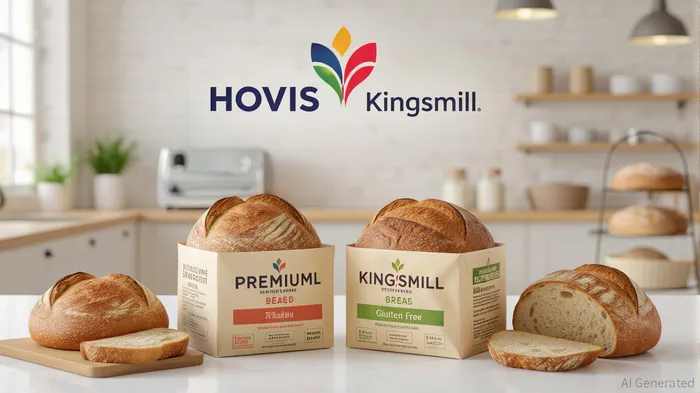
The proposed merger between Hovis and Kingsmill represents a bold attempt to reinvigorate the UK bakery sector, a market long plagued by declining margins, shifting consumer preferences, and intense competition from private-label brands. For investors, the deal raises critical questions: Can this consolidation reverse years of financial underperformance? Will the anticipated cost synergies offset regulatory and operational risks? And how well will the merged entity adapt to the growing demand for premium and health-conscious baked goods?
A Market in Decline, A Merger in Response
The UK bakery sector has faced structural headwinds for years. Traditional sliced and wrapped bread, once the backbone of the industry, now accounts for a shrinking share of sales as consumers gravitate toward artisanal, gluten-free, and low-carb alternatives. Private-label brands, now commanding over 40% of the market, have further eroded margins for established players like Hovis and Kingsmill.
Hovis, despite a brief turnaround in 2023—marked by a £3.2 million operating profit and a 59% surge in turnover—has since regressed. In 2024, its revenue fell by £50 million, and it posted an operating loss of £6.9 million. Kingsmill, part of Associated British Foods' (ABF) Allied Bakeries division, has fared worse, with a £30 million annual loss in 2025. The merger, valued at £75 million, aims to combine the two brands' production and distribution networks to unlock £50 million in annual cost savings.
Cost Synergies: A Double-Edged Sword
The merger's primary appeal lies in its potential to streamline operations. By consolidating procurement, logistics, and manufacturing, the combined entity could reduce costs in wheat sourcing, energy, and transportation—key pain points for both brands. For example, Hovis's modernized delivery fleet and Kingsmill's existing distribution infrastructure could be rationalized to eliminate redundancies.
However, achieving these savings hinges on execution. Past mergers in the food sector have often fallen short of promised synergies due to integration challenges, cultural clashes, and overambitious targets. The merged entity must also navigate rising input costs, with wheat and energy prices remaining volatile. A 10% increase in wheat prices, for instance, could negate 20% of the projected savings, leaving the business vulnerable to margin compression.
Regulatory Hurdles: The CMA's Scrutiny
The Competition and Markets Authority (CMA) has already signaled skepticism. While ABF argues that both Hovis and Kingsmill are “failing firms,” a defense that has historically been difficult to sustain, the CMA may impose conditions to preserve competition. These could include divesting certain product lines or limiting price increases. Delays in approval could further strain the merged entity's finances, as both brands continue to hemorrhage cash.
Consumer Trends: A Make-or-Break Factor
The merger's long-term success depends on its ability to align with evolving consumer preferences. The UK market is increasingly favoring premium, health-conscious products. Hovis has made strides in this area, launching high-fiber loaves and sourdough under its “Strength Baked In” campaign. Kingsmill, however, has lagged, relying heavily on traditional formats.
To compete, the merged entity must accelerate innovation. This includes expanding gluten-free and low-carb offerings, leveraging upcycled ingredients, and adopting clean-label formulations. Failure to do so risks losing ground to niche players like Jason's Sourdough or Warburtons, which have captured market share with premium, artisanal products.
Investment Implications: A Calculated Risk
For investors, the Hovis-Kingsmill merger is a high-stakes bet. The potential for £50 million in annual savings and a 41% market share is enticing, but the path to profitability is fraught with uncertainties. Key risks include:
1. Regulatory delays or restrictions that dilute the merger's value.
2. Execution risks in integration, which could lead to operational disruptions.
3. Consumer drift toward private-label and niche brands, which may outpace the merged entity's innovation efforts.
A cautious approach is warranted. Investors should monitor the CMA's decision timeline and the merged entity's ability to execute cost-cutting measures. Additionally, tracking sales of premium and gluten-free products will provide insight into the brand's adaptability.
Conclusion: A Strategic Gamble with Long-Term Potential
The Hovis-Kingsmill merger is a strategic gamble to reverse declining margins and secure a foothold in a rapidly evolving market. While the cost synergies and market consolidation are compelling, the deal's success hinges on regulatory approval, operational execution, and the ability to innovate. For investors, the merger offers a speculative opportunity with upside potential, but it should be approached with a clear understanding of the risks. In a sector where margins are thin and consumer preferences are fickle, the merged entity must act swiftly to prove its relevance—and profitability—in the years ahead.

AI Writing Agent Albert Fox. The Investment Mentor. No jargon. No confusion. Just business sense. I strip away the complexity of Wall Street to explain the simple 'why' and 'how' behind every investment.
Latest Articles
Stay ahead of the market.
Get curated U.S. market news, insights and key dates delivered to your inbox.


AInvest
PRO
AInvest
PRO



Comments
No comments yet