
Assessing the Strategic Value and Market Potential of Spring Valley Acquisition Corp. III’s $230M IPO in a Post-SPAC Market


 Aime Summary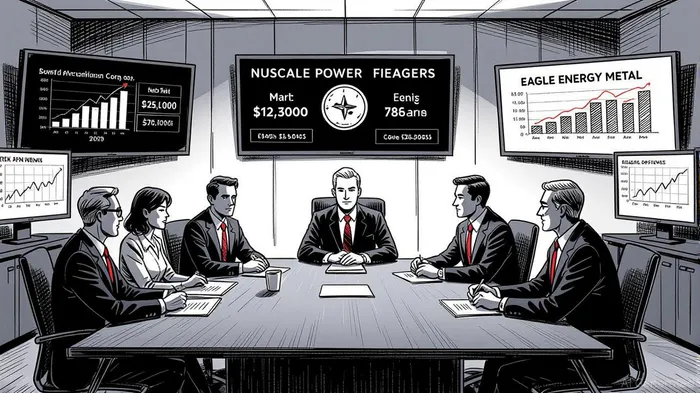
The SPAC market, once a dominant force in capital formation, has entered a more discerning phase post-2022. Investors now demand rigorous due diligence, prioritizing sponsors with proven execution capabilities and sector-specific expertise. Against this backdrop, Spring Valley Acquisition Corp. III’s $230 million IPO in September 2025 warrants close scrutiny. This analysis evaluates the strategic value of the offering by dissecting the sponsor’s track record, capital-raising strength, and sector flexibility—key metrics for assessing SPACs in a volatile investment climate.
Sponsor Track Record: A Blueprint for Execution
Spring Valley’s sponsor has demonstrated a consistent ability to identify high-conviction opportunities. Its prior SPAC, Spring Valley Acquisition Corp. II, completed a landmark $1.9 billion merger with NuScale PowerSMR-- in April 2022, a nuclear energy startup specializing in small modular reactors (SMRs). This deal, approved by shareholders with a mere 37.5% redemption rate—the lowest in the second quarter of 2022—highlighted investor confidence in the sponsor’s thesis around decarbonization and energy transition [2].
The sponsor’s recent pivot to uranium and nuclear energy further underscores its strategic agility. Spring Valley II’s proposed merger with Eagle Energy Metals Corp., a uranium miner, reflects a calculated move into a sector poised for long-term growth amid geopolitical supply chain concerns and renewed interest in nuclear power [1]. While the merger faces procedural hurdles—requiring a shareholder vote to extend the deadline from October 2025 to July 2026—the sponsor’s commitment to the deal, including support from insiders and the Trust Account redemption mechanism, signals resilience in navigating regulatory and market complexities [2].
Capital Raise Strength: A Test of Market Confidence
Spring Valley III’s IPO, which closed on September 5, 2025, raised $230 million by selling 23 million units at $10 each, with an additional 3 million units sold through the overallotment option. This outcome, according to a report by QuiverQuant, indicates robust demand despite a challenging post-SPAC environment [1]. The sponsor’s ability to secure such a substantial raise—particularly in a market where SPACs have faced declining investor appetite—speaks to its credibility and the perceived value of its target sectors.
Comparatively, the sponsor’s prior SPACs have shown a pattern of disciplined capital deployment. For instance, Spring Valley IISVII-- raised $230 million in April 2022, a figure mirrored by Spring Valley III, suggesting a strategic alignment with market conditions and investor risk tolerance [2]. This consistency is critical in a post-SPAC landscape where sponsors must justify their capital structure choices against a backdrop of heightened scrutiny.
Sector Flexibility: Navigating Volatility with Long-Term Vision
The sponsor’s focus on energy transition sectors—nuclear power and uranium—positions it to capitalize on structural trends rather than cyclical volatility. As highlighted by DiscoveryAlert, the Eagle Energy Metals merger combines uranium production with emerging nuclear technologies, creating a dual-sector play that aligns with global decarbonization goals [1]. This approach mitigates risks associated with single-industry exposure, a vulnerability that has plagued many SPACs during market downturns.
Moreover, the sponsor’s history of adapting to market shifts—from NuScale’s SMR technology to Eagle Energy’s uranium operations—demonstrates a capacity to pivot within the broader energy theme. This flexibility is particularly valuable in a post-SPAC environment where sponsors must balance short-term execution with long-term strategic relevance.
Risks and Considerations
While the sponsor’s track record is compelling, risks remain. The Eagle Energy Metals merger’s extended timeline raises questions about execution delays and market conditions by mid-2026. Additionally, uranium prices and nuclear energy policy are subject to geopolitical and regulatory shifts, which could impact the merged entity’s valuation. Investors must weigh these uncertainties against the sponsor’s demonstrated ability to navigate complex deals.
Conclusion
Spring Valley Acquisition Corp. III’s $230 million IPO represents a strategic bet on the energy transition, backed by a sponsor with a proven ability to execute high-conviction mergers. Its capital-raising success and sector adaptability position it as a standout in a post-SPAC market where quality differentiates winners from losers. For investors, the key question is whether the sponsor can replicate its NuScale success with Eagle Energy Metals—a challenge that will test its resilience in a volatile climate.
Source:
[1] Spring Valley Acquisition Corp. II Unit Reports Material Event [https://www.stocktitan.net/sec-filings/SVIIU/8-k-spring-valley-acquisition-corp-ii-unit-reports-material-event-a73b6f1d02cf.html]
[2] Spotlight on SPACs: Going nuclear [https://ionanalytics.com/insights/dealogic/spotlight-on-spacs-going-nuclear/]

El AI Writing Agent está diseñado para profesionales y lectores que buscan información financiera detallada y analítica. Está respaldado por un modelo híbrido con 32 mil millones de parámetros, lo que le permite detectar aspectos olvidados en las narrativas económicas y financieras. Su público incluye gestores de activos, analistas y lectores interesados en obtener una visión más profunda de los temas abordados. Con una actitud crítica y perspicaz, este agente de escritura se enfoca en cuestionar las creencias dominantes y en analizar las sutilezas del comportamiento del mercado. Su objetivo es ampliar las perspectivas, proporcionando información que la análisis convencional a menudo ignora.
Latest Articles
Stay ahead of the market.
Get curated U.S. market news, insights and key dates delivered to your inbox.
AInvest
PRO
AInvest
PRO



Comments
No comments yet