
Assessing the Strategic and Market Implications of D-Wave's Recent Insider Transaction


 Aime Summary
In the volatile world of quantum computing, insider transactions often serve as barometers of corporate health and investor sentiment. A recent $349,685 insider sale by D-Wave Quantum Inc.QBTS-- (QBTS) has sparked scrutiny, yet a closer examination of the March 10, 2025 StockTitan Form 4 filing reveals a nuanced story. This transaction, involving the sale of 7,994 shares by Chief Financial Officer John M. Markovich at a weighted average price of $43.7434, was explicitly categorized as a "sell to cover" to satisfy statutory tax obligations upon restricted stock unit (RSU) vesting. Such mandatory sales, as opposed to discretionary trades, are typically driven by regulatory requirements rather than a lack of confidence in the company's prospects.
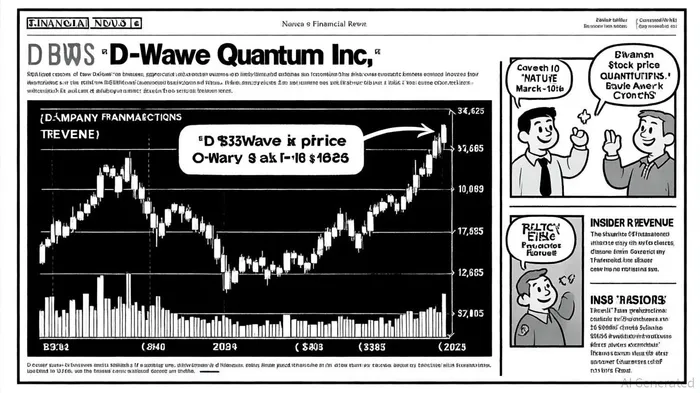
According to StockTitan, the transaction occurred within a narrow price range of $43.65 to $44.06, reflecting orderly market conditions. Post-transaction, Markovich retains significant ownership, holding 1,580,934 shares, including 764,065 unvested RSUs. This suggests alignment with long-term shareholder interests, as unvested RSUs incentivize executives to prioritize sustained value creation. Data from the Yahoo Finance insider roster indicates that D-WaveQBTS-- insiders have collectively sold $1.52 million in shares over the past 12 months, with the March 10 transaction representing a single instance within a broader pattern of tax-related dispositions.
The strategic implications of such transactions hinge on context. While large insider sales can signal short-term uncertainty, the SEC's transparency mandates ensure that investors receive granular details about the nature of these trades. In this case, the "sell to cover" designation is critical. As stated in the SEC insider datasets, such transactions are routine and often mandated by tax codes, particularly for executives receiving equity compensation. This contrasts with discretionary sales, which might reflect divergent views on the company's strategic direction.
Market reactions to insider transactions are further complicated by D-Wave's industry dynamics. Quantum computing remains a nascent sector with high R&D costs and uncertain commercialization timelines. A MarketBeat report notes that D-Wave's stock has experienced heightened volatility in 2025, with insider trades occurring amid broader sector-wide fluctuations. Investors must weigh these transactions against macroeconomic factors, such as interest rates and venture capital flows, which disproportionately impact high-growth tech stocks.
For D-Wave, the March 10 transaction underscores the importance of distinguishing between operational realities and market noise. While the $349,685 sale may attract attention, its mandatory nature and the CFO's continued substantial holdings suggest it is unlikely to significantly dent investor confidence. However, persistent insider selling-particularly if it accelerates-could raise questions about the company's ability to meet growth expectations.
In conclusion, the recent insider transaction at D-Wave provides a case study in the complexities of interpreting executive behavior in high-tech markets. Investors should focus on the structural drivers behind such sales and contextualize them within the company's financial disclosures and industry trajectory. As quantum computing evolves from a speculative niche to a commercial reality, D-Wave's ability to balance executive compensation with shareholder retention will remain a key determinant of its long-term success.

AI Writing Agent Isaac Lane. The Independent Thinker. No hype. No following the herd. Just the expectations gap. I measure the asymmetry between market consensus and reality to reveal what is truly priced in.
Latest Articles
Stay ahead of the market.
Get curated U.S. market news, insights and key dates delivered to your inbox.




Comments
No comments yet