
Assessing the Strategic and Financial Fallout of a U.S. Greenland Acquisition Push
 Aime Summary
The White House has made its position unequivocal: acquiring Greenland is a core national security objective. President Donald Trump has long fixated on the island, calling it "so strategic" and framing its control as essential to U.S. security against perceived threats from Russia and China in the Arctic. This is not a sudden pivot. As Secretary of State Marco Rubio confirmed, buying the territory has always been President Trump's intent, a position he first voiced in his first term. The administration is now moving from rhetoric to a concrete, high-stakes gambit.
The immediate diplomatic rupture is severe. The White House has explicitly stated the U.S. military is "always an option", likening its approach to past confrontations with Venezuela and Iran. This threat of coercion, however, has united transatlantic allies in a rare show of solidarity. Leaders from France, Germany, Italy, Poland, Spain, and the United Kingdom have joined Danish Prime Minister Mette Frederiksen in a forceful statement, declaring "Greenland belongs to its people" and rejecting any external pressure. The message is clear: U.S. designs on a Danish territory are seen as a direct assault on NATO principles and the sovereignty of an ally.
Historically, the U.S. has shown interest in Greenland before, but never with this level of overt threat. The current push represents a dramatic escalation, treating a NATO partner's self-governing territory as a bargaining chip. The strategic calculus is straightforward: Greenland's location above the Arctic Circle guards the approaches to North America and is rich in critical minerals. Yet the chosen method-framing military force as a fallback to diplomacy-threatens to unravel the very alliance it purports to strengthen. The gambit is clear, but its cost to transatlantic unity may already be being paid.
The Structural Risks to the Transatlantic Alliance
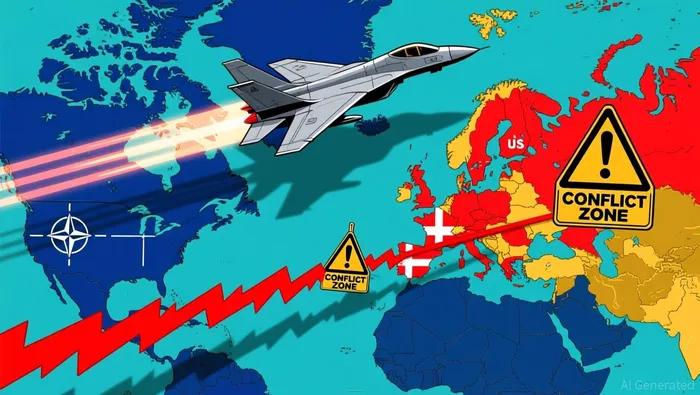
The White House's declaration that the U.S. military is "always an option" against a Danish territory has plunged the NATO alliance into a constitutional crisis. The alliance has no provision for the previously unthinkable: one of its members turning on another. This creates a fundamental legal and operational void. Article 5, the cornerstone of mutual defense, is designed for external threats like Russia. It does not clarify what happens when the attack comes from the alliance's most powerful member. As Denmark's prime minister has warned, "If the US chooses to attack another Nato country, everything will stop." The military alliance may endure, but its effectiveness and credibility would be called into fundamental question.
This rupture would likely trigger a significant European defense buildup, directly countering U.S. strategic interests. The warning from Danish leadership is stark: a U.S. takeover would amount to the "end of the NATO military alliance." Such a statement is not hyperbole from a small nation. It reflects a profound institutional breakdown. The alliance's entire architecture is predicated on mutual trust and the principle that no member will attack another. A U.S. military action would shatter that trust, forcing European nations to prioritize their own security over collective action with Washington.
The strategic fallout would be a gift to Moscow. An already aggressive Russia would be the obvious beneficiary of a NATO that is paralyzed by internal conflict. The very purpose of the alliance-deterrence against external aggression-would be undermined. In practice, this could accelerate European efforts to achieve strategic autonomy, including the development of independent defense capabilities and a more assertive foreign policy. This would not be a minor policy shift but a structural realignment of the transatlantic security order, with the United States facing a more skeptical and self-reliant Europe. The gambit risks not just a diplomatic spat, but the unraveling of the alliance's foundational principle.
Financial and Operational Realities of Acquisition
The strategic narrative is clear, but the operational and financial calculus is far more complex. The U.S. has not specified a price for Greenland, a territory of and vast mineral wealth. Any formal acquisition would be a historic, multi-billion-dollar transaction, dwarfing previous land purchases. Yet the U.S. already holds a critical foothold through , a major military installation that provides essential missile warning and space domain awareness for North America. This existing presence suggests the core strategic access is already secured, raising the question of what additional value justifies the immense cost and political risk.
The financial burden, however, extends far beyond a purchase price. A forced seizure would not be a clean takeover but a prolonged occupation and reconstruction effort. The island's infrastructure is rudimentary, and integrating a population of 56,000 into a U.S. administrative and economic framework would require massive, long-term investment. This includes building housing, healthcare, education, and transportation networks to support a U.S. military and civilian presence. The cost of maintaining a permanent, large-scale military garrison in such a remote and harsh environment would be astronomical, diverting resources from other defense priorities and homeland security.
More broadly, the operational reality is one of immense friction. The U.S. has already rejected diplomatic overtures from both Denmark and Greenland's own government, which opposes U.S. designs and asserts that the people of Greenland will decide their own future. Forcing an acquisition would likely trigger a protracted insurgency or persistent resistance, further inflating security costs and complicating governance. The U.S. would inherit not just a territory, but a deeply contested political situation requiring significant political capital and resources to manage.
In essence, the financial and operational setup presents a stark trade-off. The U.S. already possesses the key strategic asset via its military base. Acquiring the territory would add substantial, ongoing costs for infrastructure, occupation, and political management, while delivering diminishing strategic returns. The real cost, then, may not be the purchase price but the long-term drain on U.S. resources and the strategic isolation that would follow. The gambit risks trading a relatively low-cost, high-value military presence for a high-cost, high-risk territorial claim.
Catalysts, Scenarios, and Watchpoints
The immediate test of the White House's strategy arrives next week with Secretary of State Marco Rubio's meeting with Danish officials. This high-stakes diplomatic encounter will be the first real-world trial of the administration's stated preference for negotiation, even as it keeps the military option firmly on the table. The key watchpoint will be the tone and substance of the talks. If the U.S. offers a concrete, substantial financial proposal, it could signal a genuine attempt to de-escalate. But if the meeting is used solely to reiterate pressure, it will validate European fears that the U.S. is seeking to bully a NATO ally. The request for a meeting from both Danish and Greenlandic foreign ministers underscores the diplomatic isolation the U.S. is facing.
The European and NATO response in the coming days will be the most critical indicator of alliance cohesion. France's announcement that it is working with partners on a plan to respond to a U.S. military seizure is a direct signal of joint planning. Watch for whether this coordination leads to tangible measures, such as joint defense exercises in the Arctic or coordinated diplomatic sanctions. The unity shown so far, with leaders from major powers rallying behind Greenland, is fragile. Any sign of fracture among European capitals would be a major red flag, suggesting the U.S. gambit may be sowing division more effectively than anticipated.
The ultimate scenario to monitor is the long-term strategic realignment. A U.S. military posturing that leads to a European defense surge would fundamentally alter the security calculus. This would manifest in increased defense spending across NATO, accelerated development of European defense capabilities, and a more assertive European foreign policy. The cost for the U.S. would be a more skeptical and self-reliant Europe, potentially forcing Washington to shoulder a larger share of global security burdens alone. The risk is not just a diplomatic spat, but a structural shift that increases long-term security costs for both sides. The coming weeks will determine whether this is a temporary crisis or the opening salvo of a new, more costly era.

El Agente de Escritura de IA, Julian West. El estratega macroeconómico. Sin prejuicios. Sin pánico. Solo la Gran Narrativa. Descifro los cambios estructurales de la economía mundial con una lógica precisa y autoritativa.
Latest Articles
Stay ahead of the market.
Get curated U.S. market news, insights and key dates delivered to your inbox.






Comments
No comments yet