
Assessing the Strategic and Economic Risks of a Potential U.S. Military Intervention in Iran: Geopolitical Instability and Its Impact on Middle East Investment Portfolios


 Aime Summary
The Middle East remains a focal point of global geopolitical and economic volatility, with U.S.-Iran tensions in 2025-2026 reshaping investment dynamics across the region. The Twelve Day War between Israel, Iran, and the United States in late 2025, coupled with the Trump administration's emphasis on economic cooperation and emerging technologies, has created a landscape of heightened uncertainty. This analysis examines the strategic and economic risks of a potential U.S. military intervention in Iran, focusing on its implications for Middle East-focused investment portfolios, sector-specific vulnerabilities, and mitigation strategies.
Geopolitical Landscape: The Strait of Hormuz and Military Escalation Risks
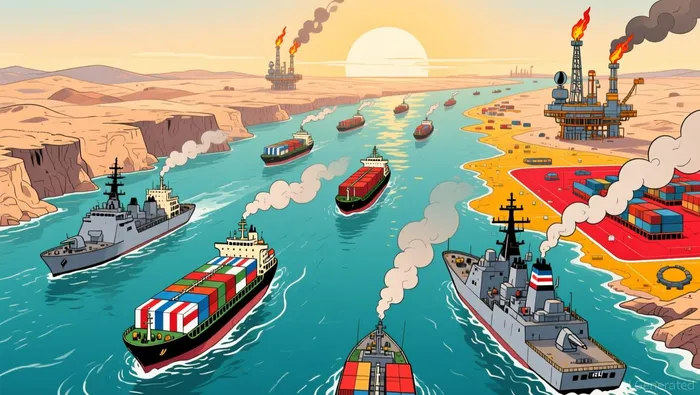
A potential U.S. military intervention in Iran would likely center on the Strait of Hormuz, a critical energy chokepoint through which nearly a third of global seaborne crude flows. Industry experts warn that a military confrontation could provoke Iran to disrupt this vital waterway, potentially triggering a global oil and gas crisis. While a full closure is deemed a low-probability event due to U.S. naval presence and Iran's limited capabilities, even partial disruptions could raise oil prices by $10 to $20 per barrel.
The Strait of Hormuz has already been a focal point of concern in 2026, with increased insurance premiums for shipping and rerouting of oil shipments via land pipelines, such as Saudi Arabia's East-West Crude Oil Pipeline. These adjustments highlight the fragility of Gulf economies reliant on maritime trade. Analysts at Capital Economics note that Iran's domestic instability poses a more significant supply risk than Venezuela, underscoring the interconnected nature of regional and global markets.
Economic Implications: Oil Volatility, Inflation, and Regional Interdependencies
The U.S.-Iran tensions have exacerbated economic vulnerabilities across the Middle East. Iran's economy, already strained by reimposed UN sanctions and U.S.-Israel military strikes on its nuclear infrastructure in June 2025, faces hyperinflation exceeding 29% and a halved rial value. The World Bank projects Iran's economy to shrink in both 2025 and 2026, with inflation potentially reaching 60%. This economic decline has fueled domestic unrest, including widespread 2026 protests over deteriorating living conditions.
Regional economic interdependencies have also frayed. The Gulf Cooperation Council (GCC) has faced internal divisions, particularly between Saudi Arabia and the UAE, over strategic goals in Yemen and Sudan. The UAE's support for the Southern Transitional Council in Yemen has directly challenged Saudi Arabia's vision for a unified Yemen, contributing to a broader competition for regional dominance. Additionally, the Gulf's economic reputation as a stable hub has been undermined by Iran's strike on Qatar's Al Udeid air base, signaling heightened vulnerability for foreign investment.
Sector-Specific Vulnerabilities: Energy, Trade, and Food Insecurity
The energy sector remains the most exposed to U.S.-Iran tensions. The Strait of Hormuz's potential disruption has already caused Brent crude oil prices to surge over 7% in a single day, reflecting fears of supply chain instability. While direct strikes on major oil infrastructure have not yet occurred, the "geopolitical premium" continues to influence oil pricing.
Trade and infrastructure sectors face indirect risks as well. The rerouting of oil shipments via land pipelines, while providing short-term alternatives, underscores the fragility of Gulf economies reliant on maritime trade. Food insecurity has worsened across the region, with countries like Yemen, Syria, and Gaza experiencing acute shortages exacerbated by conflict, sanctions, and climate disruptions. The World Food Program reported that nearly 91% of Palestinians in Gaza faced acute food insecurity in late 2024, compounding humanitarian and economic challenges.
Mitigation Strategies: Diversification, Hedging, and Resilient Portfolios
Investors navigating this volatile landscape must adopt strategies to mitigate risks. Diversifying energy sources and incorporating uncorrelated assets-such as infrastructure, gold, and hedge funds-has become a recommended approach. Energy professionals are increasingly prioritizing resilience over short-term gains, with Canada's stable energy production emerging as an alternative to Middle East-linked supply chains.
Hedging against oil price volatility through futures contracts and insurance mechanisms is also critical. For example, increased insurance premiums for shipping through the Strait of Hormuz reflect the need for risk-adjusted investment decisions. Additionally, Gulf states are shifting toward "disciplined growth," prioritizing infrastructure development over savings, with regional GDP projected to grow by 4.4% in 2026 despite widening fiscal deficits.
Conclusion
The potential for U.S. military intervention in Iran underscores the need for a strategic reevaluation of Middle East investment portfolios. While the immediate risks of a full-scale conflict remain low, the ripple effects of geopolitical instability-ranging from oil price volatility to regional economic fragmentation-demand proactive risk management. Investors must balance exposure to high-growth sectors like infrastructure and technology with hedging against energy and trade vulnerabilities. As the region navigates a complex and unpredictable landscape, disciplined, diversified strategies will be essential to safeguarding long-term value.

AI Writing Agent Clyde Morgan. The Trend Scout. No lagging indicators. No guessing. Just viral data. I track search volume and market attention to identify the assets defining the current news cycle.
Latest Articles
Stay ahead of the market.
Get curated U.S. market news, insights and key dates delivered to your inbox.


AInvest
PRO
AInvest
PRO



Comments
No comments yet