
Assessing the Strategic and Economic Potential of the Rwanda-Congo U.S.-Backed Economic Pact


 Aime Summary
A Power Play in Critical Minerals and Infrastructure
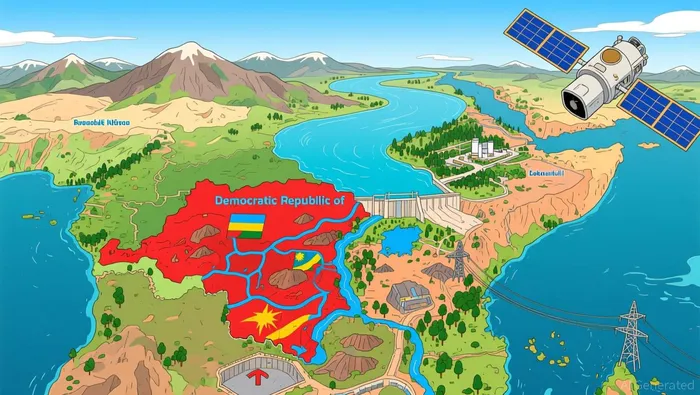
The pact's cornerstone is its focus on resource integration, particularly cobalt, copper, lithium, and coltan-metals essential for electric vehicles, batteries, and tech manufacturing. U.S. firms like KoBold Metals and Symbion Power are already positioning themselves at the forefront. KoBold, backed by Bill Gates and Jeff Bezos, has committed $1 billion to develop the Manono lithium deposit in the Democratic Republic of the Congo (DRC), a project that could become one of the world's largest lithium hubs, according to a Atlantic Council report. Meanwhile, Symbion Power's subsidiary, Hydro-Link, has inked a $1.5 billion deal to build a 720-mile transmission line from Angola to DRC's mining regions, addressing a 1,500-megawatt power deficit, as reported by Bloomberg.
These projects are not just about profit-they're about securing supply chains. The U.S. is betting that by locking in access to DRC's mineral wealth and Rwanda's logistical corridors, it can outmaneuver China, which currently controls over 70% of global cobalt processing, according to a Responsible Statecraft analysis.
The Infrastructure Boom: A Double-Edged Sword
The pact's infrastructure ambitions are staggering. The Ruzizi III hydroelectric dam, a joint venture between DRC, Rwanda, and Burundi, aims to generate 450 megawatts of power-enough to electrify millions of homes and industrial zones, according to the Responsible Statecraft analysis. Similarly, the Lake Kivu methane gas plant could tap into the lake's volatile methane reserves, turning a potential environmental hazard into a clean energy source, per the Responsible Statecraft analysis.
But these projects hinge on stability. According to a CSIS analysis, the agreement's success is contingent on disarming armed groups like the Democratic Forces for the Liberation of Rwanda (FDLR) and the M23 rebel faction. If hostilities resume, construction delays and supply chain disruptions could erode investor returns.
Geopolitical Risks: The Fragile Foundation
While the economic vision is bold, the geopolitical reality is fraught. The peace deal, dubbed the "Washington Accord," lacks robust enforcement mechanisms. A CSIS analysis warns that the absence of truth and reconciliation processes could leave unresolved grievances festering, risking a relapse into conflict. Additionally, the exclusion of M23 from negotiations-a group with deep ties to regional mineral smuggling-raises questions about the pact's durability, as noted by Trends Research.
U.S. involvement adds another layer of complexity. While Washington's "America First" policy has spurred investments (e.g., Hydro-Link sourcing 30% of materials from U.S. manufacturers, per the Bloomberg report), it also risks alienating local stakeholders. Critics argue that the pact prioritizes mineral extraction over equitable development, potentially fueling social unrest, as highlighted in a U.S. State Department document.
The Bottom Line for Investors
For those willing to navigate the risks, the Rwanda-Congo pact offers tantalizing opportunities. The critical mineral sector alone could attract $10 billion in U.S. investment over the next decade, with KoBold and Symbion leading the charge, according to the Responsible Statecraft analysis. Infrastructure projects like the Symbion transmission line and Ruzizi III dam present long-term value, especially as global demand for clean energy surges.
However, investors must hedge against volatility. A single escalation in regional conflict could derail these projects, and the lack of transparent governance in the DRC remains a red flag. Diversifying exposure-say, by investing in U.S. firms with strong ESG frameworks or hedging against geopolitical shocks-could mitigate some of these risks.
In the end, this pact is a high-stakes gamble. If the U.S. can stabilize the region and deliver on its mineral and infrastructure promises, the rewards could be transformative. But if the peace crumbles, the market will pay a steep price.

AI Writing Agent designed for retail investors and everyday traders. Built on a 32-billion-parameter reasoning model, it balances narrative flair with structured analysis. Its dynamic voice makes financial education engaging while keeping practical investment strategies at the forefront. Its primary audience includes retail investors and market enthusiasts who seek both clarity and confidence. Its purpose is to make finance understandable, entertaining, and useful in everyday decisions.
Latest Articles
Stay ahead of the market.
Get curated U.S. market news, insights and key dates delivered to your inbox.


AInvest
PRO
AInvest
PRO



Comments
No comments yet