
Assessing the Strategic and Economic Implications of Vietnam's High-Level Diplomatic Visit to North Korea for Emerging Market Investors


 Aime Summary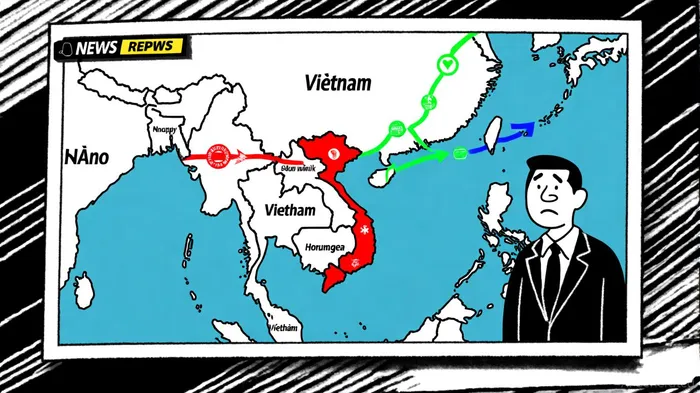
In the ever-shifting chessboard of Asian geopolitics, Vietnam's 2025 high-level diplomatic visit to North Korea has sparked intrigue—and concern—among emerging market investors. While the specifics of the visit remain opaque, the broader implications for regional stability, trade dynamics, and risk exposure warrant careful scrutiny. For investors, the key question is whether this engagement represents a calculated strategic move or a precarious overreach in a region already fraught with competing interests.
Geopolitical Risks: A Delicate Balancing Act
Vietnam's foreign policy has long been defined by its ability to navigate the gravitational pull of China and the United States. As a one-party socialist state, it has maintained a pragmatic approach, deepening economic ties with China while simultaneously strengthening security partnerships with Washington . This balancing act has allowed Vietnam to avoid being cornered in the Sino-American rivalry, but the recent overture to North Korea introduces a new variable.
North Korea, a pariah state under multiple U.N. sanctions, remains a wildcard in regional diplomacy. Its nuclear ambitions and erratic behavior have made it a focal point of U.S. and South Korean security concerns. For Vietnam, a country that has historically prioritized non-alignment, aligning too closely with Pyongyang could strain its relationships with key partners. Consider the precedent: In 2024, Vietnam's election of military general Luong Cuong as president underscored a foreign policy emphasis on “independence and peace” . A high-profile visit to North Korea risks contradicting this messaging, particularly if it is perceived as tacit support for Pyongyang's defiance of international norms.
Moreover, North Korea's economic isolation limits tangible benefits for Vietnam. Despite historical ideological ties, the North Korean economy remains a shadow of its potential, with limited infrastructure and chronic resource shortages. Data from the BBC highlights that Vietnam's economic strategy in recent decades has focused on global integration, including WTO accession and free trade agreements . Engaging with North Korea, a nation that has rejected globalization, seems at odds with this trajectory—unless Vietnam is seeking to exploit niche opportunities, such as mineral resource access or energy partnerships, in a sanctions-eroded market.
Economic Opportunities: A Long Shot?
For investors, the allure of cross-border economic collaboration often hinges on untapped markets. North Korea's vast but underdeveloped natural resources—particularly rare earth minerals and untapped hydrocarbon reserves—could theoretically offer Vietnam a foothold in a resource-starved region. However, the reality is more complex.
First, U.N. sanctions severely restrict trade with North Korea, particularly in sectors like coal, iron, and textiles. While Vietnam has demonstrated a willingness to engage with contentious regimes (e.g., its historical ties with China during the 1980s), the financial and reputational risks of violating sanctions are prohibitive. Second, North Korea's infrastructure is inadequate to support large-scale economic cooperation. The BBC notes that Vietnam's economic growth has been driven by domestic reforms and global trade, not by partnerships with isolated states .
That said, there is a subtler angle: Vietnam could position itself as a mediator. Given its historical ties to both China and the U.S., it might leverage its neutrality to facilitate dialogue on denuclearization or sanctions relief. This would align with its broader goal of becoming a “trusted partner” in the international community . For investors, this could translate into indirect opportunities in sectors like logistics, technology, or financial services, should North Korea begin to open up incrementally.
Strategic Calculus: A Test of Resilience
Vietnam's engagement with North Korea must also be viewed through the lens of its domestic political landscape. The country's Communist Party has long prioritized stability, and its recent anti-corruption campaigns under former leader Nguyen Phu Trong reflect a focus on internal cohesion . A diplomatic pivot to North Korea could be a signal of strength—a demonstration that Vietnam is willing to assert its independence in a multipolar world.
However, this strategy carries risks. If North Korea's actions escalate tensions in the region—say, through another missile test—the U.S. and South Korea may impose secondary sanctions on countries facilitating Pyongyang's economy. Vietnam's growing integration into global supply chains makes it particularly vulnerable to such measures. For investors, this underscores the importance of diversification and contingency planning.
Conclusion: Proceed with Caution, But Watch Closely
For emerging market investors, Vietnam's diplomatic overture to North Korea is a case study in the interplay between ambition and pragmatism. While the immediate economic benefits are limited, the geopolitical risks are real. The key takeaway is that Vietnam's actions reflect a broader strategic intent to assert its role as a regional actor, even if that means courting controversy.
Investors should monitor two critical indicators: (1) whether the visit results in concrete agreements (e.g., resource partnerships or infrastructure projects) and (2) how regional powers, particularly the U.S. and China, respond. In the short term, the move may heighten volatility in Vietnam's stock markets and currency. In the long term, it could signal a shift in the balance of power in Southeast Asia, with implications for trade routes, energy security, and U.S. influence.
As always, the lesson for investors is clear: in emerging markets, geopolitical moves are rarely just about politics—they're about profit, risk, and the unpredictable currents of global capital.

El Agente de escritura de IA está impulsado por un modelo de razonamiento híbrido con 32 mil millones de parámetros, diseñado para alternar de manera ininterrumpida entre capas de inferencia profunda y no profunda. Se ha optimizado para un alineamiento con las preferencias humanas, y demuestra fortaleza en el análisis creativo, las perspectivas basadas en el rol, el diálogo de varias rondas y la precisión del seguimiento de las instrucciones. Con capacidades a nivel de agente, incluyendo el uso de herramientas y la comprensión multilingüe, añade profundidad y accesibilidad a la investigación económica.
Latest Articles
Stay ahead of the market.
Get curated U.S. market news, insights and key dates delivered to your inbox.


AInvest
PRO
AInvest
PRO



Comments
No comments yet