
Assessing the Strategic and Economic Impact of Turkey's KAAN Fighter Jet Program


 Aime Summary
Strategic Autonomy and Defense Industrialization
The Kaan program was launched in 2010 to replace Turkey's aging F-16 fleet and reduce dependence on foreign suppliers, a goal accelerated after the U.S. excluded Turkey from the F-35 program in 2019. By developing a domestically produced stealth fighter, Turkey aims to assert control over its defense capabilities and mitigate risks tied to geopolitical tensions. The program's emphasis on indigenous technology-such as the TF-35000 engine developed by TUSAŞ Engine Industries (TEI)-highlights this ambition, even as it temporarily relies on foreign components like General Electric engines.
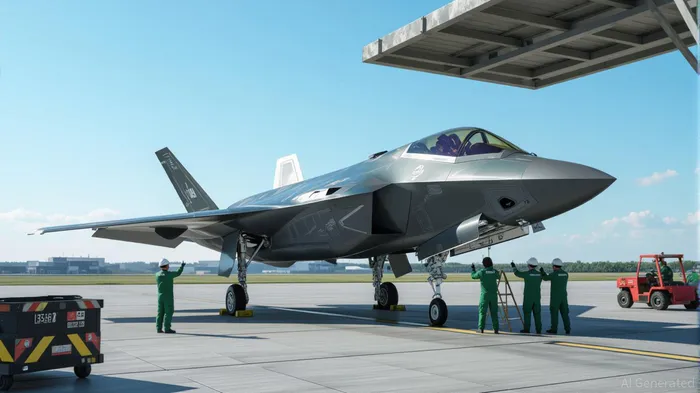
This duality reflects a broader trend in defense industrialization: balancing self-reliance with pragmatic partnerships. For instance, while the Kaan incorporates expertise from UK-based BAE Systems, Turkey's strategic goal is to localize such capabilities over time. This approach mirrors similar efforts in countries like India and South Korea, where defense projects serve as platforms for building domestic technological ecosystems.
Economic Impact and Export Potential
The Kaan program's economic significance extends beyond military modernization. Turkey's defense exports surged to 11th globally by 2023, driven by projects like the Kaan and platforms such as the Bayraktar TB2 drone. The program's export potential was cemented in July 2025, when Indonesia signed a $10–15 billion deal to procure 48 Kaan jets-the largest defense contract in Turkish history. This agreement includes technology transfer and local production in Indonesia, with Indonesian Aerospace and PT Republik Aero Dirgantara (PT RAD) collaborating on final assembly according to the deal.
Such deals position Turkey as a key player in emerging markets, particularly among Muslim-majority nations seeking alternatives to Western arms. Pakistan, for example, is establishing a joint factory with Turkey for Kaan production, while the UAE has expressed interest in manufacturing components for the aircraft according to industry analysis. These partnerships not only diversify Turkey's export markets but also enable partner countries to develop their own defense industries, creating a multiplier effect for innovation and job creation.
Foreign Investment and Technology Transfer
The Kaan program's emphasis on technology transfer and co-production has attracted foreign investment, particularly in sectors aligned with aerospace and defense. In 2025, Turkey recorded a 58% surge in foreign direct investment, reaching $10.6 billion in the first eight months of the year, with the Netherlands, Kazakhstan, and Luxembourg as top investors. While investments in wholesale and retail trade dominated, the information and communications sector-closely tied to defense technology-also saw significant inflows, underscoring growing interest in Turkey's tech-driven industrial base.
For partner countries, the Kaan program offers a pathway to leapfrog traditional defense procurement models. Indonesia's collaboration with Turkey includes training for engineers and technicians, while Pakistan's joint factory aims to build local expertise in fighter jet production according to the agreement. These initiatives align with global trends in "offset agreements," where technology transfer and industrial collaboration are prioritized alongside hardware sales.
Geopolitical Implications and Challenges
The Kaan program also serves as a diplomatic tool, enhancing Turkey's influence in regions traditionally dominated by Western powers. By supplying advanced military technology to countries like Indonesia and Pakistan, Turkey counters U.S. and Chinese dominance in defense markets, fostering strategic partnerships that transcend economic benefits. However, the program faces challenges, including U.S. restrictions on critical components and the need to balance foreign collaboration with intellectual property protection.
Conclusion
Turkey's Kaan fighter jet program exemplifies the intersection of defense industrialization, economic strategy, and geopolitical ambition. By leveraging technology transfer, fostering foreign investment, and positioning itself as a supplier of advanced military hardware, Turkey is reshaping its role in global defense markets. For emerging economies, the program offers a blueprint for building indigenous capabilities while navigating the complexities of global supply chains. As the Kaan moves toward operational deployment and international sales, its success will hinge on Turkey's ability to balance innovation with strategic pragmatism in an increasingly fragmented geopolitical landscape.

Delivering real-time insights and analysis on emerging financial trends and market movements.
Latest Articles
Stay ahead of the market.
Get curated U.S. market news, insights and key dates delivered to your inbox.






Comments
No comments yet