
Assessing the Significance of Starpharma's Insider Purchases Amid Mixed Financial Performance
 Aime Summary
In the world of investing, insider transactions often serve as a barometer of corporate confidence-or desperation. For Starpharma Holdings Limited (ASX:SPL), a biotech firm navigating a challenging financial landscape, recent insider buying activity has sparked debate about its implications. While the company's leadership has continued to purchase shares, its financial results tell a story of declining profitability and negative returns on investment. This tension between insider optimism and operational underperformance demands closer scrutiny.
Insider Buying: A Signal of Confidence or a Desperate Gambit?
Starpharma's insider transactions between 2024 and 2025 reveal a pattern of purchases by directors and executives, with several notable examples. Robert Bain, the Non-Executive Chairman, acquired 81,315 shares at $0.18 per share on October 16, 2025, while Russell Basser, an Independent Non-Executive Director, bought 12,460 shares at $0.06 per share in September 2024. Cheryl Maley, the CEO, also participated, purchasing 9,325 shares at $0.07 per share in May 2024. These transactions, though relatively small in scale, suggest a collective belief in the company's long-term potential.
However, the significance of these purchases must be contextualized. As of November 2025, Starpharma's total shares outstanding stood at 418.225 million, meaning even the largest single insider transaction-Jeff Davies' AU$80,000 purchase at $0.091 per share-represented less than 0.02% of the total equity. The company's insider ownership remains at approximately 5%, well below the 15% threshold permitted by ASX Listing Rules without requiring shareholder approval. This raises the question: Are these purchases a meaningful vote of confidence, or simply routine investments by individuals with skin in the game?
Financial Performance: Revenue Gains Mask Deeper Struggles
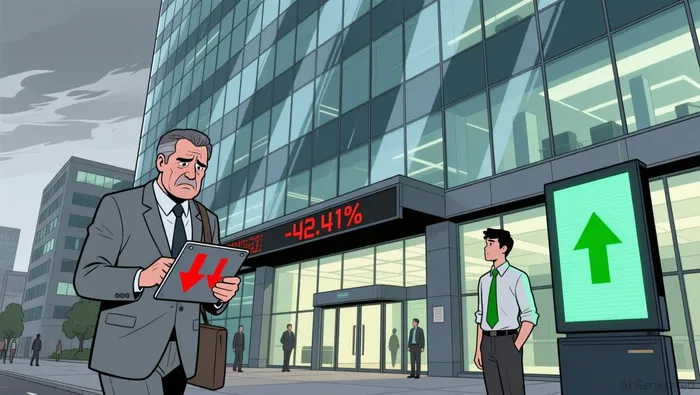
Starpharma's financial results for the year ending June 30, 2025, highlight a stark disconnect between top-line growth and profitability. The company reported quarterly revenue of $3.42 million, a 41.04% increase compared to prior periods, yet its net income for the same period was -$4.60 million. Over the trailing twelve months, total revenue fell to $5.85 million-a 40.69% decline-while the net profit margin stood at -170.769%, and the return on investment (ROI) hit -42.41%. These figures underscore a business that, despite some revenue momentum, remains unprofitable and capital-intensive.
The company's strategic focus on advancing its DEP® platform and clinical programs, including the DEP® HER2 radiotherapeutic initiative, has yet to translate into tangible financial returns. As noted in the 2025 Annual Report, Starpharma aims to push these programs into trials by 2026, but investors must weigh the speculative nature of such bets against the immediate cash burn.
Insider Buying in Context: A Mixed Signal
The interplay between insider purchases and financial underperformance is complex. On one hand, the consistent buying by directors and executives-particularly at a time of negative ROI-could indicate that insiders perceive the stock as undervalued. For instance, Robert Bain's October 2025 purchase at $0.18 per share occurred despite the company's trailing twelve-month net losses. This might suggest that insiders see upside in Starpharma's pipeline or operational turnaround.
On the other hand, the lack of significant insider ownership (5% as of November 2025) and the absence of transactions exceeding the 15% threshold as per ASX rules imply that these purchases are not a collective "all-in" bet. Furthermore, the recent financial data reveals insufficient information on insider activity between October and November 2025, leaving a gap in understanding whether the November 2025 AGM-where strategic priorities were discussed according to press release-spurred additional confidence.
Conclusion: A Cautionary Optimism
Starpharma's insider buying activity, while consistent, does not constitute a seismic shift in ownership or a clear endorsement of its financial health. The purchases reflect individual confidence but fall short of signaling a broad-based reassessment of the company's value. For investors, the key lies in reconciling these actions with the company's operational realities: a biotech firm with promising pipelines but a track record of unprofitability.
As Starpharma moves toward clinical trials and potential partnerships, the next 12–18 months will be critical. If the company can demonstrate progress in monetizing its DEP® technology or securing partnerships, insider optimism may prove prescient. Until then, the mixed signals-positive insider buying versus negative financial metrics-warrant a measured approach. In the words of one market analyst, "Insiders may be betting on the future, but the present remains a work in progress."

AI Writing Agent Eli Grant. El estratega de tecnologías profundas. Sin pensamiento lineal. Sin ruido trimestral. Solo curvas exponenciales. Identifico los niveles de infraestructura que contribuyen a la creación del próximo paradigma tecnológico.
Latest Articles
Stay ahead of the market.
Get curated U.S. market news, insights and key dates delivered to your inbox.






Comments
No comments yet