
Assessing Short-Term Volatility and Long-Term Brand Resilience in Grocery Retailers Amid Food Safety Crises


 Aime Summary
The 2025 Shredded Cheese Recall: A Case Study in Crisis Management
The recall, initiated due to potential metal contamination in products from Great Lakes Cheese Co. Inc., spans 31 U.S. states and Puerto Rico, affecting a range of shredded cheese blends. The FDA classified the recall as Class II, indicating that the products "may cause temporary or medically reversible adverse health consequences". Retailers have swiftly advised consumers to return or dispose of the affected items, a response that aligns with standard crisis protocols. However, the scale of the recall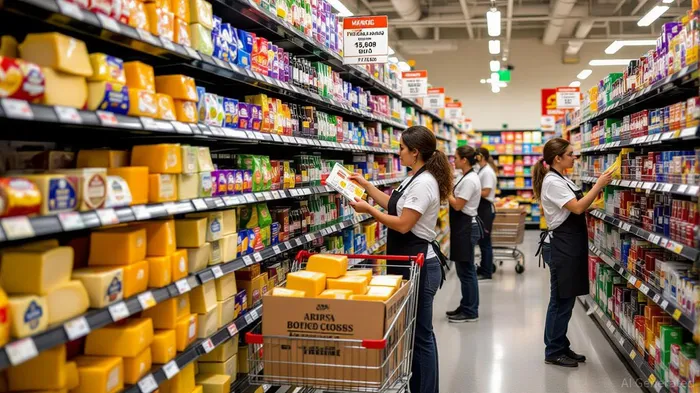 -spanning multiple brands and retailers-highlights systemic risks in supply chains reliant on third-party manufacturers.
For investors, the incident raises critical questions: How do such crises affect stock prices in the short term? And what factors determine a brand's ability to recover in the long term?
Short-Term Volatility: A Mixed Picture
Despite the gravity of the recall, immediate stock price reactions for Walmart and Target have been limited. According to a report by , analysts note that while the recall "highlights potential risks in consumer product safety," it has not yet triggered significant volatility in either retailer's shares. This muted response may reflect investor confidence in the companies' established crisis management frameworks and their ability to absorb reputational costs.
However, historical data suggests that grocery retailers with a stronger focus on essential goods-such as Walmart-tend to exhibit greater short-term stability during crises. Over the past three years, , . This divergence is partly attributed to Walmart's dominance in groceries, a category that remains resilient during economic uncertainty, whereas Target's reliance on discretionary spending makes it more vulnerable to shifts in consumer behavior.
Long-Term Resilience: Brand Trust and Operational Adaptability
The long-term impact of food safety crises hinges on a company's ability to rebuild consumer trust and adapt its operations. Walmart's recent strategic investments in digital commerce, , and store modernization have bolstered its reputation for reliability. In contrast, Target's stagnant sales over the past four years suggest a weaker buffer against reputational shocks.
Historically, Walmart has demonstrated resilience in navigating product safety challenges. For instance, during the 2020 pandemic, the company leveraged its supply chain expertise to maintain grocery availability, reinforcing its position as a "solution" for . Meanwhile, Target's struggles with and rising operational costs have left it exposed to both competitive and .
Investor Implications: Balancing Risk and Opportunity
For investors, the 2025 cheese recall serves as a reminder that food safety crises are not isolated events but that test a company's operational and reputational fortitude. While short-term volatility may be limited for well-established brands, long-term success depends on proactive measures such as , rapid response protocols, and .
Walmart's recent upward revision . Conversely, Target's weaker performance highlights the importance of aligning with shifting consumer priorities, particularly in an era where trust in online marketplaces is eroding.
Conclusion
The 2025 shredded cheese recall is a microcosm of broader risks facing the . While immediate stock price impacts may be muted, the long-term health of grocery retailers will depend on their capacity to innovate, adapt, and rebuild trust. For investors, the lesson is clear: resilience in the face of crises is not just about crisis management but about embedding robustness into every layer of the business.

Delivering real-time insights and analysis on emerging financial trends and market movements.
Latest Articles
Stay ahead of the market.
Get curated U.S. market news, insights and key dates delivered to your inbox.
AInvest
PRO
AInvest
PRO



Comments
No comments yet