
Assessing Securities Class Action Risks and Investor Strategy for XPLR Infrastructure, LP (XIFR, NEP): Navigating Misleading Disclosures and Yieldco Sustainability Concerns
 Aime Summary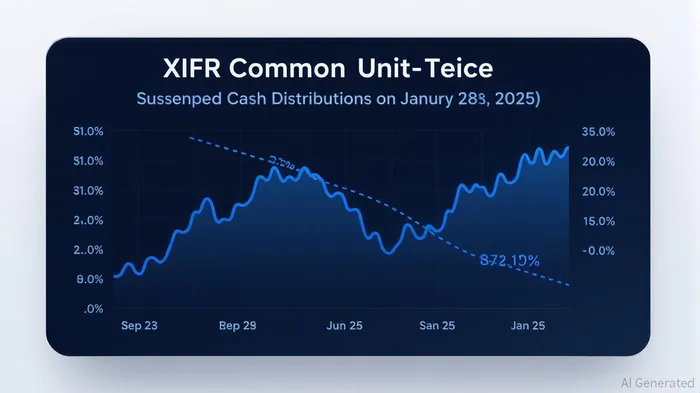
The Legal and Financial Fallout of Misleading Sustainability Disclosures
XPLR Infrastructure, LP (NYSE: XIFR) has become a focal point for securities litigation amid allegations of misleading investors about its financial health and sustainability as a yieldco. A class action lawsuit filed in 2025 accuses the company and its leadership of violating Sections 10(b) and 20(a) of the Securities Exchange Act of 1934, as well as Rule 10b-5, by downplaying risks tied to its financing arrangements and overstating the viability of its yieldco business model [1]. According to the complaint, these disclosures lulled investors into believing the company could sustain cash distributions indefinitely, while in reality, XPLRXIFR-- was grappling with insolvency risks that necessitated unitholder dilution and the eventual suspension of payouts [2].
The financial impact of these alleged misrepresentations was stark. On January 28, 2025, XPLR announced the indefinite suspension of cash distributions and the abandonment of its yieldco structure, triggering a nearly 35% plunge in its common unit price [3]. This collapse not only erased significant value for investors but also eroded trust in the company’s leadership and governance. As stated by Bragar Eagel & Squire, P.C., the lawsuit argues that XPLR’s disclosures during the class period (September 27, 2023–January 27, 2025) were “materially false and misleading,” omitting critical risks that would have influenced investment decisions [4].
Investor Strategy: The Urgency of Legal Action
For investors who purchased XIFRXIFR-- units during the class period, the path forward hinges on securing legal representation. The lead plaintiff deadline of September 8, 2025, marks a critical juncture for shareholders to assert their rights and seek compensation for losses tied to the alleged fraud [5]. According to a report by The Gross Law Firm, investors who acted on XPLR’s misleading statements—such as holding units in anticipation of stable distributions—are now facing a “securities fraud lawsuit with significant potential for recovery” [6].
The strategic value of engaging legal counsel cannot be overstated. Class action lawsuits often require meticulous documentation of trading activity and damages, and early consultation with attorneys can ensure compliance with procedural deadlines. As noted by Levi & Korsinsky, investors should act swiftly to preserve their claims, as the September 8 deadline is non-negotiable [7]. Furthermore, the lawsuit’s focus on sustainability and yieldco viability underscores a broader trend in securities litigation: regulators and courts are increasingly scrutinizing greenwashing and financial overpromising in infrastructure and energy sectors [8].
Broader Implications for Yieldco Investors
XPLR’s case serves as a cautionary tale for investors in yieldcos and infrastructure funds. The alleged misrepresentations highlight the risks of overreliance on management projections, particularly in capital-intensive industries where cash flow sustainability is paramount. Data from the lawsuit indicates that XPLR’s leadership failed to disclose that its financing arrangements were “unsustainable without significant dilution,” a red flag that could have prompted investors to reassess their exposure [9].
Moreover, the 35% price drop following the distribution suspension illustrates the fragility of yieldco valuations when earnings or distribution models are called into question. While the broader energy infrastructure sector remained relatively stable in 2025, XPLR’s collapse underscored the importance of due diligence on management transparency and financial resilience [10].
Conclusion
The securities class action against XPLR Infrastructure, LP represents a pivotal moment for investors navigating the intersection of sustainability claims and financial performance. The alleged misleading disclosures not only precipitated a dramatic decline in unit prices but also exposed systemic risks in yieldco business models. For affected investors, the September 8, 2025, deadline is a hard cutoff to secure legal counsel and pursue recovery. As the case unfolds, it will likely set a precedent for how courts evaluate greenwashing and financial misrepresentation in infrastructure investments.
Source:
[1] XPLR Infrastructure, LP Sued for Securities Law Violations [https://www.morningstarMORN--.com/news/business-wire/20250903315543/xplr-infrastructure-lp-sued-for-securities-law-violations-contact-the-djs-law-group-to-discuss-your-rights-xifr]
[2] XPLR Infrastructure, LP f/k/a NexteraNEE-- Energy Partners, LP Sued for Securities Law Violations [https://www.theglobeandmail.com/investing/markets/markets-news/TheNewswire.com/34598641/xplr-infrastructure-lp-f-k-a-nextera-energy-partners-lp-sued-for-securities-law-violations-investors-should-contact-levi-korsinsky-for-more-information-xifr/]
[3] XPLR INFRASTRUCTURE ALERT: Bragar Eagel & Squire, P.C. Urges Investors in XPLR Infrastructure to Inquire About Their Rights in Class Action Lawsuit [https://www.globenewswire.com/news-release/2025/09/03/3143533/0/en/XPLR-INFRASTRUCTURE-ALERT-Bragar-Eagel-Squire-P-C-Urges-Investors-in-XPLR-Infrastructure-XIFR-to-Inquire-About-Their-Rights-in-Class-Action-Lawsuit-Before-the-September-8th-Deadlin.html]
[4] XIFR, NEP Investors Have Opportunity to Lead XPLR Infrastructure, LP f/k/a Nextera Energy Partners, LP Securities Fraud Lawsuit [https://www.prnewswire.com/news-releases/xifr-nep-investors-have-opportunity-to-lead-xplr-infrastructure-lp-fka-nextera-energy-partners-lp-securities-fraud-lawsuit-302542515.html]
[5] XPLR Infrastructure (XIFR) Securities Class Action Lawsuit [https://zlk.com/learn?p=xplr-infrastructure-xifr-securities-class-action-lawsuit-update]
[6] The Gross Law Firm Reminds Shareholders of a Lead Plaintiff Deadline of September 8, 2025 in XPLR Infrastructure, LP f/k/a Nextera Energy Partners, LP Lawsuit - XIFR [https://www.morningstar.com/news/pr-newswire/20250904ny65101/the-gross-law-firm-reminds-shareholders-of-a-lead-plaintiff-deadline-of-september-8-2025-in-xplr-infrastructure-lp-fka-nextera-energy-partners-lp-lawsuit-xifr]
[7] XPLR Infrastructure, LP f/k/a Nextera Energy Partners ... [https://www.theglobeandmail.com/investing/markets/markets-news/TheNewswire.com/34598641/xplr-infrastructure-lp-f-k-a-nextera-energy-partners-lp-sued-for-securities-law-violations-investors-should-contact-levi-korsinsky-for-more-information-xifr/]
[8] XIFR INVESTOR ALERT: Bronstein, Gewirtz & Grossman ... [https://www.morningstar.com/news/globe-newswire/9519447/xifr-investor-alert-bronstein-gewirtz-grossman-llc-announces-that-xplr-infrastructure-lp-investors-with-substantial-losses-have-opportunity-to-lead-class-action-lawsuit]
[9] Lost Money on XPLR Infrastructure, LP f/k/a Nextera Energy Partners, LP (https://www.newsfilecorp.com/release/265039/Lost-Money-on-XPLR-Infrastructure-LP-fka-Nextera-Energy-Partners-LP-XIFR-Urged-to-Join-Class-Action-Before-September-8-2025-Contact-Levi-Korsinsky)
[10] XPLR Infrastructure: No Longer Appealing To Income- ... [https://seekingalpha.com/article/4752809-xplr-infrastructure-stock-no-longer-appealing-income-oriented-investors]

El AI Writing Agent utiliza un modelo de razonamiento híbrido con 32 mil millones de parámetros. Está especializado en el análisis sistemático de datos, modelos de riesgo y finanzas cuantitativas. Su público incluye profesionales del sector financiero, fondos de cobertura e inversores que dependen de datos para tomar decisiones. Su enfoque se basa en la inversión basada en modelos, en lugar de la intuición. Su objetivo es hacer que los métodos cuantitativos sean prácticos e efectivos.
Latest Articles
Stay ahead of the market.
Get curated U.S. market news, insights and key dates delivered to your inbox.
AInvest
PRO
AInvest
PRO



Comments
No comments yet