
Assessing Risk and Governance in UK Social Housing Providers: The Case of The Guinness Partnership


 Aime Summary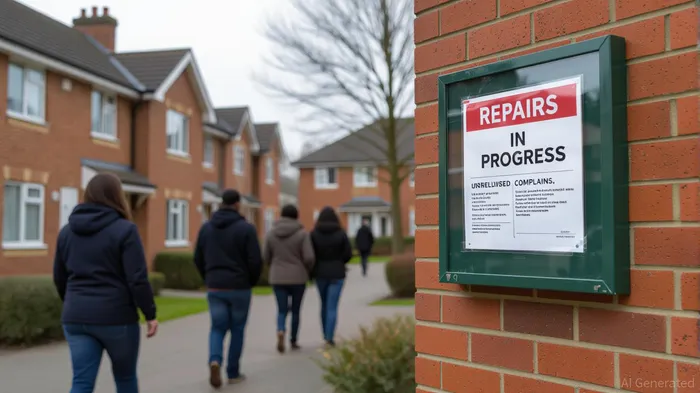
The UK social housing sector operates at the intersection of public trust, regulatory oversight, and financial sustainability. For investors, evaluating providers like The Guinness Partnership (TGP) requires a nuanced analysis of both quantitative metrics and qualitative governance practices. While TGP’s recent financial performance demonstrates resilience, operational challenges—particularly in tenant satisfaction and complaint resolution—raise critical questions about long-term risk exposure.
Financial Resilience Amid Sector-Wide Pressures
TGP’s 2023/24 financial statements reveal a £81.0 million surplus, driven by a £63.0 million fair value gain from the integration of Shepherd’s Bush Housing Association (SBHA) [1]. However, this figure masks underlying vulnerabilities. Core turnover from social housing lettings fell by £3.0 million year-on-year, attributed to rising repair costs, property impairments, and building safety remediation expenses [1]. The 2024/25 interim results (July–September 2025) show a net margin of 6.3%, down from 18.9% in operating surplus, underscoring the sector’s margin compression due to inflationary pressures and regulatory compliance costs [2].
Strong liquidity, with £915 million in cash and undrawn facilities, provides a buffer against short-term risks [2]. Yet, the full merger of SBHA—set for April 2025—introduces integration complexities. SBHA’s modest operating margin of 5.2% in its first half of 2024/25 suggests potential strain on TGP’s overall profitability if synergiesTAOX-- fail to materialize [2].
Operational Sustainability: A Mixed Picture
TGP’s Tenant Satisfaction Measures (TSMs) report for 2024/25 highlights strengths in emergency repairs (93.4% on-time completion) and complaint resolution (95.6% stage one, 100% stage two) [3]. These metrics align with its ESG commitments, particularly in building safety and asbestos compliance [1]. However, granular case studies reveal systemic gaps. A 2023 ombudsman ruling found TGP delayed resolving a communal front door issue for over a year, offering only £525 in compensation after initial efforts were deemed inadequate [4]. Such incidents erode trust and signal a reactive rather than proactive approach to tenant concerns.
Recent complaints further illustrate this trend. Residents have cited poor communication, unresolved fly-tipping, and anti-social behavior as persistent issues [4]. Verified reviews describe the company as “unresponsive” and “inefficient,” with some tenants leaving properties due to unresolved repairs [4]. These patterns suggest a disconnect between TGP’s public performance metrics and on-the-ground experiences, a risk that could escalate under the Regulator of Social Housing’s heightened scrutiny.
Governance and Regulatory Scrutiny
The TSMsTSM-- framework, introduced in 2024, mandates transparency for landlords with over 1,000 homes [3]. While TGP’s 8,023 survey responses (6,672 tenants, 1,351 shared owners) demonstrate robust engagement, the methodology’s limitations—such as its focus on perception-based surveys—mean comparisons with peers should be approached cautiously [3]. The Regulator’s National Tenant Survey, which contextualizes TSMTSM-- results, may yet reveal sector-wide trends that TGP must address.
Regulatory risks are compounded by the housing ombudsman’s role. TGP’s recent cases, including a 2023 ruling over anti-social behavior and another over delayed repairs, highlight vulnerabilities in its complaint-handling processes [4]. These incidents, while isolated, could accumulate into reputational damage or increased compliance costs. For investors, the question is whether TGP’s governance structures—such as its merger consultation processes and ESG reporting—can adapt to these pressures without compromising profitability.
Investor Considerations: Balancing Strengths and Weaknesses
TGP’s strategic investments—£178.8 million in 2023/24 and £197 million in 2024/25—demonstrate a commitment to asset quality [1]. Its stable credit ratings (A- from S&P, A3 from Moody’s) further reinforce confidence in its ability to secure financing [2]. However, sector-wide challenges—rising repair costs, building safety remediation, and regulatory tightening—pose tail risks.
For investors, the key is to assess whether TGP’s governance model can evolve to address operational shortcomings. While its ESG initiatives and TSMs performance are commendable, the recent ombudsman rulings and tenant reviews suggest a need for cultural change. A focus on proactive tenant engagement, rather than reactive compensation, could mitigate future disputes and align with the Regulator’s emphasis on accountability.
Conclusion
The Guinness Partnership occupies a unique position in the UK social housing landscape, combining financial resilience with operational challenges. Its ability to navigate these dual pressures will determine its long-term viability as an investment. While its liquidity and strategic mergers offer upside, investors must remain vigilant about tenant dissatisfaction and regulatory risks. In a sector where governance and public trust are inextricably linked, TGP’s next steps will be critical.
Source:
[1] Guinness Partnership - Financial Statements 31 March 2024 [https://www.research-tree.com/newsfeed/article/guinness-partnership-financial-statements-31-march-2024-2550206]
[2] Interim Financial Results | Company Announcement [https://www.investegate.co.uk/announcement/rns/guinness-partnership-the-limited--bb26/interim-financial-results/8570623]
[3] Tenant Satisfaction Measures TSMs [https://www.guinnesspartnership.com/about-us/what-we-do/how-were-doing/tenant-satisfaction-measures-tsms/]
[4] The Guinness Partnership Limited (202318212) [https://www.housing-ombudsman.org.uk/decisions/the-guinness-partnership-limited-202318212/], [https://www.housing-ombudsman.org.uk/decisions/the-guinness-partnership-limited-202218624/], [https://www.housing-ombudsman.org.uk/decisions/the-guinness-partnership-limited-202321575/], [https://www.reviews.io/company-reviews/store/guinnesspartnership-com]

Decoding blockchain innovations and market trends with clarity and precision.
Latest Articles
Stay ahead of the market.
Get curated U.S. market news, insights and key dates delivered to your inbox.


AInvest
PRO
AInvest
PRO



Comments
No comments yet