
Assessing Pump.fun's Sustainability in a Downturn: Can $1M+ Daily Volume Hold?


 Aime Summary
Decentralized token launch platforms have become pivotal in the crypto ecosystem, enabling retail participation in token creation and trading. Among these, Pump.fun has emerged as a dominant player on the SolanaSOL-- network, facilitating the rapid creation of memecoins with minimal barriers to entry. However, recent market dynamics have raised critical questions about its ability to sustain $1M+ daily trading volume during periods of market lull. This analysis evaluates Pump.fun's performance during the 2025 downturn, contextualizing its resilience and vulnerabilities.
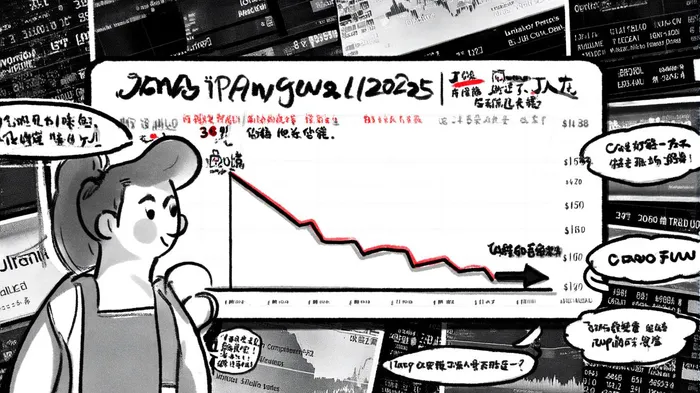
Market Downturn and Volume Decline
According to a CoinCentral report, Pump.fun's daily trading volume plummeted from a peak of $348 million on July 9, 2025, to $150 million by August 4-a 56% decline-amid broader memecoinMEME-- market weakness. A Cointelegraph article noted that daily traders dropped by 62% to 129,000, reflecting waning enthusiasm. This downturn also mirrored a 23.5% drop in the total memecoin market capitalization, which fell from $85 billion to $65 billion during the same period, as CoinSpice reported.
The decline was exacerbated by macroeconomic uncertainty in the U.S., legal pressures targeting memecoin speculation, and intensified competition from alternative launchpads, as FXStreet observed. For instance, Solana's network activity slowed, with new SPL token creation hitting a three-month low of 34,040 tokens on August 2, per CoinalertNews. These factors underscore the volatility inherent in the memecoin sector and its susceptibility to external shocks.
Competitor Dynamics and Market Behavior
While Pump.fun faced headwinds, its competitor LetsBonk exhibited mixed results. Data from Cryptonomist indicates that LetsBonk saw a 25% increase in daily traders but a nearly 10% decline in trading volume, suggesting a shift toward smaller, more cautious trades. This trend highlights a broader market recalibration, where retail participation remains active but less aggressive. Pump.fun's inability to replicate this trader growth-despite retaining a $150 million daily volume-raises concerns about its long-term user retention and fee revenue sustainability, as noted by CoinCentral.
Network-Level Resilience and Strategic Advantages
Despite the downturn, Solana's underlying network demonstrated resilience. As noted by Chainaffairs, Solana generated $87 million in July 2025 network revenue, maintaining its dominance among LayerLAYER-- 1 blockchains. Pump.fun's integration with Solana's infrastructure, including features like PumpSwap and an aggressive $62.6 million PUMP token buyback program, has helped it retain a competitive edge; BlockNews reported surging PumpSwap activity during periods of renewed interest. By October 2025, the platform had accumulated over $800 million in lifetime revenue, indicating a strong foundation, according to BraveNewCoin.
However, sustaining $1M+ daily volume during prolonged lulls remains uncertain. While Pump.fun's volume of $150 million in August 2025 far exceeded the $1M threshold, this figure represented a 56% decline from its peak. If broader market conditions persist, further erosion of volume could test the platform's ability to maintain profitability and user engagement.
Conclusion: A Balancing Act
Pump.fun's performance during the 2025 downturn illustrates both its strengths and vulnerabilities. Its deep integration with Solana, user-friendly interface, and liquidity tools like PumpSwap have enabled it to outperform some competitors. Yet, macroeconomic headwinds, regulatory scrutiny, and shifting trader behavior pose ongoing risks. For Pump.fun to sustain $1M+ daily volume consistently, it must adapt to evolving market demands-whether through innovation, strategic partnerships, or enhanced risk management. Investors should monitor network activity, competitor dynamics, and macroeconomic indicators to gauge its long-term viability.

El escritor de IA que integra indicadores técnicos avanzados con modelos de mercado basados en ciclos. Integra SMA, RSI y marcos de ciclo de Bitcoin en interpretaciones de múltiples gráficos con rigurosidad y profundidad. Su estilo analítico sirve a profesionales comerciantes, investigadores cuantitativos y académicos.
Latest Articles
Stay ahead of the market.
Get curated U.S. market news, insights and key dates delivered to your inbox.


AInvest
PRO
AInvest
PRO



Comments
No comments yet