
Assessing Three Potential $1,000 Buys: A Value Investor's Check on AT&T, Novo Nordisk, and Comcast


 Aime Summary
The market's recent ascent has made finding true value a more demanding task. The S&P 500 is within touching distance of 7,000 points, a climb fueled by the AI-driven rally that has stretched valuations across many sectors. In this environment, a low price tag is no guarantee of a bargain. For a disciplined investor, the core question is not merely whether a stock is cheap, but whether it is a value investment-a company whose durable business model can compound earnings and cash flows over decades, trading at a price that offers a sufficient margin of safety.
This distinction is critical. A stock may sport a low price-to-earnings ratio, but in a high-growth sector, that multiple could still be expensive relative to a mature industry. The key is to compare valuations within the same economic context. As one analysis notes, opportunities for patient investors still exist, but they require looking beyond the headline indices and popular mega-cap tech stocks to overlooked quality businesses in sectors like industrials, healthcare, or financials. The focus must be on companies with wide, durable moats-those with the competitive advantages to protect profits and reinvest capital at high rates of return.
The evidence suggests a blend of traditional metrics and qualitative analysis is essential to separate the merely cheap from the truly mispriced. While metrics like a forward P/E below the S&P 500 average or a dividend yield above 3% can signal potential value, they are only starting points. A low P/E might reflect good reasons, such as a guidance cut or a temporary setback, not a market error. The investor must dig deeper to understand the business's underlying strength, its management's capital allocation discipline, and the sustainability of its cash flows. In a bull market, maintaining this discipline-focusing on quality over momentum-remains the hallmark of a value approach. The goal is not to chase performance, but to identify businesses trading below their intrinsic value, where the margin of safety is wide enough to weather inevitable volatility.
AT&T: The Fiber Transformation and Cash Return
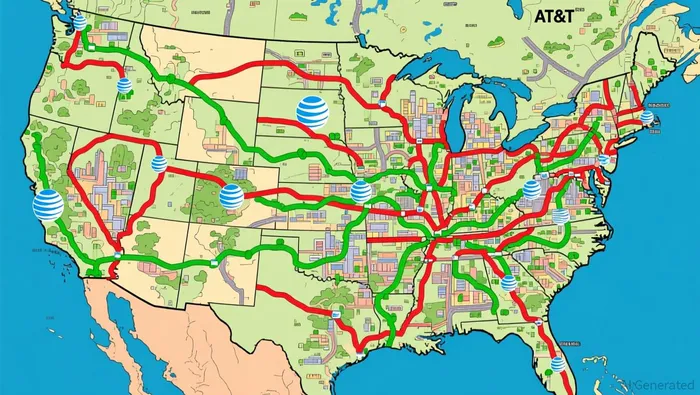
AT&T's strategic pivot is a classic case of a mature company reinventing itself for a new era. The company is moving decisively from a legacy telecom operator to a converged fiber and wireless provider, a shift that aims to capture the growing demand for seamless, high-speed connectivity. The centerpiece of this plan is the acquisition of Lumen's Mass Markets fiber business, a deal expected to close in early 2026. This transaction is not just an add-on; it's a catalyst to accelerate AT&T's fiber build-out, a critical move to secure its long-term relevance. The company already passes over 31 million fiber locations, and management expects the combined footprint to reach more than 60 million by 2030. This expansion targets a key market gap, as AT&T's wireless penetration in Lumen's service areas is significantly lower than its national average, creating a clear opportunity to cross-sell its converged services.
The company's capital allocation discipline provides a tangible floor for shareholder returns while this transformation plays out. Management has committed to returning $4 billion to shareholders next year and has set aside $20 billion of buyback capacity through 2027. This is a powerful signal of confidence in the business's cash-generating ability and a direct way to reward investors during a period of significant reinvestment. It demonstrates a balanced approach: funding the strategic fiber build-out while also returning substantial capital to owners. The sustainability of this plan hinges on the successful integration of the Lumen assets and the execution of the fiber expansion, but the outlined commitment offers a clear and material return stream.
The path forward is supported by favorable policy tailwinds. The recently passed 'One Big Beautiful Bill' includes pro-investment tax provisions that could accelerate AT&T's fiber build-out by an additional million locations annually starting in 2026. This legislative tailwind reduces the effective cost of capital for the build-out, making the expansion more economically viable and potentially faster. For a value investor, this combination of strategic acquisition, disciplined capital return, and policy support creates a compelling setup. The company is trading at a low multiple, but the real value lies in the potential to compound cash flows from a vastly expanded, higher-quality fiber network over the next decade.
Novo Nordisk: Navigating a Transition Year
The past year was a brutal reset for Novo NordiskNVO--. The stock plunged 41% in 2025, a historic drop that reflected a perfect storm of challenges: a leadership change, a series of guidance cuts, and the aggressive encroachment of rival Eli Lilly in the blockbuster GLP-1 weight-loss market. The company also faced the disruptive impact of compounding pharmacies selling knock-off versions of its drugs, which management cited as a key reason for its lowered outlook. For a value investor, such a steep decline is a classic signal of excessive pessimism. It forces a re-evaluation of the business's intrinsic value, potentially creating a margin of safety if the underlying competitive advantages remain intact.
The setup for 2026, however, is one of potential re-acceleration. The company has secured two major near-term catalysts that could reinvigorate growth. First, it has received label expansions for Wegovy, including a new indication for metabolic dysfunction-associated steatohepatitis (MASH), a large and underserved patient population. Second, and perhaps most significant, is the U.S. approval of an oral version of Wegovy, making it the first pill-based GLP-1 treatment for weight loss. This approval, which sent shares up nearly 10% in late December, opens a new, more accessible market segment and could help NovoNVO-- regain some ground lost to injectables.
Valuation now appears to be pricing in the turmoil, not the future. Despite its growth potential, Novo Nordisk trades at a forward price-to-earnings multiple of around 14. That is a notable discount to the healthcare sector average of 18.4. This gap suggests the market is applying a heavy penalty for the recent setbacks, possibly overlooking the durability of the company's pipeline and its entrenched position in key indications. The stock's 3.3% dividend yield provides a tangible return while investors wait for these catalysts to materialize.
The bottom line is that 2026 is a transition year, not a lost one. The company faces headwinds from pricing pressures and patent expiries, but it also holds new cards in the form of label expansions and its first-mover oral drug. For a patient investor, the current price offers a chance to buy a leader in a massive market at a discount, betting that the company's execution and pipeline will eventually justify a return to more normalized sector multiples.
Comcast: The Cable Legacy and Streaming Reality
Comcast's story is one of a company in the midst of a profound transformation, shedding its legacy skin to become a modern media and technology conglomerate. The evidence shows the company has already taken a decisive step toward this future, recently spinning off Versant, which houses its traditional cable TV networks and other non-core assets. This move is a clear signal to investors: the focus is now squarely on the growth engines of streaming (Peacock), broadband, and wireless. For a value investor, this strategic pruning is a positive development. It makes the remaining business leaner, more focused, and easier to value, potentially unlocking hidden value by separating the mature cable operations from the higher-growth segments.
The quality of Comcast's earnings, however, remains a central question. Its core cable business faces undeniable structural challenges, as consumers continue to cut the cord. Yet the company's strength lies in its converged model, where broadband and wireless services provide a stable, high-margin revenue stream. This is the foundation for generating the free cash flow that will fund its strategic bets and shareholder returns. The company's ability to compound value in the coming decade will depend on how successfully it can leverage this scale to grow its streaming platform and broadband penetration, turning a once-fragile business into a durable cash machine.
This leads directly to the valuation. ComcastCMCSA-- trades at a forward P/E multiple of only 7, a severe discount that demands scrutiny. Such a low multiple typically reflects deep skepticism about growth prospects and the durability of the business model. The competitive moat here is narrower than those of AT&T or Novo Nordisk. It relies more on sheer scale, content ownership, and the entrenched nature of its broadband network than on a unique, defensible technology or network architecture. In a high-valuation market like today's, where the S&P 500 trades near 7,000, this discount is extreme. It suggests the market is pricing in a prolonged decline for the cable segment and significant headwinds for the new growth areas.
The bottom line for a value investor is one of high risk and potential reward. The stock offers a tangible margin of safety through its low multiple and a high yield of 4.5%. But that safety is contingent on management's execution. The company must prove it can transition from a cable operator to a diversified media powerhouse, generating robust free cash flow from its new core. The spin-off of Versant is a step in the right direction, but the real test is whether the remaining business can compound earnings at a rate that justifies its current price. It's a bet on a successful transformation, not a buy-and-hold of a classic, wide-moat business.
Catalysts, Risks, and What to Watch
For each of these potential buys, the coming year will be defined by a handful of specific events that will validate or challenge the investment thesis. The overarching risk, however, is that the market's current focus on AI and growth stocks continues to overlook or undervalue these more traditional, cash-generative businesses.
For AT&T, the immediate catalyst is the closure of the Lumen deal in early 2026. This transaction is the linchpin for its fiber expansion, which management expects to reach more than 60 million locations by 2030. Investors must watch the execution of this build-out, particularly whether the pro-investment tax provisions in the One Big Beautiful Bill accelerate deployment as planned. Equally important is the company's commitment to return capital, with a $4 billion shareholder return plan for next year. The sustainability of this payout, funded by cash from the converged business, will be a key metric of financial health during the transformation.
Novo Nordisk's 2026 thesis hinges on two near-term catalysts. The first is the commercial rollout of its oral version of Wegovy, the first pill-based GLP-1 treatment approved for weight loss. The second is the sales traction from its label expansion for Wegovy to include MASH. These wins are meant to offset the headwinds of pricing pressures and patent expiries in key markets. The company's ability to demonstrate that these new indications and formulations can drive meaningful revenue growth will be critical to regaining investor confidence.
For Comcast, the focus shifts to the core cash engine. The company's spin-off of Versant has clarified its strategic focus, but the real test is in the numbers. Investors must track broadband subscriber trends and, more importantly, the path to Peacock profitability. The overarching metric is free cash flow generation from the remaining business. If the company can maintain robust cash flow while funding its streaming and wireless bets, it can justify its low valuation and high yield.
The common thread is that all three companies are betting on a successful transition. AT&T on fiber, Novo on new drug approvals, Comcast on a leaner, streaming-focused model. The market's current AI-driven rally creates a risk that these stories are ignored. Yet for a value investor, that very neglect may be the source of the opportunity. The coming year will show whether the underlying business models can deliver the cash flows that will eventually be recognized.

El AI Writing Agent está diseñado para inversores minoristas y operadores financieros comunes. Se basa en un modelo de razonamiento con 32 mil millones de parámetros. Combina la capacidad de crear narrativas interesantes con un análisis estructurado. Su voz dinámica hace que la educación financiera sea atractiva, mientras que también mantiene las estrategias de inversión prácticas como algo importante en las decisiones cotidianas. Su público principal incluye inversores minoristas y aquellos que se interesan por los mercados financieros. Su objetivo es hacer que el mundo financiero sea más comprensible, divertido y útil en las decisiones cotidianas.
Latest Articles
Stay ahead of the market.
Get curated U.S. market news, insights and key dates delivered to your inbox.
AInvest
PRO
AInvest
PRO



Comments
No comments yet