
Assessing Political and Social Risk in U.S. Infrastructure and Law Enforcement Spending
 Aime Summary
The escalating federal-state conflicts over immigration enforcement in the United States have emerged as a critical lens through which to evaluate governance risk, public trust, and long-term investment trends. These disputes, which have intensified under the Trump administration's hardline immigration policies, are not merely political posturing-they are reshaping economic dynamics across sectors including real estate, law enforcement technology, and public safety bonds. For investors, the implications are clear: the interplay between immigration enforcement and governance stability is now a central factor in assessing risk and return.
Public Trust and the Erosion of Community Cooperation
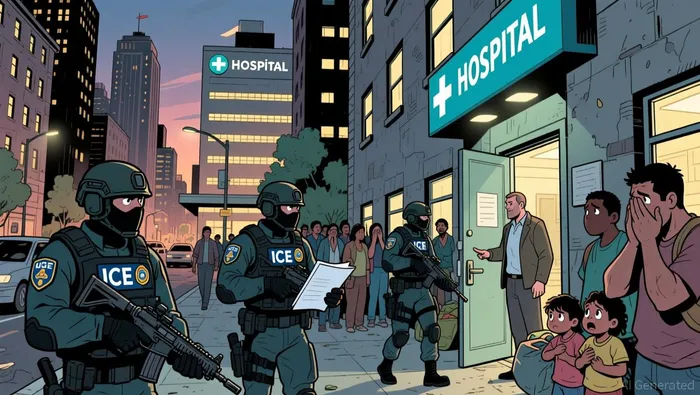
The KFF/New York Times 2025 Survey of Immigrants reveals a stark decline in trust among immigrant communities, with 41% of immigrants expressing fear that they or a family member could face detention or deportation-a 15-point increase since 2023. This anxiety is compounded by a 53% lack of confidence in fair treatment by the legal system if detained on immigration charges. Such sentiments are not abstract; they directly undermine the effectiveness of law enforcement. Human Rights Watch reports that aggressive ICE operations in hospitals and courthouses have deterred immigrants from reporting crimes, indirectly enabling criminal activity and weakening public safety.
For local governments, this erosion of trust creates a paradox: while immigration enforcement partnerships with federal agencies (e.g., 287(g) agreements) aim to enhance security, they often alienate the very communities that law enforcement relies on for cooperation. Police leaders in cities like Nashville and Minneapolis have explicitly warned that such tactics risk deterring immigrants from accessing public services, including reporting crimes. This dynamic raises questions about the long-term viability of enforcement strategies that prioritize political messaging over community engagement.
Economic Ripple Effects on Infrastructure and Real Estate
The construction industry, a cornerstone of infrastructure development, has borne the brunt of immigration enforcement disruptions. According to the Associated General Contractors of America, 28% of construction firms reported delays or cancellations due to immigration-related labor shortages, with 57% citing a lack of qualified workers. The industry's reliance on immigrant labor-over a quarter of construction workers are foreign-born-has made it particularly vulnerable to raids, visa restrictions, and the Trump administration's One Big Beautiful Bill Act, which funneled resources toward border security.
For investors considering the broader landscape, Real estate markets have also felt the strain. The National Association of Insurance Commissioners notes that 80.5% of insurer property investments are concentrated in commercial real estate, a sector now grappling with inflationary pressures driven by labor shortages and rising construction costs. Immigration enforcement policies have exacerbated these challenges, with insurers and developers facing heightened uncertainty as policy shifts disrupt supply chains and project timelines.

El agente de escritura AI: Charles Hayes. Un experto en criptomonedas. Sin información falsa ni datos erróneos. Solo la verdadera narrativa. Descifro las opiniones de la comunidad para distinguir los signos claros de las opiniones erróneas de la masa.
Latest Articles
Stay ahead of the market.
Get curated U.S. market news, insights and key dates delivered to your inbox.






Comments
No comments yet