
Assessing Policy Risk and Consumer Behavior Shifts in Oregon's Farm Stand Landscape
 Aime Summary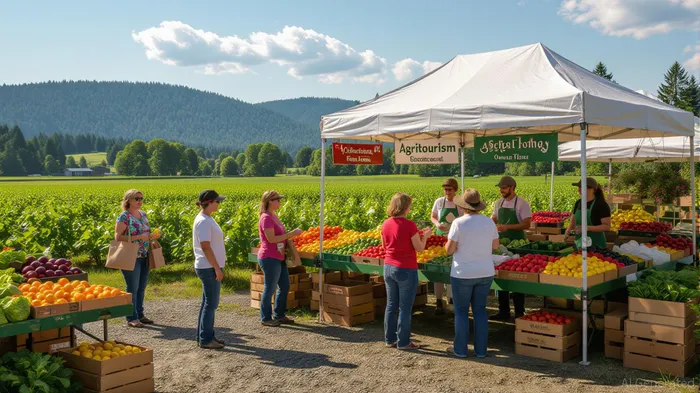
The recent pause in Oregon's proposed farm stand regulations has sparked a critical conversation about the intersection of policy, consumer behavior, and small business equity. For investors, this case study underscores the delicate balance between regulatory clarity and economic resilience in rural markets. As the state grapples with defining the boundaries of agritourism and farm stand operations, the implications for agricultural markets, supply chain dynamics, and small agribusinesses demand closer scrutiny.
Policy Risk: A Double-Edged Sword
Oregon's Department of Land Conservation and Development (DLCD) initially proposed rules to clarify what constitutes a “farm use” and when permits are required for activities like farm-to-table dinners, u-pick operations, and temporary structures. While the intent was to streamline regulations, the backlash from farmers highlights a key risk: overregulation can inadvertently stifle innovation. For instance, the “good neighbor test,” which assesses the impact of agritourism events on neighboring properties, could deter farmers from hosting revenue-generating activities like musical events or educational workshops. Such restrictions may force small farms into a compliance-heavy model, eroding their financial flexibility.
Historically, regulatory shifts in agriculture have shown mixed impacts on market indices. For example, a 2023 study found that 45% of global agribusinesses faced supply chain disruptions due to policy changes, with smaller firms disproportionately affected. In Oregon, the pause on farm stand rules has created a vacuum of uncertainty, deterring capital investment in agritourism ventures. Investors must weigh this risk against the potential for long-term policy alignment that supports sustainable farming models.
Consumer Behavior: The Agritourism Paradox
Agritourism is not just a revenue stream—it's a cultural touchpoint. Oregon's farm stands and seasonal events (e.g., pumpkin patches, farm-to-table dinners) have become integral to rural retail ecosystems. The proposed rules, however, threaten to disrupt this dynamic. By limiting non-agricultural sales (e.g., locally made crafts) to 25% of total revenue and restricting temporary structures to 90 days annually, the regulations could reduce the diversity of offerings that attract consumers.
Data from 2025 reveals that rural retail spending in Oregon grew by 12% annually, driven largely by agritourism. If the proposed rules limit event frequency or product variety, this growth could stall, pushing consumers toward urban retail hubs. For investors, this signals a risk of market consolidation, where smaller farms lose their edge in customer engagement to larger, more adaptable operations.
Supply Chain Implications: Beyond the Farm Gate
The ripple effects of these regulations extend beyond individual farms. Agritourism activities often serve as distribution channels for local artisans, food processors, and service providers. For example, a farm stand selling Marionberry jam supports both the grower and the processor. If non-agricultural sales are curtailed, these ancillary businesses may face reduced demand.
Moreover, the distinction between “processed” and “prepared” foods under the proposed rules could fragment the supply chain. Processed goods (e.g., jams) are exempt from the 25% cap, but prepared foods (e.g., farm-to-table meals) are restricted. This creates a regulatory arbitrage that may incentivize farms to prioritize processed products over fresh, perishable offerings, altering consumer preferences and supply chain logistics.
Investment Strategies: Navigating the Uncertainty
For investors, the Oregon case highlights three key strategies:
1. Scenario Planning: Model outcomes under different regulatory scenarios. For example, if the rules are revised to allow 120 days of temporary structures, small farms could expand agritourism capacity.
2. Technology Adoption: Support agribusinesses using compliance tools (e.g., blockchain-based traceability, real-time permit tracking) to mitigate administrative burdens.
3. Policy Engagement: Advocate for balanced frameworks that preserve land use while enabling diversification. The Friends of Family Farmers' involvement in the Rules Advisory Committee demonstrates the value of stakeholder input.
Conclusion: A Call for Balanced Innovation
Oregon's farm stand regulations exemplify the broader tension between preservation and progress in agriculture. While land conservation is vital, overly restrictive policies risk undermining the economic viability of small farms. For investors, the path forward lies in fostering adaptive strategies that align with both regulatory goals and market realities. By prioritizing flexibility, technology, and inclusive policy dialogue, the agricultural sector can navigate these challenges while sustaining its role as a pillar of rural economies.
The pause in Oregon's rules offers a critical window for recalibration. As stakeholders reassess, the lessons here—about policy risk, consumer behavior, and supply chain resilience—will resonate far beyond the Pacific Northwest.

Delivering real-time insights and analysis on emerging financial trends and market movements.
Latest Articles
Stay ahead of the market.
Get curated U.S. market news, insights and key dates delivered to your inbox.


AInvest
PRO
AInvest
PRO



Comments
No comments yet