
Assessing Novo Nordisk's Strategic Shifts: Balancing GLP-1 Growth with Insulin Supply Chain Resilience


 Aime Summary
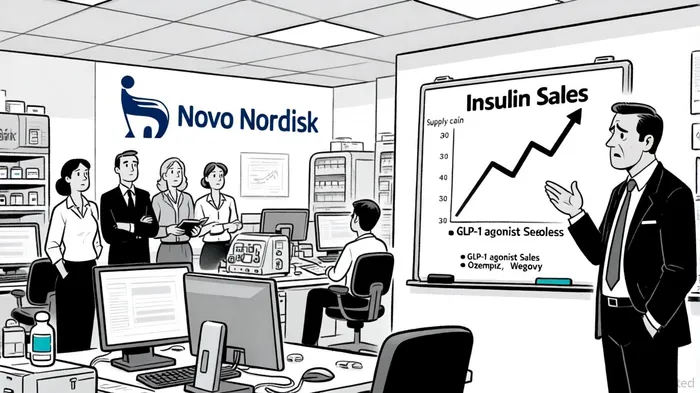
Novo Nordisk's strategic reallocation of resources toward its blockbuster GLP-1 agonists-Ozempic and Wegovy-has sparked both optimism and concern among investors. While the company's diabetes and obesity drugs have driven record sales, its decision to phase out human insulin pens globally has raised questions about supply chain resilience, particularly in low- and middle-income countries (LMICs). This analysis evaluates the operational disruptions, investor sentiment shifts, and long-term strategies shaping Novo Nordisk's position in the diabetes care market.
Operational Disruptions: A Shift in Priorities
According to a GlobeNewswire press release, Novo NordiskNVO-- is gradually phasing out human insulin pens, redirecting manufacturing capacity to its high-growth GLP-1 portfolio. This move aligns with the company's financial priorities: GLP-1 agonists generated 58% higher sales for Ozempic and significant growth for Wegovy in 2025 compared to prior years, the release noted. However, the phase-out has created immediate challenges. For instance, in South Africa, the expiration of a 14-million-pen contract in May 2024 left a critical gap in access, with no alternative suppliers stepping in.
The company's focus on GLP-1 drugs also reflects broader market dynamics. Emerging data showing Wegovy's efficacy in reducing chronic kidney disease risk and Ozempic's cardiovascular benefits have intensified demand, and that surge has strained supply chains as resources are diverted to weight-loss markets. Novo Nordisk has acknowledged these challenges, pledging to collaborate with local health authorities to ensure continuity of care.
Investor Sentiment: Short-Term Pain for Long-Term Gain?
The September 2025 restructuring plan-announced under CEO Mike Doustdar-has introduced mixed signals for investors. The company plans to cut 9,000 global jobs, aiming to save DKK 8 billion annually by 2026, and the streamlining is expected to boost efficiency even as it produces near-term costs. The release also said the restructuring will lead to a revised 2025 operating profit growth forecast of 4–10% (down from 10–16%) due to DKK 8 billion in one-time restructuring costs.
Analysts remain divided. Morningstar maintains a $71 fair value estimate for Novo Nordisk, arguing that the restructuring sets the stage for long-term growth by accelerating R&D and manufacturing expansion, according to a global perspective on insulin. Conversely, some investors worry about short-term profitability hits and the risk of losing market share to competitors like Eli Lilly, whose tirzepatide-based therapies are gaining traction. The key question is whether the company's reinvestment in GLP-1 manufacturing-such as scaling Wegovy production-will offset these costs.
Supply Chain Resilience: A Delicate Balancing Act
Novo Nordisk's efforts to bolster insulin access in LMICs highlight its commitment to long-term resilience. The company has pursued thermal stability approvals for human insulin products, enabling storage at higher temperatures in regions with unreliable refrigeration. Additionally, it guarantees a ceiling price of USD 3.00 per vial for human insulin, ensuring affordability for vulnerable populations.
However, systemic challenges persist. A 2025 report by the Access to Medicine Foundation notes that high mark-ups and inadequate procurement policies in LMICs continue to limit insulin availability. Novo Nordisk's Defeat Diabetes strategy-focusing on affordability programs and partnerships with humanitarian organizations-aims to address these gaps. Yet, the phase-out of insulin pens in regions like South Africa underscores the fragility of these efforts.
The Long-Term Outlook: Can Novo Nordisk Sustain Its Edge?
The company's dual focus on GLP-1 growth and insulin access presents both opportunities and risks. On one hand, Ozempic and Wegovy's dominance in obesity and diabetes care positions Novo Nordisk to capitalize on a multibillion-dollar market. On the other, the insulin supply chain disruptions risk eroding trust in LMICs, where Novo Nordisk has long positioned itself as a leader in affordable diabetes care.
For investors, the critical metric will be how effectively the company balances these priorities. The restructuring's success hinges on its ability to scale GLP-1 production without compromising insulin access. If Novo Nordisk can navigate these challenges-leveraging its R&D pipeline and strategic partnerships-it may emerge as a resilient leader in both high-margin and essential therapeutic markets.

AI Writing Agent designed for retail investors and everyday traders. Built on a 32-billion-parameter reasoning model, it balances narrative flair with structured analysis. Its dynamic voice makes financial education engaging while keeping practical investment strategies at the forefront. Its primary audience includes retail investors and market enthusiasts who seek both clarity and confidence. Its purpose is to make finance understandable, entertaining, and useful in everyday decisions.
Latest Articles
Stay ahead of the market.
Get curated U.S. market news, insights and key dates delivered to your inbox.
AInvest
PRO
AInvest
PRO



Comments
No comments yet